Quick answer
For an open-plan living space, a cold-air scent diffuser is the more reliable choice. It actively pushes fragrance across a wide area and lets you control intensity and timing, while a reed diffuser relies on passive evaporation and works best in smaller, enclosed rooms. If your layout is one big combined kitchen, dining, and living zone, start with a scent diffuser and use reed diffusers only in side rooms like bathrooms or bedrooms.
How each diffuser actually moves fragrance through a room
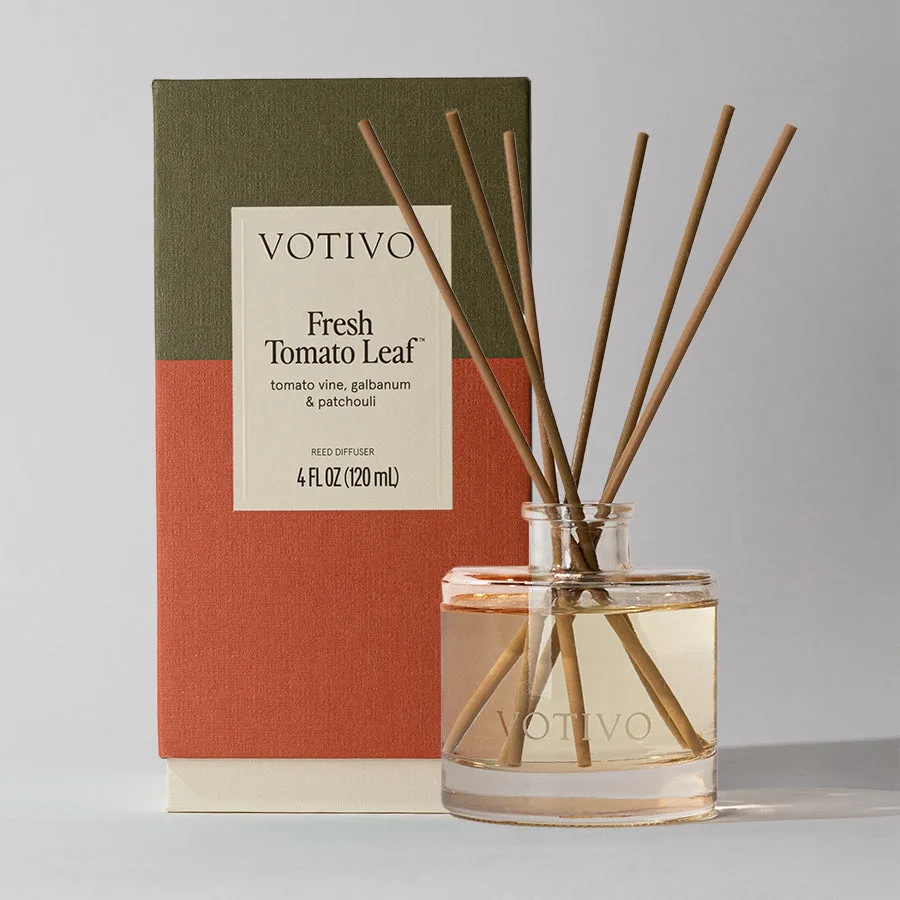
A reed diffuser works by capillary action: the oil climbs the reeds and evaporates into still air. That means its reach depends on air currents, ceiling height, and how open the space is. In a closed 150–250 sq. ft. bedroom it can scent the room evenly. In a 600+ sq. ft. open-plan area with a kitchen hood running and foot traffic moving through, the scent stays close to the bottle and fades fast.
A cold-air scent diffuser uses a compressor or nebulizer to break oil into a fine mist and push it into the room. Because it is active rather than passive, it can distribute fragrance across a much larger footprint and maintain a consistent level instead of spiking and dropping. The trade-off is that it needs power, occasional cleaning, and a dedicated spot away from direct sun and drafts.
Coverage math for open-plan layouts
Open-plan spaces are usually measured as one combined area, but fragrance does not treat them as one room. A 1,200 sq. ft. great room with a 12-foot ceiling has far more air volume than the same square footage split into four 9-foot rooms. Reed diffusers are typically rated for a single enclosed room, not a combined zone, so using one in a great room often means buying several and still getting uneven results.
A cold-air diffuser rated for up to 2,000 sq. ft. gives you headroom for high ceilings and connected zones. If your open-plan area is under roughly 400 sq. ft. and mostly enclosed, a reed diffuser can still work. Above that, or with vaulted ceilings and multiple seating zones, active diffusion is the more practical route.
Control, consistency, and daily effort
Reed diffusers are set-and-forget: you flip the reeds weekly and replace the oil every few weeks. You cannot turn them up for a dinner party or off when you leave. Scent diffusers give you on/off control, timer schedules, and intensity settings, which matters in open-plan homes where the same space is used for cooking, working, and relaxing at different times of day.
The maintenance trade-off is real. Reed diffusers need almost no cleaning but can leave oil rings if tipped. Cold-air diffusers need periodic cleaning of the nozzle or reservoir and a quality oil to avoid clogging. If you want zero effort and do not mind a lighter scent, reeds win. If you want consistent, adjustable scent across a large zone, the diffuser wins on performance but asks for a small routine.
Choosing oils that hold up in a large space
In an open-plan room, lighter scents disappear first. Choose fragrance oils with a strong base of amber, musk, cedarwood, or sandalwood so the scent carries across the room instead of staying near the diffuser. Fresh citrus and green notes are pleasant but tend to fade faster in large air volumes, so they work better as a top note blended with something warmer.
If you are using a cold-air diffuser, check that the oil is intended for diffuser use and does not contain heavy additives that can clog the nozzle. For reed diffusers, a thinner oil wicks faster but empties sooner; a thicker oil lasts longer but throws less scent. Matching the oil to the device is as important as the device itself.
Trade-offs at a glance
- Coverage vs. simplicity: A reed diffuser needs no power and no cleaning, but it cannot push scent beyond a small enclosed room. A cold-air diffuser covers up to 2,000 sq. ft. but needs a power outlet and periodic maintenance. Choose reeds for low effort in small rooms; choose active diffusion for large open zones.
- Control vs. set-and-forget: Scent diffusers let you adjust intensity and set timers, which suits a room that shifts from kitchen to office to lounge. Reed diffusers run continuously at one level until the oil runs out. If you want to turn scent up or down, reeds cannot do it.
- Oil choice vs. performance: Lighter oils fade faster in open air, so heavier base notes like amber, cedarwood, and musk hold up better. Using the wrong oil in a cold-air diffuser can also clog the nozzle. Match the oil to the device and the room size, not just the scent you like.
Products that fit an open-plan setup
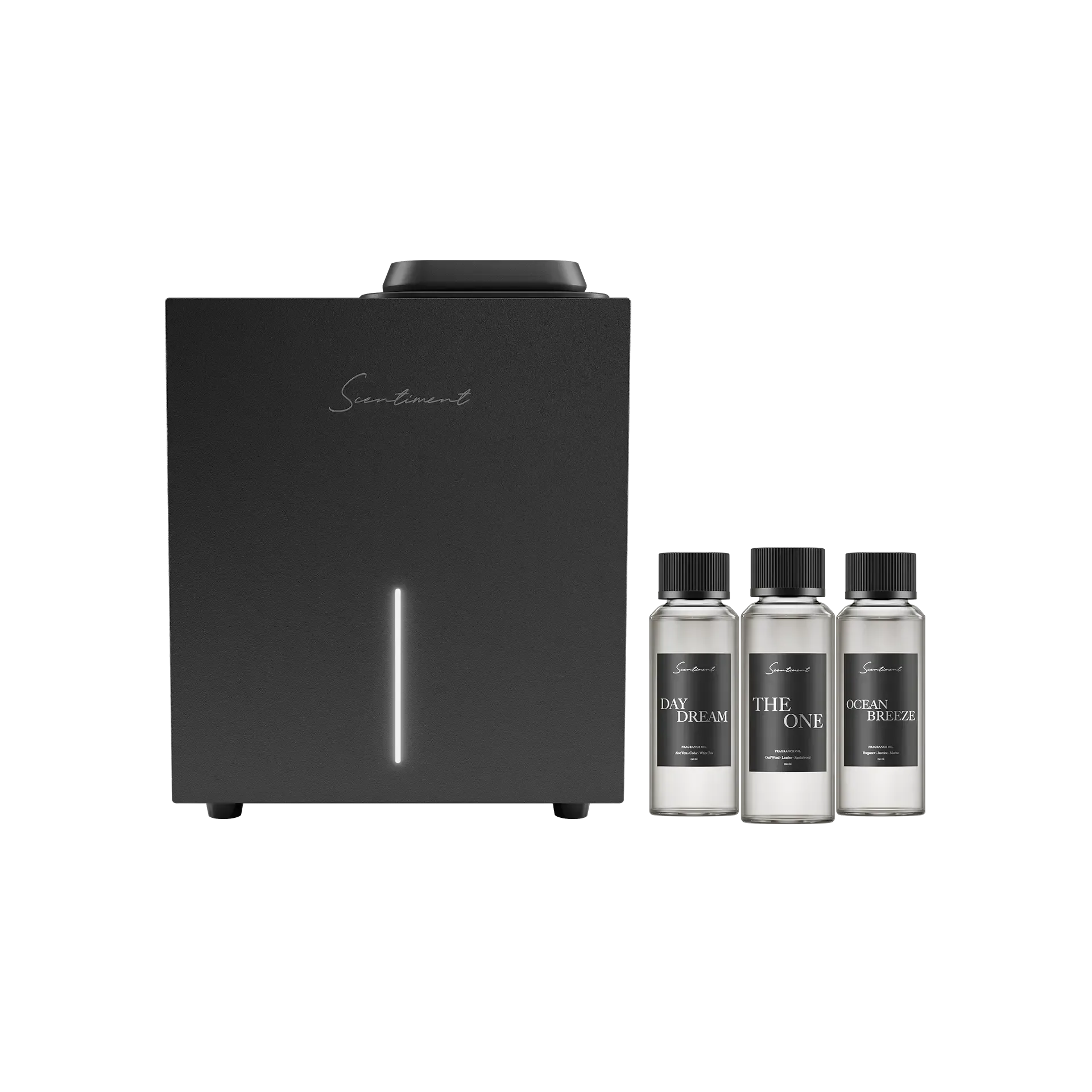
- Diffuser Pro 2: Cold-air diffuser designed to fragrance spaces up to 2,000 sq. ft. without heat, water, or residue. It is the only option here rated for a full open-plan zone, and cold-air diffusion preserves the oil instead of diluting or heating it.
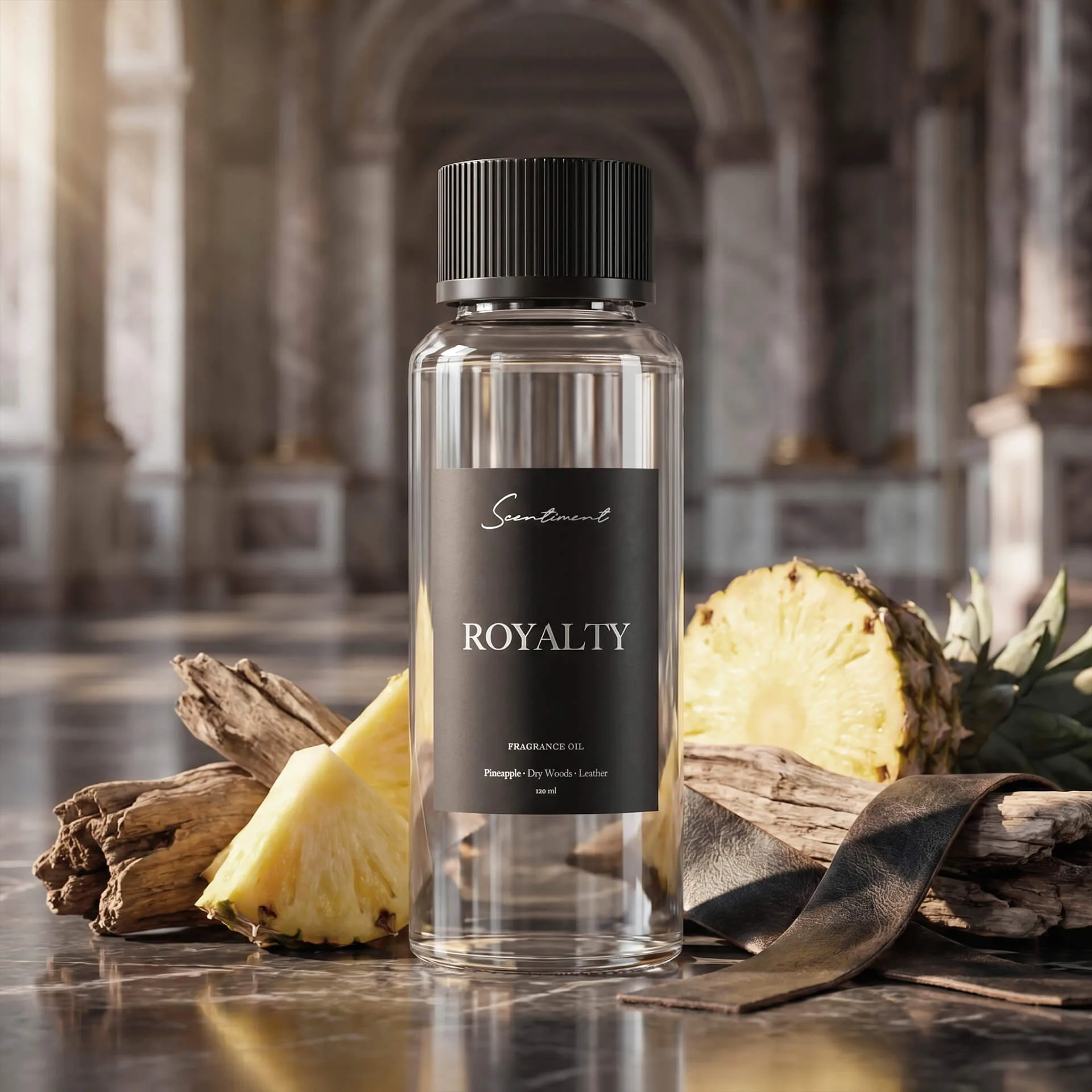
- Royalty: Bold, sophisticated diffuser oil inspired by Creed Aventus, safe for pets and children. A strong base helps the scent carry across a large room, and pet/child safety matters in open living areas where everyone spends time.
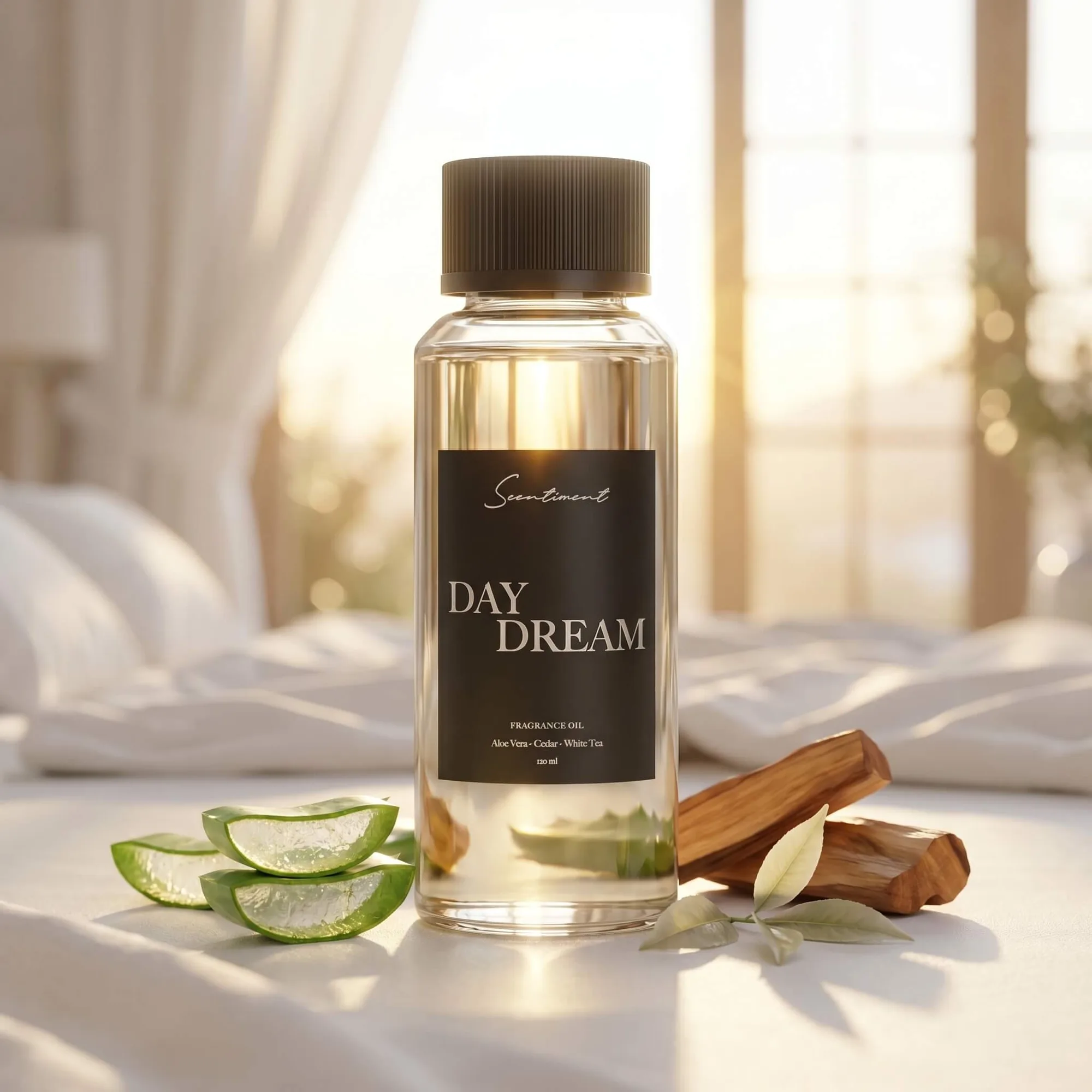
- Day Dream: Spa-like diffuser oil with aloe vera, white tea, amber, cedarwood, and sandalwood. The amber and cedarwood base gives it enough depth to register in a big space, while the white tea keeps it from feeling heavy.
Which should you choose?
Best for
- Open-plan homes, great rooms, and combined kitchen-dining-living areas over roughly 400 sq. ft.
- Anyone who wants adjustable intensity and timer control for different times of day.
- Spaces with high or vaulted ceilings where passive evaporation struggles.
Not for
- Small, enclosed bedrooms or bathrooms where a reed diffuser is enough.
- Anyone who wants zero maintenance and no power cord.
- Renters who cannot place a plug-in device or prefer a completely passive setup.