The short answer: both are three-way standmounts, but the catalog names only one Reference standmount
If you are comparing the Reference 1 Meta and Reference 2 Meta, start with what the supplied catalog actually states. Both models are described as three-way standmounts using KEF's 12th generation Uni-Q driver array with MAT technology. The Reference 1 Meta is explicitly called "the one standmount model in the Reference series," yet the Reference 2 Meta appears as a separate product with its own price and finish options. That wording conflict is the first thing to resolve before you treat them as two distinct standmount designs.
The practical takeaway is not that one model is better. It is that the catalog does not provide enough model-specific detail to confirm how the Reference 2 Meta differs from the Reference 1 Meta beyond price and color choices. Use the confirmed facts below to narrow the decision, then verify the remaining differences with the manufacturer or dealer before buying.
Confirmed Reference 1 Meta and Reference 2 Meta details
-
Reference 1 Meta: Reference 1 Meta is a three-way standmount with KEF's 12th generation Uni-Q driver array with MAT. This establishes the core architecture you are comparing; both models share this description in the supplied record.
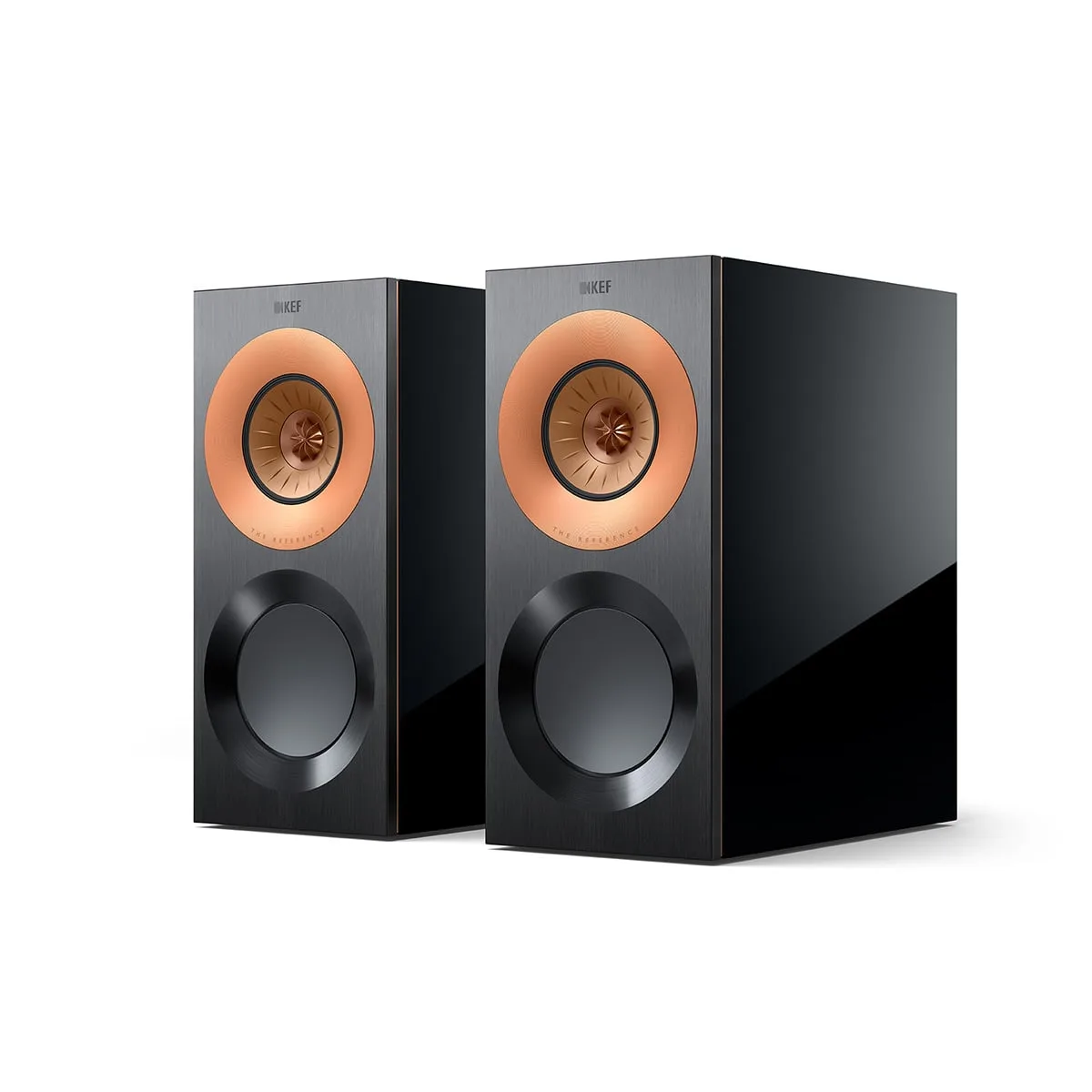
Reference 1 Meta
-
Reference 1 Meta: Catalog price is USD 6299.99, with a catalog comparison price of USD 9999.98. Price is one of the few confirmed differences between the two models in the supplied evidence.
-
Reference 2 Meta: Reference 2 Meta is also described as a three-way standmount with the 12th generation Uni-Q driver array with MAT. The shared description means you cannot assume a different driver count or array generation from the catalog alone.

Reference 2 Meta
-
Reference 2 Meta: Catalog price is USD 4019.99, with a catalog comparison price of USD 5999.99. The Reference 2 Meta is listed at a lower price than the Reference 1 Meta, which may make it the starting point for budget-led comparisons.
Reference 1 Meta vs Reference 2 Meta at a glance
The table below uses only supplied catalog facts. Where a row says "not confirmed," the supplied information does not state the answer; it does not mean the feature is absent.
- Catalog price: Reference 1 Meta: USD 6299.99 (comparison price USD 9999.98). Reference 2 Meta: USD 4019.99 (comparison price USD 5999.99).
- Design description: Both are described as three-way standmount models with the 12th generation Uni-Q driver array with MAT.
- Finish options: Both list the same five color variants: High-Gloss White/Champagne, High-Gloss White/Blue, Satin Walnut/Silver, High-Gloss Black/Grey, and High-Gloss Black/Copper.
- Room size guidance: Not confirmed in the supplied catalog for either model.
- Amplifier power requirements: Not confirmed in the supplied catalog for either model.
- Physical dimensions and weight: Not confirmed in the supplied catalog for either model.
Why the "one standmount" wording matters for this comparison
The Reference 1 Meta description calls it "the one standmount model in the Reference series." If that phrase is accurate, the Reference 2 Meta may not be a separate standmount at all, or the catalog description may be shared or outdated. The Reference 2 Meta record repeats the same sentence, including the Reference 1 Meta name, which suggests the copy was not written specifically for the Reference 2 Meta.
This does not prove the Reference 2 Meta is not a standmount. It does mean you should not rely on the catalog to explain the difference between the two models. Before treating them as two standmount options, confirm with KEF or an authorized dealer that both are current, distinct standmount products and ask for the model-specific specifications.
What you can and cannot decide from the catalog
You can decide on price and finish. The Reference 1 Meta lists at USD 6299.99 and the Reference 2 Meta at USD 4019.99, and both offer the same five color variants. If budget or room decor is your main constraint, those confirmed facts are enough to shortlist one model.
You cannot decide on room size, amplifier matching, sensitivity, impedance, dimensions, or weight from the supplied information. Those details are not confirmed for either model. Any claim that one model suits a particular room size or amplifier wattage would be an assumption, not a catalog fact. Use the absence of data as a prompt to request a specification sheet rather than as evidence that either speaker is unsuitable.
A practical way to choose between the two
Work through these checks in order. Each one uses a confirmed fact or flags a question the catalog cannot answer.
- 1. Set your budget against the confirmed prices: The Reference 2 Meta is listed USD 2280 lower than the Reference 1 Meta at catalog price. If that gap matters, the Reference 2 Meta is the logical first look.
- 2. Choose a finish that fits your room: Both models offer the same five variants, so finish does not separate them. Pick the color first, then compare the remaining differences.
- 3. Ask for model-specific specifications: Request dimensions, weight, sensitivity, impedance, and recommended amplifier power for both models. These are not confirmed in the supplied catalog.
- 4. Confirm the product identity: Because the Reference 1 Meta is described as the one standmount in the series, ask whether the Reference 2 Meta is a separate standmount model or a variant. This prevents buying the wrong product based on a shared description.
- 5. Audition both if possible: The catalog describes both as capable of expansive, high-performance sound beyond their compact size, but it does not quantify the difference. A listening comparison is the only reliable way to judge which suits your ears and room.
The honest trade-off
The Reference 1 Meta carries a higher catalog price and is explicitly named as the Reference series standmount. The Reference 2 Meta costs less and shares the same described driver technology and finish options, but the catalog does not explain what, if anything, you give up or gain beyond price. Until model-specific specifications are confirmed, the safer buying advice is to treat the Reference 2 Meta as a lower-cost alternative that needs verification, not as a proven equivalent or a proven step down.