The real difference is texture and prep time
Both refried black beans and whole black beans start from the same legume, but they are processed differently. Whole black beans are cooked and canned in their own liquid, keeping each bean intact. Refried black beans are cooked, mashed, and often seasoned — so they arrive as a spreadable paste. Your choice depends on whether you want a ready-to-use base or whole beans you can season yourself.
If you are short on time and want a flavorful side or filling, refried beans save you a step. If you need beans that hold their shape in soups, salads, or grain bowls, whole beans are the better fit.
Refried black beans vs. whole black beans at a glance
- Texture: Refried beans are creamy and smooth, ideal for spreading or layering. Whole beans keep their shape and add a firmer bite.
- Prep time: Refried beans are ready after a quick warm-up on the stove or in the microwave. Whole beans also need reheating but may benefit from extra simmering with seasonings.
- Sodium control: Light-in-sodium refried beans offer reduced salt compared to standard versions. Whole beans in low-sodium or no-salt-added cans give you full control over seasoning.
- Best uses: Refried beans work well in tacos, burritos, tostadas, or as a dip. Whole beans suit soups, chili, rice bowls, or salads where you want distinct beans.
What the label of a light-sodium refried bean can tells you
-
Refried Black Beans, Light in Sodium: Traditional-Style Black Beans: Seasoned with organic bell peppers, tomatoes, cilantro, and garlic. These refried beans come with built-in flavor, so you can skip adding spices if you want a quick, savory base. Whole beans usually contain only water and salt.
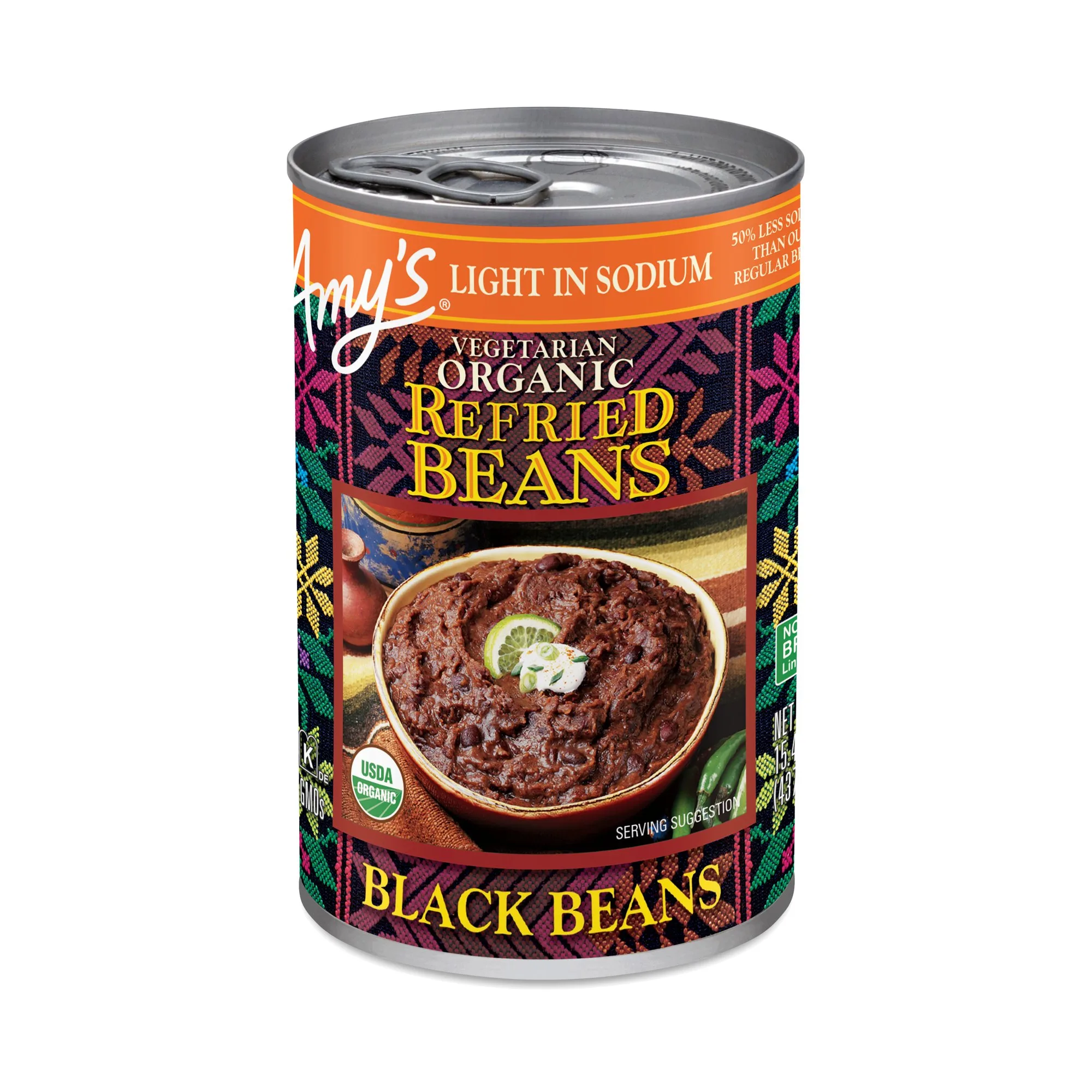
Refried Black Beans, Light in Sodium
-
Refried Black Beans, Light in Sodium: Light & Flavorful: With 50% less sodium than Amy's regular refried black beans. If you are watching sodium, this is a meaningful reduction. Whole beans in low-sodium cans also cut salt, but you have to add your own seasoning to match this flavor profile.
-
Refried Black Beans, Light in Sodium: Nutrition Notes: 6g dietary fiber* per serving, plus a good source of iron and potassium. Both refried and whole black beans provide fiber and minerals, but the refried version here includes those benefits in a ready-to-eat form. Whole beans offer similar nutrition but need more preparation.
When refried beans make sense
Reach for refried black beans when you want a creamy, seasoned option that heats in minutes. They are a natural fit for Mexican-inspired dishes like burritos, quesadillas, or nachos. The light-in-sodium version still tastes savory because of the organic bell peppers, tomatoes, cilantro, and garlic. Just warm them on the stovetop or microwave — no mashing or extra seasoning required.
When whole black beans are the better choice
Choose whole black beans when you need beans that stay separate — in a black bean soup, a rice bowl, or a cold salad. Whole beans also let you control the exact salt level and seasoning blend. If you like to cook from scratch or want to build a dish layer by layer, whole beans give you more flexibility. The trade-off is a few extra minutes of simmering and seasoning.
The sodium question: what the label confirms
The light-in-sodium refried beans contain 50% less sodium than the brand's regular version, but the can does not list the exact milligram amount in the supplied information. If you need precise sodium numbers for a strict diet, whole beans with a no-salt-added label let you track intake exactly. For most people, the reduced-sodium refried option is a practical middle ground between convenience and salt control.