Quick answer
Choose the Remy Footstool in natural linen if you want a relaxed, breathable fabric that hides everyday wear and suits a calm, light-filled room. Choose the Elbert Footstool in dark olive velvet if you want a richer, more dramatic look and a button-tufted surface that doubles as a coffee table with a tray.
Fabric feel and durability: linen vs velvet
Natural linen has a matte, slightly textured surface that softens with use and doesn't show marks as readily as velvet. Velvet, by contrast, has a directional pile that catches light and shows pressure marks and crumbs more easily, so it needs more regular brushing and care.
Both fabrics here are Oeko-Tex certified, meaning they've been tested for textile safety. That doesn't make them equal in durability: linen is generally more forgiving in high-traffic rooms, while velvet is better suited to quieter spaces where its appearance is part of the appeal.
Comfort and construction differences
The Remy uses a foam core with a feather jacket, giving it a pillow-like, sink-in feel that's comfortable for resting legs but may need plumping to keep its shape. The Elbert is button-tufted, which firms up the surface and makes it more stable for use as a makeshift coffee table with a tray.
Both have sustainably sourced hardwood frames and turned legs in an aged oak finish with brass castors, so the main decision comes down to the top: soft and relaxed versus structured and decorative.
Style and colour in the room
Natural linen is light and neutral, so it blends into pale schemes and doesn't dominate a small living room. Dark olive velvet is a statement colour that adds depth and works well against warm neutrals, darker woods, and rooms with plenty of natural light.
Consider how much visual weight you want the footstool to carry. The Elbert's tufting and rich colour make it a focal point; the Remy's linen and simple lines let other pieces lead.
Key trade-offs to weigh
- Maintenance: Linen hides everyday dust and marks better; velvet shows pressure marks and needs brushing. If you want low-fuss upkeep, choose linen. Velvet looks richer but demands more care.
- Dual use as a table: The Elbert's button-tufted top is firmer, so it works better under a tray. The Remy's feather jacket is softer and may not support a tray as steadily. If you often use a footstool as a coffee table, the tufted top is more practical.
- Style impact: Dark olive velvet makes a bold statement and suits rooms with strong colour or warm woods. Natural linen is quieter and blends into light, neutral schemes. Match the fabric to the room's existing palette rather than the other way round.
Product facts
-
Elbert Footstool, Dark Olive Velvet: Button-tufted in dark olive velvet with piped detailing and brass castors. The tufted top gives a firmer surface for resting a tray, while the dark colour hides minor marks better than pale fabrics.
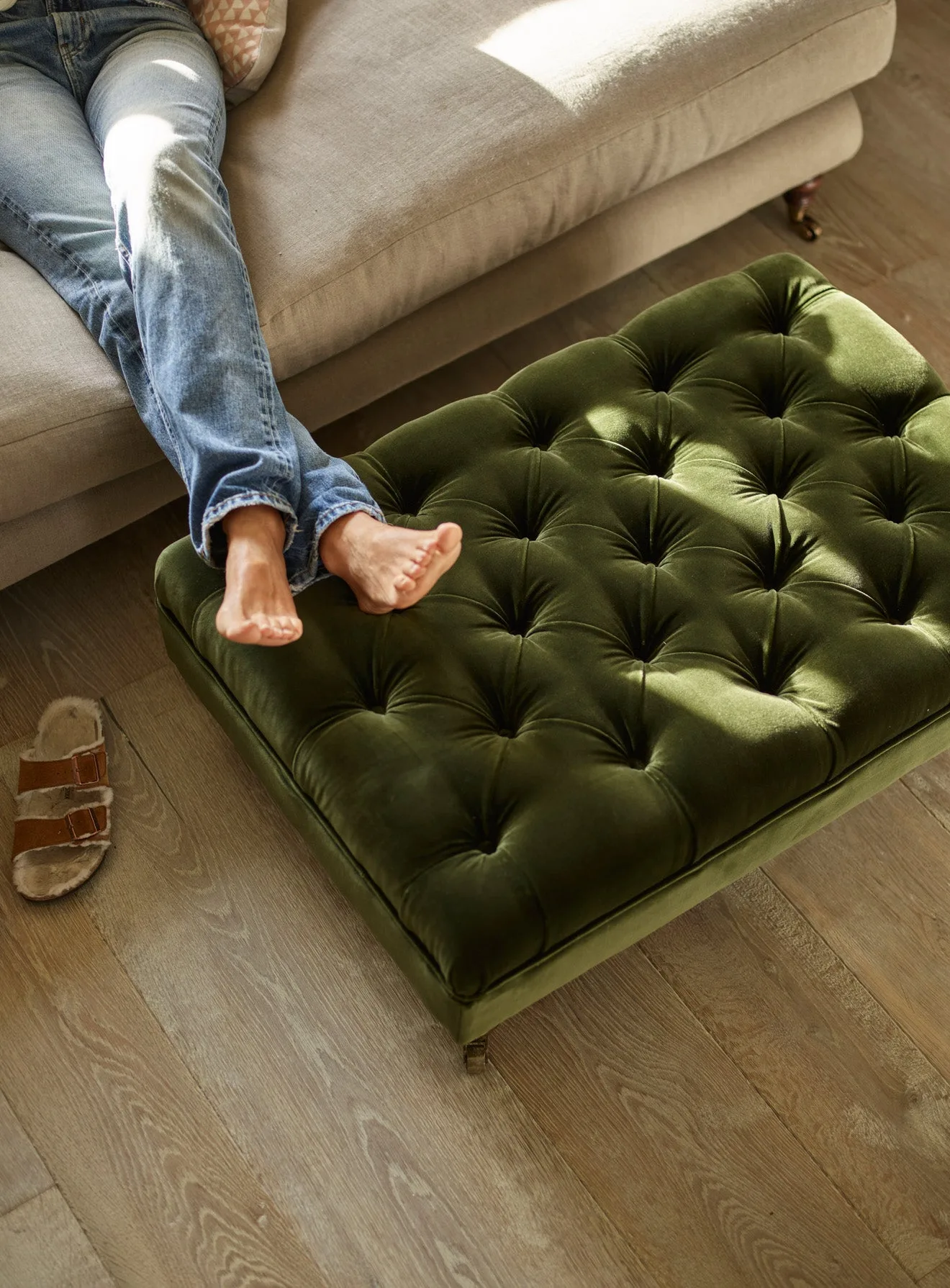
Elbert Footstool, Dark Olive Velvet
-
Remy Footstool, Natural Linen: Upholstered in natural linen with a foam core and feather jacket. The feather jacket gives a soft, pillow-like feel that suits lounging, but it may need regular plumping to keep its shape.
Remy Footstool, Natural Linen
Which footstool suits your room?
Best for
- Busy family living rooms where low maintenance matters
- Light, neutral, or coastal-style interiors
- Anyone who wants a soft, pillow-like footrest
Not for
- Rooms where a bold colour statement is the priority
- Households that want a firm surface for a tray without adding a table