Quick answer
Choose the Rengoku lightbox if you want a warm, steady focal glow and don't mind spending a little more; choose the Zenitsu lightbox if you want a slightly brighter-feeling scene and prefer to save a couple of dollars. Both share the same acrylic-framed layered-paper build, remote-controlled LED backlight, and USB or battery power. The real difference is the mood each scene sets, not the hardware.
What actually differs between these two Demon Slayer lightboxes
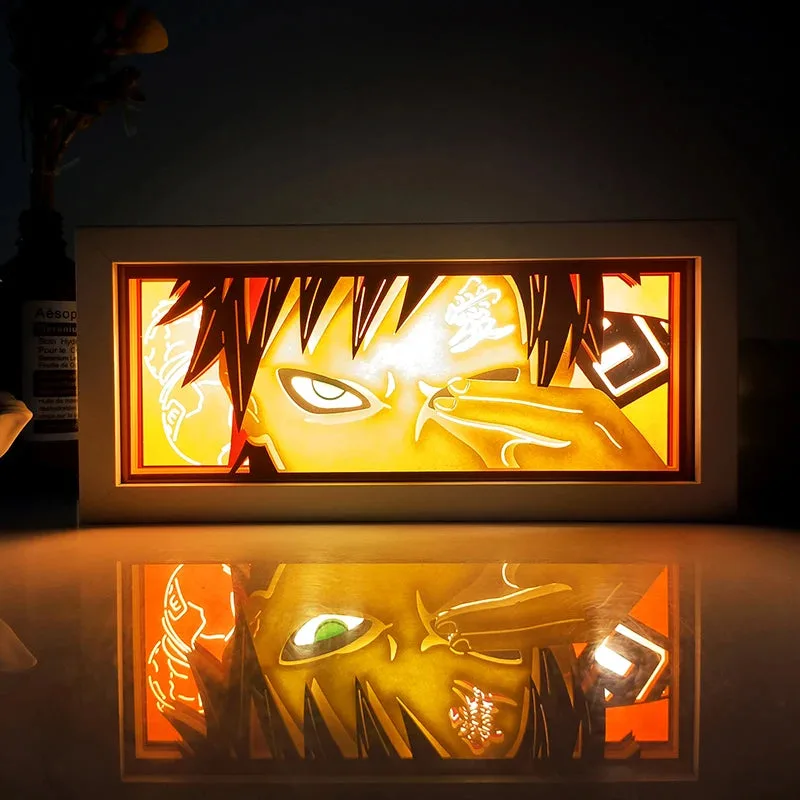
On paper, the Rengoku and Zenitsu lightboxes are close siblings. Each uses precision-cut layered paper inside a durable acrylic frame, each has a vibrant LED backlight with a remote control, and each can run from the included USB plug-in or from batteries for flexible placement. The catalog lists the Rengoku at USD 34.99 and the Zenitsu at USD 36.99, with both showing a comparison price of USD 49.99. That two-dollar gap is the only hard spec difference the store provides, so treat the choice as a mood decision first and a budget decision second.
Because the catalog does not list separate brightness ratings or color-temperature specs, you cannot pick one over the other based on measured light output. What you can compare is the scene: Rengoku's flame motif reads as a warm, steady centerpiece, while Zenitsu's lightning motif reads as a sharper, more energetic accent. Both are equally at home on a shelf, desk, or wall-mounted display.
How to decide based on your room and display habits
Start with where the lightbox will live. If it will sit on a desk or nightstand within arm's reach, the USB option keeps it running without battery swaps, and the remote makes it easy to dim or switch off from bed. If you want it on a high shelf or a wall where a cable would look messy, plan on the battery route and buy the required 3V lithium battery locally, since the remote needs one and it is not included due to shipping restrictions.
Next, match the scene to the rest of your Demon Slayer room decor. A warm flame scene tends to pair well with wood tones, warm lamps, and darker walls, while a lightning scene tends to pop against cooler colors and minimalist white or gray setups. If you already own a Tanjiro or Nezuko piece, a Rengoku lightbox keeps the palette warm and consistent; a Zenitsu lightbox adds contrast. Neither is objectively better, so pick the one that makes the corner feel intentional rather than crowded.
A note on the buy-3-get-1 offer and mixing characters
Both lightboxes fall under the same store promotion: add four quantities of any lightbox and get one free. That makes mixing characters more affordable than buying a single unit, so if you are torn between Rengoku and Zenitsu, the offer lets you bring both home plus two more without paying full price on the fourth. It also means you can pair a Demon Slayer lightbox with a Naruto or Attack on Titan piece and still qualify, which is useful if your shelf is not dedicated to one series.
If you only want one lightbox, ignore the promotion and focus on the scene you will actually look at every day. A lightbox you love at a single unit price beats four you feel neutral about.
Trade-offs to weigh before you buy
- Price vs. scene preference: The Rengoku costs USD 34.99 and the Zenitsu costs USD 36.99, so the Zenitsu asks about two dollars more for the same hardware. If you are indifferent between the two scenes, the Rengoku is the cheaper pick; if the lightning scene is the reason you are buying, the small premium is worth it.
- Warm focal glow vs. sharper accent: Rengoku's flame motif reads as a steady, warm centerpiece, while Zenitsu's lightning motif reads as a more energetic accent. Match the scene to your existing room palette rather than trying to judge brightness from the listing.
- USB convenience vs. battery freedom: Both lightboxes support USB plug-in (included) or battery power, but the remote requires a 3V lithium battery that is not included due to shipping restrictions. If you plan to mount it away from an outlet, buy the remote battery locally before the lightbox arrives.
- Single purchase vs. buy-3-get-1: The store promotion gives one free lightbox when you add four quantities of any lightbox, mixing characters is allowed. Only use the offer if you genuinely want multiple lightboxes; otherwise a single unit is the better value.
Product facts at a glance
- RENGOKU LIGHTBOX: RENGOKU LIGHTBOX: precision-cut layered paper in a durable acrylic frame, vibrant LED backlight with remote control, USB plug-in (included) or battery-powered, catalog price USD 34.99 (comparison price USD 49.99). The lower of the two prices and the same flexible power setup make it the easier default if you are budget-conscious and want a warm focal piece.
- ZENITSU LIGHTBOX: ZENITSU LIGHTBOX: precision-cut layered paper in a durable acrylic frame, vibrant LED backlight with remote control, USB plug-in (included) or battery-powered, catalog price USD 36.99 (comparison price USD 49.99). Costs about two dollars more than the Rengoku, so choose it for the lightning scene and contrast rather than for hardware differences.
- NARUTO LIGHTBOX: NARUTO LIGHTBOX: same layered-paper and acrylic build, LED backlight with remote, USB or battery power, catalog price USD 32.99 (comparison price USD 49.99). Useful if you want to mix series on one shelf or use the buy-3-get-1 offer across categories.
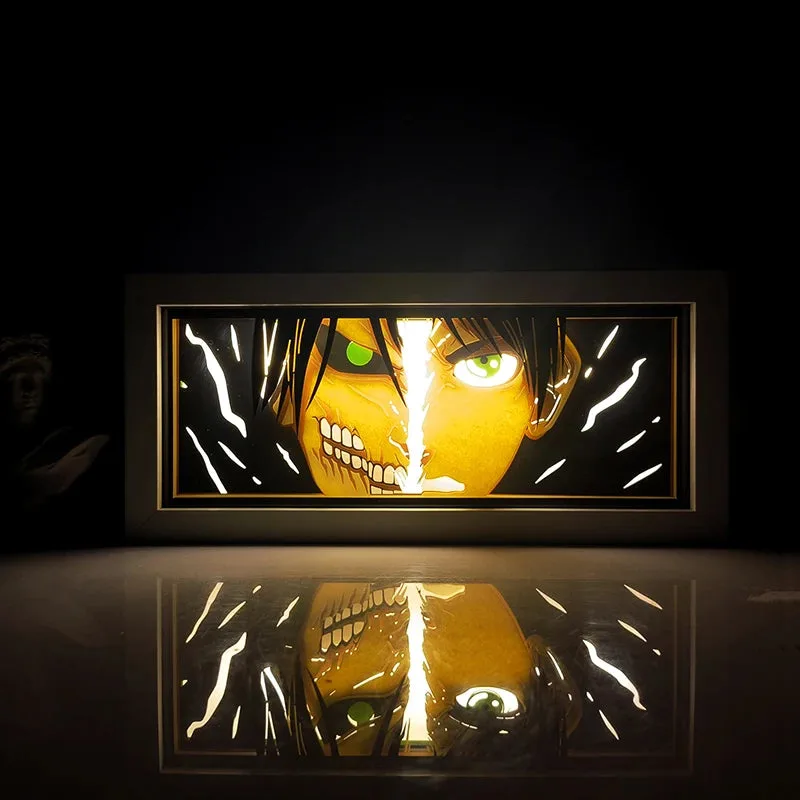
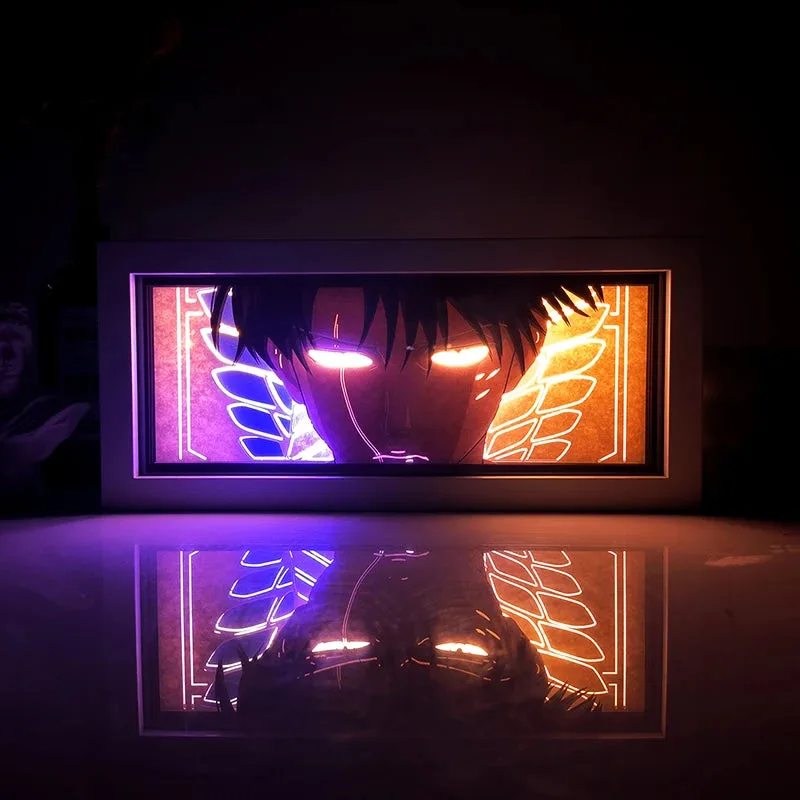
- LEVI LIGHTBOX: LEVI LIGHTBOX: same layered-paper and acrylic build, LED backlight with remote, USB or battery power, catalog price USD 35.99 (comparison price USD 49.99). A third option if your display spans Demon Slayer and Attack on Titan, and it qualifies for the same promotion.
Which Demon Slayer lightbox should you buy?
Best for
- Fans who want a warm, steady focal glow and prefer the lower USD 34.99 price
- Rooms with wood tones, warm lamps, or darker walls where a flame scene feels cohesive
- Buyers who already own a Tanjiro or Nezuko piece and want to keep the palette consistent
Not for
- Shoppers who specifically want the lightning motif and cooler contrast, they should choose the Zenitsu lightbox instead
- Anyone who needs a measured brightness or color-temperature rating, since the catalog does not list one for either model
- Buyers who want a battery-only display and are unwilling to buy the required 3V lithium remote battery locally