Quick Answer
A standard leash gives you the most reliable control and is the safer default for large dogs, reactive dogs, and busy sidewalks. A retractable leash is useful for controlled sniff-and-roam sessions in open, low-traffic areas, but it should not replace a fixed-length leash for training or crowded walks. If you want one leash that handles most situations, choose a standard leash; add a retractable only for specific, low-risk outings.
Most leash problems start with the wrong tool for the moment, not a bad dog. A retractable leash and a standard leash solve different problems: one trades control for freedom, the other trades freedom for control. Knowing which trade-off fits your walk keeps both you and your dog safer.
This comparison focuses on what actually changes your walk: how each leash type handles tension, how quickly you can respond, and what that means for large dogs, puppies, and dogs who pull. It also covers a few real products from our shelves so you can see how material and hardware choices affect daily use.
How Each Leash Type Actually Works
A standard leash is a fixed length of material with a handle at one end and a clip at the other. Because the length never changes, your dog's range is predictable and your hand position stays consistent. That predictability is why standard leashes are the default for training, vet visits, and any setting with cars, cyclists, or other dogs nearby.
A retractable leash houses a cord or tape on a spring-loaded reel inside a handle. You can lock it at a chosen length or let it extend as your dog moves away. The mechanism gives your dog more room to explore, but it also means the leash is often under light tension, and that constant tension can teach a dog to pull rather than walk loosely.
- Fixed-length leashes keep your dog's position predictable, which matters most near roads and crowds.
- Retractable leashes reward forward movement with more line, which can unintentionally reinforce pulling.
Control and Response Time
Control comes down to how fast you can shorten the distance between you and your dog. With a standard leash, you can gather slack in your hand or step into your dog's path immediately. With a retractable leash, you must first find and press the lock button, then reel the line back in while your dog may still be moving away. That delay is the core safety concern.
For large dogs, the delay matters more because the forces are larger. A 70-pound dog hitting the end of a fully extended retractable line can generate a sudden jolt on your hand, wrist, and the dog's neck. A standard leash keeps that distance short, so corrections and redirections stay gentle and immediate.
- Practice locking and unlocking a retractable leash in your driveway before using it on a real walk.
- Keep a standard leash clipped on for the first and last five minutes of any walk, when traffic and triggers are most likely.
Safety Risks Specific to Retractable Leashes
The most common retractable-leash injuries come from cord burns and entanglement. Thin cord can wrap around legs, fingers, or another dog before anyone notices. In a panic, a dropped handle can retract and snap against a dog or a person. These risks are manageable in open fields but hard to manage on narrow sidewalks or shared paths.
Retractable leashes also make it difficult for other people to read your dog's intent. A dog on a long, loose line may look off-leash, which can startle joggers, children, or owners of nervous dogs. If your route includes any of those, a standard leash is the more considerate and predictable choice.
- Never clip a retractable leash to a collar on a dog who lunges; use a harness to reduce neck strain.
- Avoid retractable leashes entirely around traffic, bikes, strollers, and off-leash dogs.
Where Retractable Leashes Earn Their Place
Retractable leashes are genuinely useful for one job: giving a dog safe, supervised room to sniff and move in an open area with no traffic and good visibility. Sniffing is mentally tiring in a good way, and a little extra line can make a decompression walk more satisfying for both of you. Used this way, the leash is a tool for enrichment, not for control.
They also help owners who have limited mobility or grip strength and cannot manage a long line by hand. The reel does the winding for you. If that is your situation, choose a tape-style retractable rather than a thin cord, and keep the lock engaged except during dedicated sniff breaks.
- Reserve the retractable for open parks, empty fields, and quiet trails with clear sightlines.
- Switch back to a fixed leash before you reach the parking lot, street, or trailhead.
Materials, Hardware, and Daily Durability
On a standard leash, the material determines how it feels and how long it lasts. Leather softens with use and develops a broken-in grip, while nylon is lighter and easier to clean. Hardware matters too: a brass snap resists corrosion better than plated metal, and a stitched handle is less likely to fail than a glued one.
On a retractable leash, the reel mechanism is the weak point. Sand, dirt, and moisture can jam the spring, and a jammed reel is a leash you cannot shorten. Rinse and dry the housing after muddy walks, and replace the unit if the lock stops holding. No leash lasts forever, and a slipping lock is a safety issue, not a minor annoyance.
- Check the snap and stitching on any leash monthly, especially with strong pullers.
- Replace a retractable leash the moment the lock fails to hold under light tension.
Trade-Offs at a Glance
- Control vs. freedom: A standard leash keeps your dog within a fixed, predictable distance. A retractable leash trades that predictability for room to roam, which is a real benefit in open spaces and a real liability near roads. Choose control as your default and freedom as the exception.
- Response time: Shortening a standard leash is instant. Locking and reeling a retractable takes a moment, and that moment is longer with a large dog already moving away from you. If your dog is strong, fast, or reactive, the standard leash wins on response time.
- Durability and maintenance: Leather and nylon leashes wear visibly and are easy to inspect. Retractable reels hide their springs and lock mechanisms, so problems show up as sudden failures rather than gradual wear. Inspect standard leashes monthly; test a retractable lock before every walk.
Leash and Walk Gear Facts
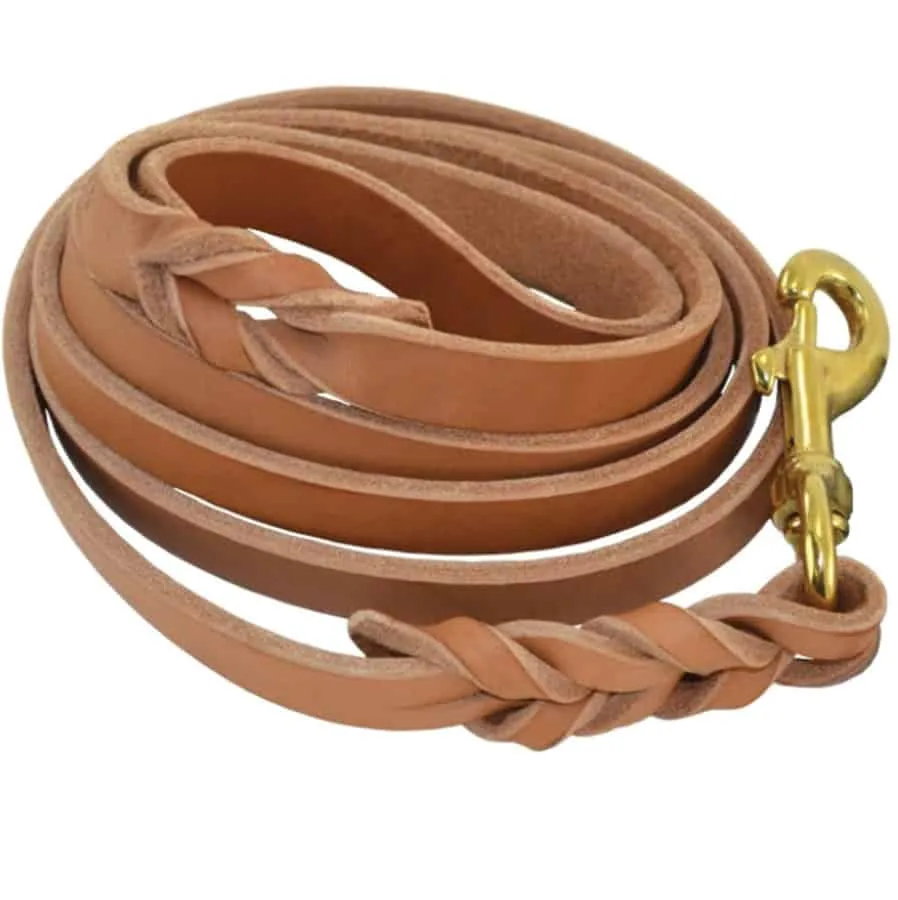
- Twisted Latigo Leather Dog Leash Brown: Reverse braided genuine latigo leather, stitched at the handle with a brass snap closure, sized 1 inch by 6 feet. A 6-foot fixed length keeps your dog's range predictable, and the brass snap plus stitched handle address the two hardware points most likely to fail on a standard leash. The leather is designed to soften over time, so it breaks in rather than wearing out quickly.
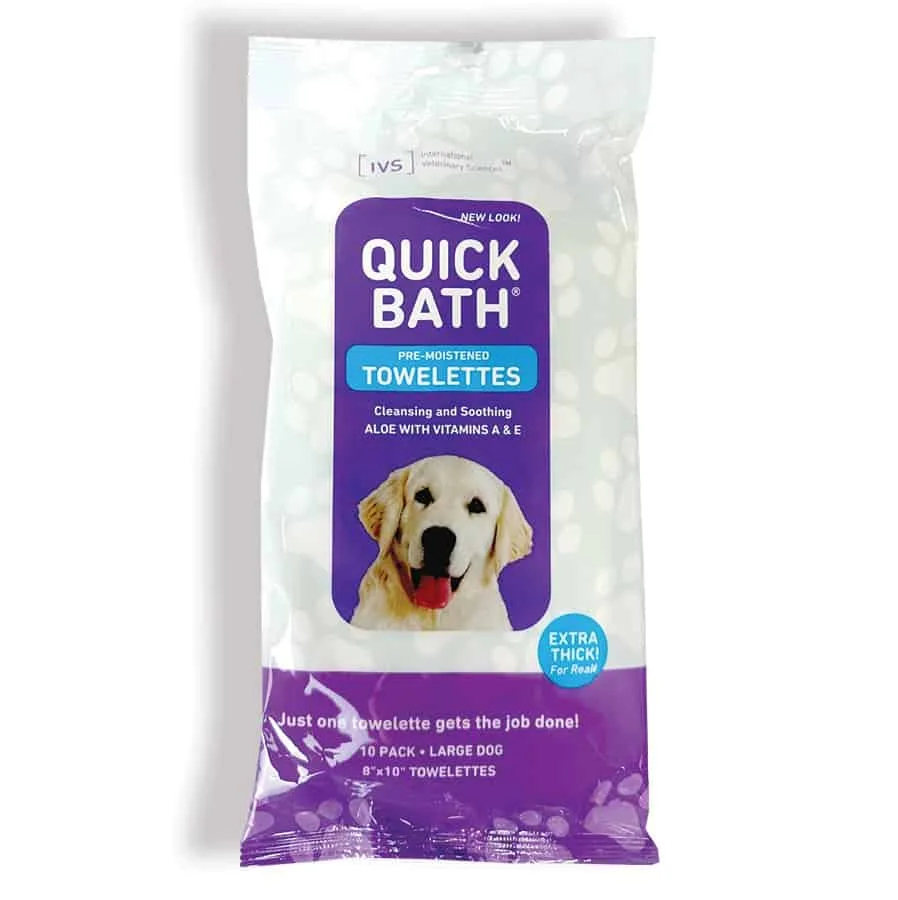
- Quick Bath Large Dog Wipes 10 Ct: Extra-thick 8 x 10 inch towelettes with an antibacterial formula, Vitamin A and E, and aloe vera; 10 per pack. Walks in tall grass or mud mean dirty paws and coats. Keeping wipes by the door lets you clean up before your dog tracks debris onto furniture or into the car, and the size fits large dogs without folding.
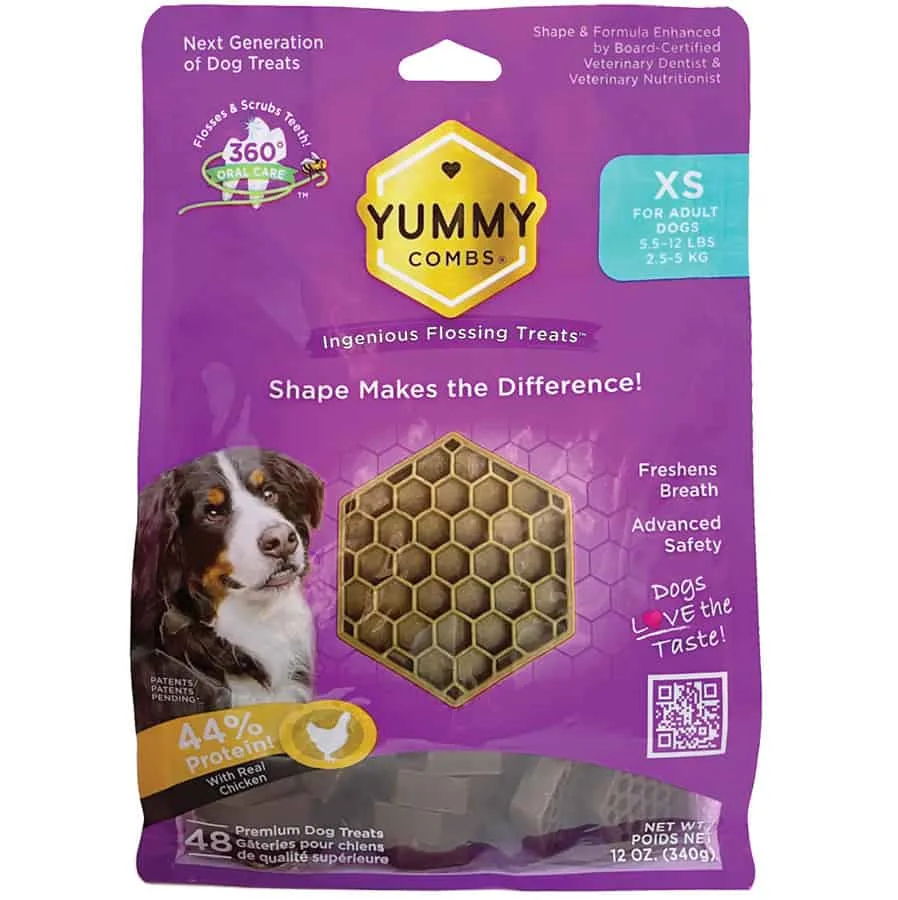
- Yummy Combs Dental Treats for X-Small Dogs 5.5-12 lbs 48 Ct (12 oz): Dental treats with a functional shape and 44% high-quality protein, designed to work like dental floss; 48 count for dogs 5.5 to 12 pounds. A post-walk routine is a good time to build in dental care. This option is sized specifically for extra-small dogs, so it is not the right pick for the large dogs this leash comparison focuses on.
Which Leash Fits Your Walk
Best for
- Owners of large or strong dogs who need immediate, reliable control
- Puppies and dogs in training, where consistent leash length teaches loose walking
- Walks on sidewalks, near traffic, or in areas with other dogs and people
Not for
- Open-field sniff sessions where a dog needs room to explore safely
- Owners with limited grip strength who cannot manage a long line by hand
- Anyone who wants one leash to cover both training and free-roam walks
Pick a standard leash as your everyday tool, and treat a retractable as a specialized extra for open, low-traffic spaces. That combination gives your dog room to sniff without giving up the control that keeps both of you safe on the walks that matter most.