Quick answer
If your priority is deep skin tightening and lasting collagen remodeling with minimal downtime, choose RF microneedling. For surface-level texture improvement and scar reduction at a lower cost, traditional microneedling still works well.
How they differ in mechanism
Traditional microneedling uses fine needles to create micro-injuries in the skin, triggering a natural wound-healing response that boosts collagen and elastin. The results depend entirely on the body's repair process, which can be slow and inconsistent.
RF microneedling adds radiofrequency energy delivered through the needles. The heat penetrates deeper into the dermis, contracting existing collagen fibers and stimulating new collagen production simultaneously. This dual action produces more pronounced tightening and lifting effects, especially for sagging skin or deep wrinkles.
Pain, downtime, and recovery
Traditional microneedling is generally less painful because no heat is involved. Numbing cream is still recommended. Downtime is shorter—redness and mild swelling resolve in 24–48 hours.
RF microneedling feels more intense due to the heat pulses. Most devices include built-in cooling (like the cold therapy on the EMRF M8 Gold RF Microneedle Machine) to soothe the skin during treatment. Downtime can last 2–4 days, with redness and possible pinpoint scabbing. The trade-off is more dramatic, longer-lasting results.
Cost and equipment considerations
Traditional microneedling devices are simpler and more affordable, making them accessible for at-home use or lower-budget clinics. However, they require multiple sessions to achieve noticeable tightening.
RF microneedling machines are more expensive upfront—like the EMRF M8 Gold RF Microneedle Machine priced at around $1,080—but combine multiple technologies (EMRF, gold RF microneedles, and cold therapy) into one system. This can replace separate devices for tightening, resurfacing, and soothing, offering long-term value for clinics or serious home users.
Trade-offs at a glance
- Depth of treatment: Traditional microneedling reaches the upper dermis (0.5–2.0 mm). RF microneedling can go deeper (up to 3.5 mm) with controlled heat, making it more effective for loose skin and deep wrinkles.
- Results timeline: Traditional: subtle improvement after 3–6 sessions, results peak at 3 months. RF: visible tightening after 1–2 sessions, continued improvement for up to 6 months. If you want faster, more dramatic results, RF microneedling saves time overall.
- Skin type safety: Traditional microneedling is safe for all skin tones but may cause hyperpigmentation if done too aggressively. RF microneedling with insulated needles is safer for darker skin because heat is delivered below the epidermis, minimizing surface pigment risk.
Product spotlight
-
EMRF M8 Gold RF Microneedle Machine Ice Hammer Skin Tightening Anti-aging Device: The EMRF M8 Gold RF Microneedle Machine combines EMRF, M8 gold RF microneedles, and cold therapy in one device. This 3-in-1 design lets you tighten, stimulate collagen, and soothe redness during a single session, reducing the need for multiple machines.
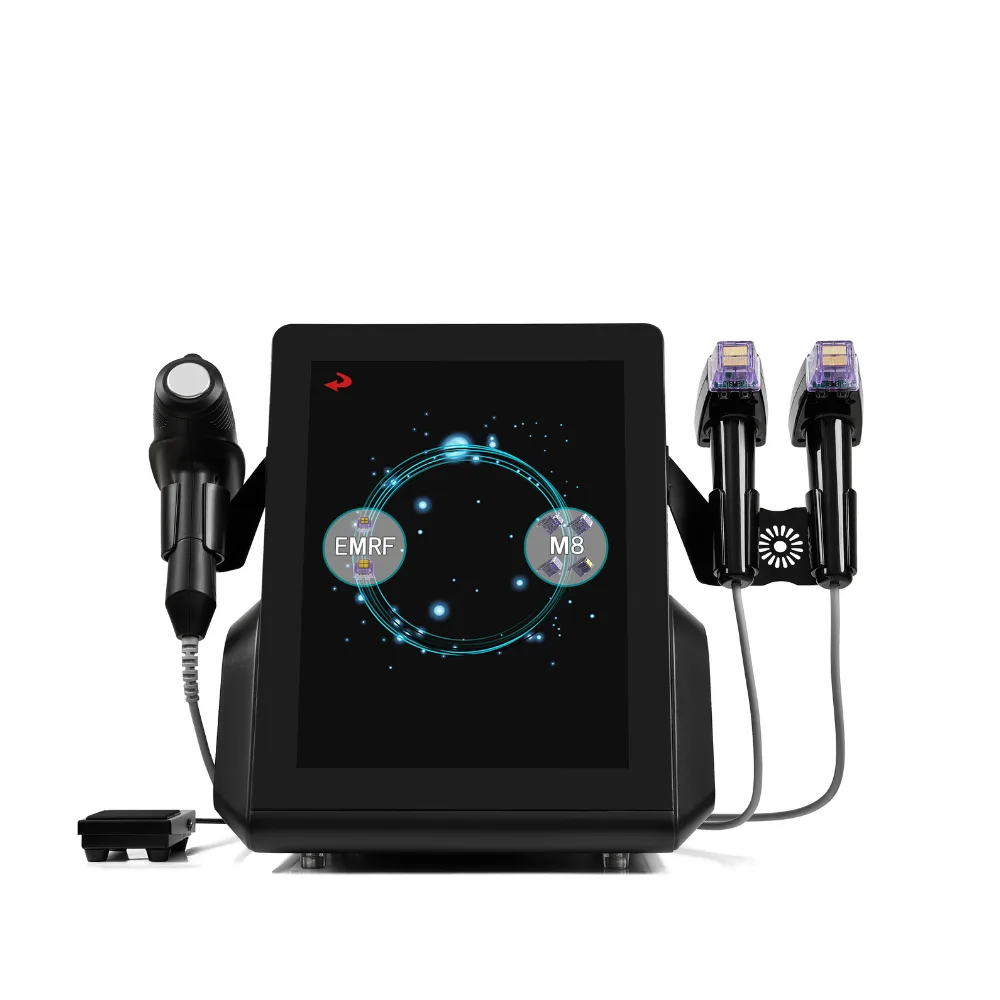
EMRF M8 Gold RF Microneedle Machine Ice Hammer Skin Tightening Anti-aging Device
Which one is right for you?
Best for RF microneedling
- Anyone with moderate to severe skin laxity who wants visible tightening
- Those with deep wrinkles or acne scars who prefer fewer sessions
Better suited to traditional microneedling
- Budget-conscious users seeking an affordable at-home option
- People with very sensitive skin who cannot tolerate heat or longer downtime