Quick answer
Choose a dedicated TV backlight if you want bias lighting that reduces eye strain behind a single monitor. Pick an RGB light bar if you need flexible placement, color customization, and the ability to light a desk, shelf, or gaming area—not just the back of a screen.
Placement flexibility changes everything
A TV backlight is designed to stick to the rear edge of a monitor or television. It creates a soft halo that reduces contrast strain, but it stays in one spot. An RGB light bar, like the 17-inch TECKNET model, can sit on a desk, behind a monitor, under a shelf, or beside a PC case. If you rearrange your setup often or want to light multiple surfaces, a light bar gives you that freedom.
Color control and brightness trade-offs
TV backlights often offer a fixed white or warm bias light with limited color options. RGB light bars typically provide millions of colors and dynamic modes. The TECKNET RGB Light Bar, for instance, features 16 million DIY colors plus 125 scene modes, making it far more versatile for gaming or party atmospheres. However, if your only goal is to reduce eye fatigue during movie watching, a simpler bias light may be cheaper and easier to set up.
Power and mounting differences
Most TV backlights are USB-powered and include adhesive strips for permanent attachment. RGB light bars also use USB power, but they often come with a stand or clip so you can place them without sticking anything to your furniture. The TECKNET light bar uses a 2-pack design with a 270° ambient lighting angle, which means you can position each bar independently for broader coverage—something a single strip cannot achieve.
Decision rules: RGB light bar vs TV backlight
- Primary use case: If you want to reduce eye strain while watching movies or working on a single screen, a dedicated TV backlight is the simpler choice. If you want colored effects, dynamic scenes, and the ability to light multiple areas, go with an RGB light bar.
- Placement needs: TV backlights require a flat rear monitor surface and adhesive. RGB light bars with a stand or clip (like the TECKNET 17-inch model) can sit on a desk, shelf, or floor without permanent attachment. If you rent or change your desk layout often, a light bar avoids adhesive residue.
- Color and scene requirements: TV backlights usually offer a fixed white or limited color range. RGB light bars provide millions of colors and multiple scene modes. The TECKNET light bar includes 125 scene modes and app control for easy switching. For gaming, parties, or mood lighting, an RGB light bar is far more versatile.
- Power and setup: Both use USB power, but TV backlights are often a single strip that must be cut to size. RGB light bars come as ready-to-place units with individual power cables, making setup faster and mess-free.
Product spotlight
-
RGB Light Bar, 17" LED Light Bar 360 Degree Emitting, 16 Million colors, APP Control USB Powered, Color Changing TV Backlight, Ambient Lighting for Desk, PC, Gaming, Party, 2 Pack: Each light bar has 18 high-brightness LED beads (36 total in the 2-pack) and a 270° ambient lighting angle. This wide angle and dual-bar design let you light a desk, monitor back, and side shelf simultaneously, giving you more coverage than a single TV backlight strip.
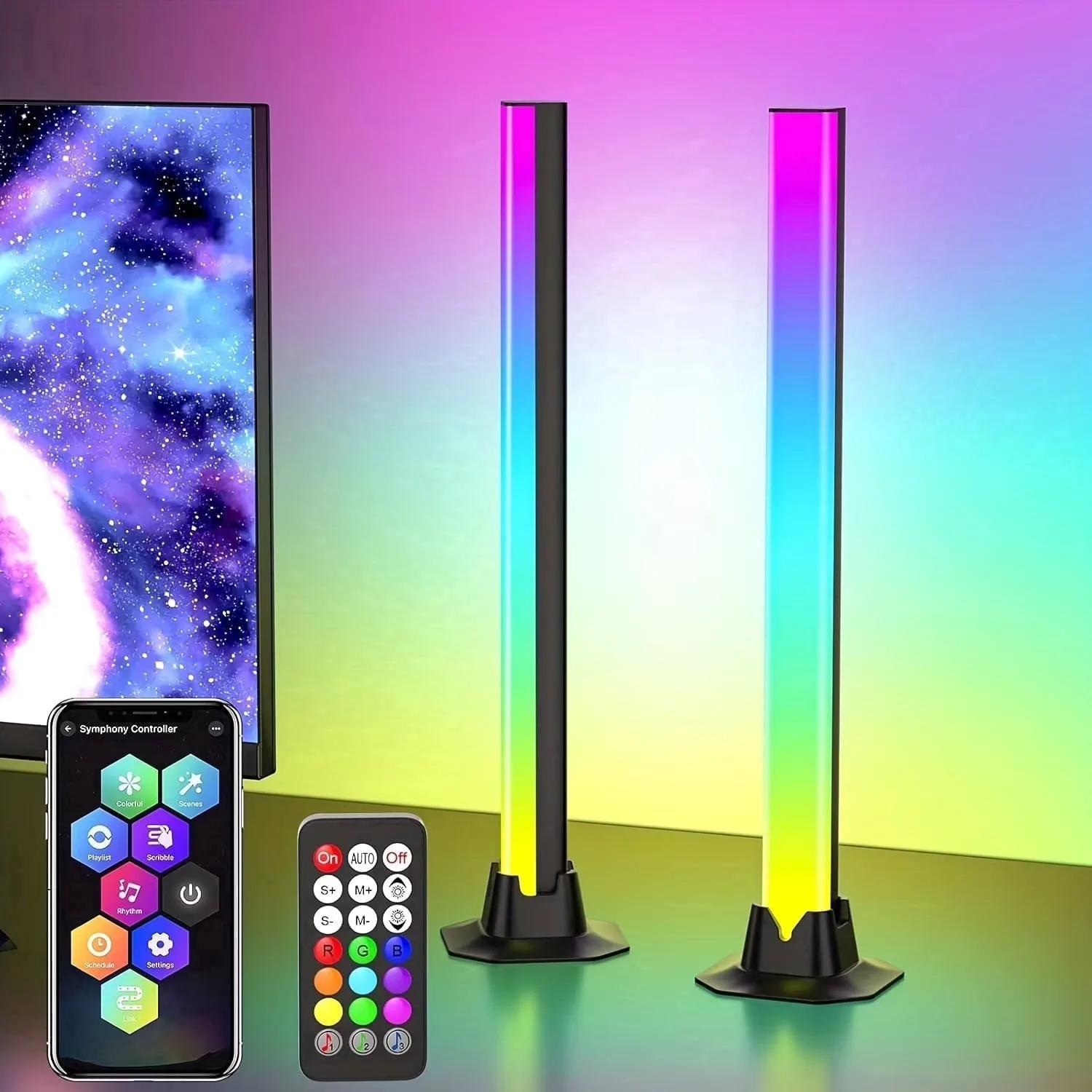
RGB Light Bar, 17" LED Light Bar 360 Degree Emitting, 16 Million colors, APP Control USB Powered, Color Changing TV Backlight, Ambient Lighting for Desk, PC, Gaming, Party, 2 Pack
Which setup fits you?
Best for
- Gamers who want dynamic, colorful ambient effects around their desk and PC
- Users who need flexible lighting that can move between a desk, shelf, or behind a monitor
- Anyone who wants app-controlled colors and scene modes without permanent adhesive
Not for
- Users who only need a simple white bias light behind a single TV or monitor
- Those who prefer a permanent, invisible strip that blends into the back of a screen