Why Your Rhino Baby Figure May Tip Over
If your rhino baby figure won't stand upright, you're not alone. Many small collectible figures can be tricky to balance, especially when they have a sitting pose or a forward-heavy body. The good news is that the issue is often simple to diagnose and fix without modifying the figure.
Before you try any adjustments, look at the figure's pose. A baby rhino sitting on its haunches naturally shifts weight toward the rear. If the figure's feet or base are not perfectly flat, or if the surface is slightly uneven, it may tilt forward or to one side. The rhino's large head and horns also add weight up front, which can pull the figure off balance.
Quick Checks Before You Do Anything
First, inspect the figure's underside. Look for any small plastic flash or mold lines that could prevent the figure from sitting flush. If you find a tiny bump, gently scrape it off with a fingernail or a soft tool. Avoid cutting or sanding painted areas.
Next, test the figure on a hard, level surface like a table or a shelf. A soft or uneven surface (like a bed or a carpet) can cause the figure to rock. If it stands fine on a hard surface, the problem is the display spot, not the figure.
If the figure still tips, check the balance by placing it on a mirror or glass. This lets you see which foot or edge is lifting. You can then decide if a small display stand or a dab of museum putty is the right solution.
What the Catalog Confirms About the Rhino Baby Figure
The Rhino Baby Sitting figure depicts a white rhino calf in a seated pose. White rhinos are the second largest land animal and can weigh around 2 tons as adults. The figure's design includes two horns on the head, made of keratin, with the front horn averaging 90 cm (up to 150 cm) in real life. These horns are prominent on the figure and contribute to its forward weight.
The figure's sitting posture means its center of gravity is relatively low and centered over the rear. This is generally stable, but the forward-heavy head and horns can cause the figure to tip if the surface is not level or if the figure is placed on an incline. The catalog does not mention any specific balance issues or recommended display surfaces, so these tips are based on general figure care.
Product Facts
-
Rhino Baby Sitting: The white rhino is the second biggest land animal and can weight around 2 tons. The figure represents a baby rhino, which is proportionally smaller but still has a robust body. Its sitting pose is designed to be stable, but the large head and horns add forward weight.
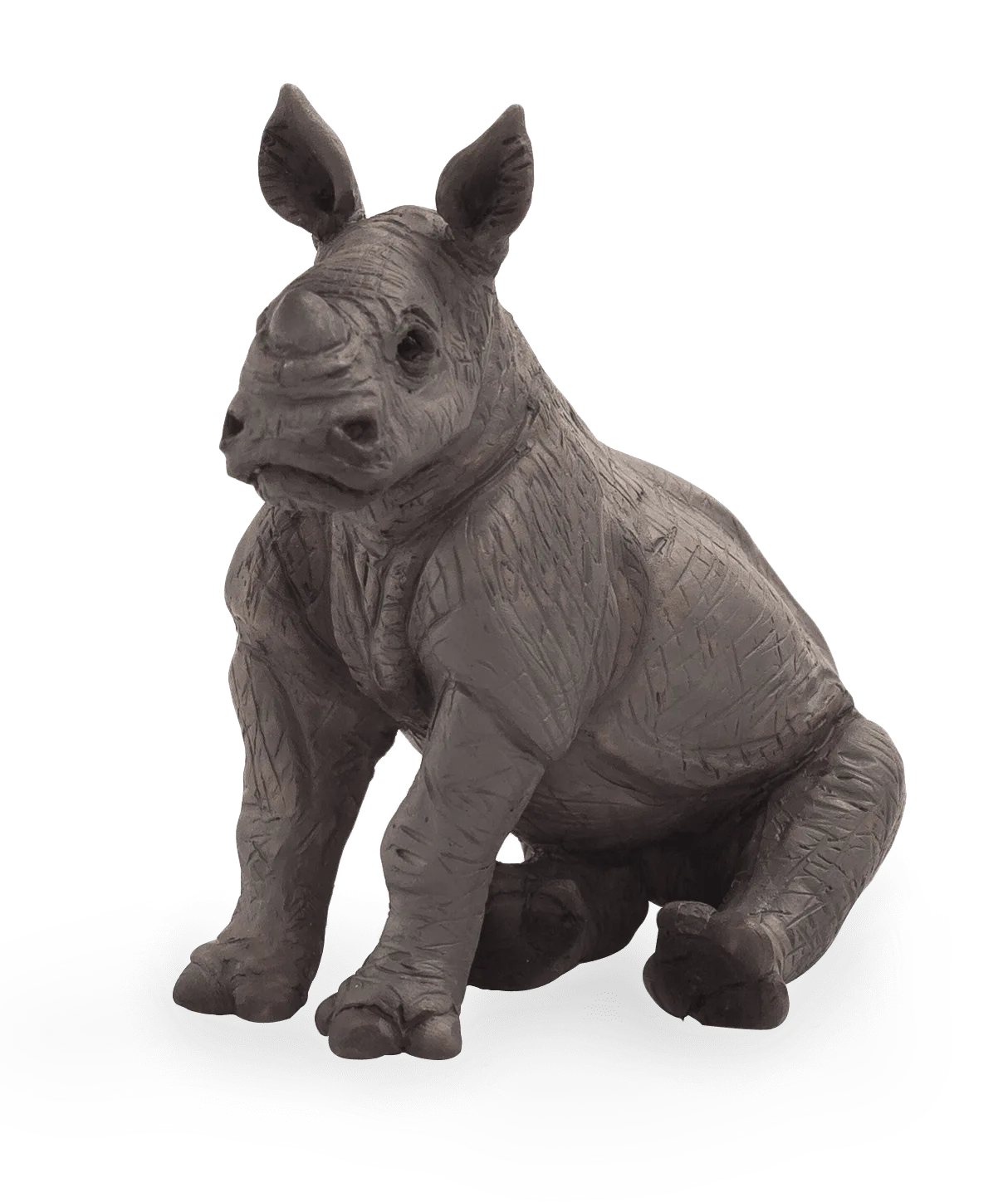
Rhino Baby Sitting
-
Rhino Baby Sitting: The white rhino has 2 horns on its head that are made of keratin. The white rhinos front horn averaging a length of 90cm but can get up to 150cm! The figure includes two horns, which extend forward. This extra weight at the front can cause the figure to tip forward if not placed on a perfectly level surface.
Display Tips for a Stable Rhino Baby Figure
If you want to keep your rhino baby figure standing without any adhesive, choose a display spot that is flat and stable. A wooden shelf or a glass cabinet works well. Avoid placing it near the edge where it might be bumped.
For collectors who want extra security, a small piece of museum putty or a clear silicone dot under the figure's rear feet can prevent sliding and tipping. This is invisible and removable. Do not use glue or double-sided tape that could damage the paint or plastic.
If you have multiple figures, group the rhino baby with other sitting animals to create a natural scene. The rhino's pose works well in a diorama or on a themed shelf. Just make sure each figure has its own stable base.