Quick answer
Set the booster seat height so your child's elbows sit comfortably at table level and their feet rest flat on the floor or a footrest. The Right Height Adjustable Booster Seat offers three height adjustments to match your growing child.
Why the right height matters at the dining table
A booster that is too low leaves your child reaching up, which can lead to slouching and spilled food. Too high, and their knees may hit the table or they may feel unstable. The goal is a relaxed 90-degree bend at the elbows and hips, with feet supported.
Because children grow quickly, a seat with multiple height settings lets you fine-tune the fit without buying a new seat. The Right Height Adjustable Booster Seat provides three height adjustments, so you can move up a level as your child's legs get longer.
When to change the height setting
Check the fit every few months, or whenever you notice your child straining to reach the table or their feet dangling. A simple test: have your child sit in the booster with their back against the backrest. If their elbows are below the tabletop, raise the seat. If their thighs are pressed against the table edge, lower it.
Keep in mind that the booster is designed for ages 1 to 5. As your child approaches the upper end of that range, you may find the highest setting works best until they are ready for a regular chair.
How to adjust the booster seat height step by step
- Place the booster on a stable dining chair: Set the booster on a chair with a backrest, away from table edges or walkways. Make sure the chair seat is flat and the booster sits flush. Check that the booster does not wobble before seating your child.
- Identify the height adjustment mechanism: Locate the adjustment tabs or levers under the seat. The Right Height Adjustable Booster Seat uses a simple mechanism to change between the three height settings. Never force the mechanism; it should move smoothly when used correctly.
- Set the desired height before your child sits: Adjust the booster to the lowest setting first, then raise it one level at a time until your child's elbows are at table height. Always adjust while the seat is empty. Adjusting with a child in the seat can cause pinching or tipping.
- Seat your child and check the fit: Have your child sit back with their bottom against the back of the booster. Check that their feet rest flat on the floor or a footrest, knees bend at about 90 degrees, and elbows are level with the table. If feet dangle, add a footrest or adjust the chair; do not raise the booster higher than needed.
- Secure the booster and your child: Use the booster's attachment straps to secure it to the dining chair if provided, and always use the safety harness to buckle your child in. A secured booster prevents sliding and tipping during meals.
- Clean the booster regularly: Wipe the PVC-free surface with a damp cloth and mild soap after each use. Avoid harsh chemicals or abrasive cleaners that can damage the material. Regular cleaning prevents sticky buildup that can interfere with the adjustment mechanism.
Product facts
-
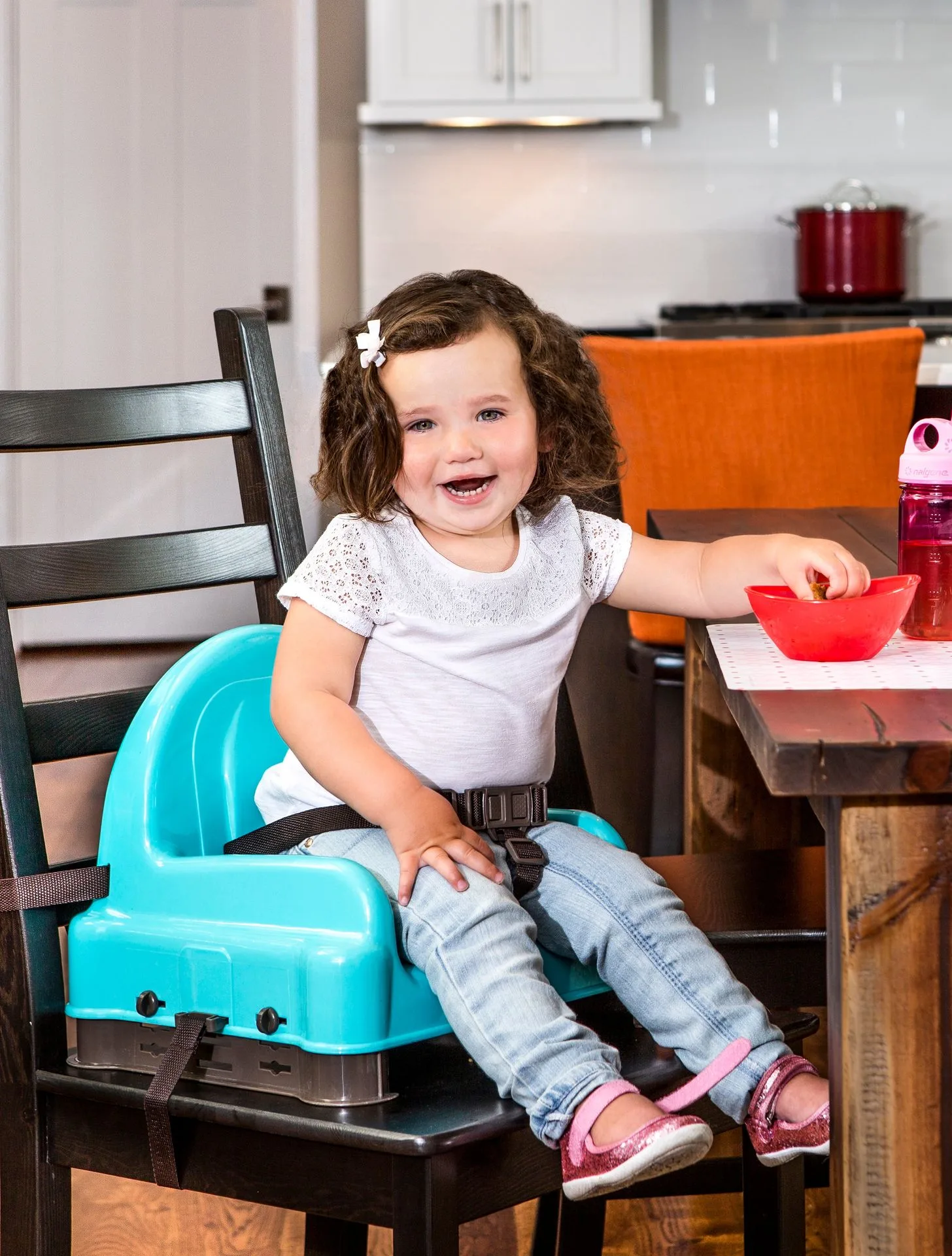
Right Height Adjustable Booster Seat - Turquoise: Model #1664 features three height adjustments and is PVC-free. Three settings let you adapt the seat as your child grows, and PVC-free material gives peace of mind for everyday use.
Right Height Adjustable Booster Seat - Turquoise