How Ring Rush turns a pool into a search-and-find arena
Ring Rush is a swimming pool game where memory and speed meet underwater. Each round starts with a card to memorize: which colored rings you need and in what order. Then you dive in, find the right rings, stack them around your arms in the correct sequence, and race back up. The first player to win five points is the Ring Rush champion.
It is built for ages 6 and up, so it suits kids who are comfortable putting their face in the water and swimming short distances. The game does not require reading or complicated setup—just a pool, the rings, and the cards.
Setting up a round of Ring Rush
The supplied game description covers the core loop—memorize, dive, stack, return—but does not list exact ring quantities or card counts. Use the following steps as a practical framework; adjust ring distribution to your pool size and the number of players.
- 1. Scatter the rings: Spread the colored rings across the pool area where players can safely dive and surface. Keep them visible enough for a search-and-find challenge but not clustered in one spot.
- 2. Agree on a starting point: Choose a consistent edge or shallow spot where players wait and where they return to stack and score. This keeps the race fair and avoids collisions.
- 3. Reveal the card: Show one card to all players at the same time. Give a short, consistent window to memorize the ring colors and their order before the dive begins.
- 4. Dive and collect: On the signal, players swim out, find the matching colored rings, and stack them around their arms in the order shown on the card.
- 5. Return and score: The first player back to the starting point with the correct stack wins the point. The first to five points wins the game.
What the game asks players to do
-
Ring Rush | Underwater Search and Find Game (ages 6+): Memorize the card and dive into the pool to find the right colored rings. This is the core memory-and-search mechanic that separates Ring Rush from simple diving games.
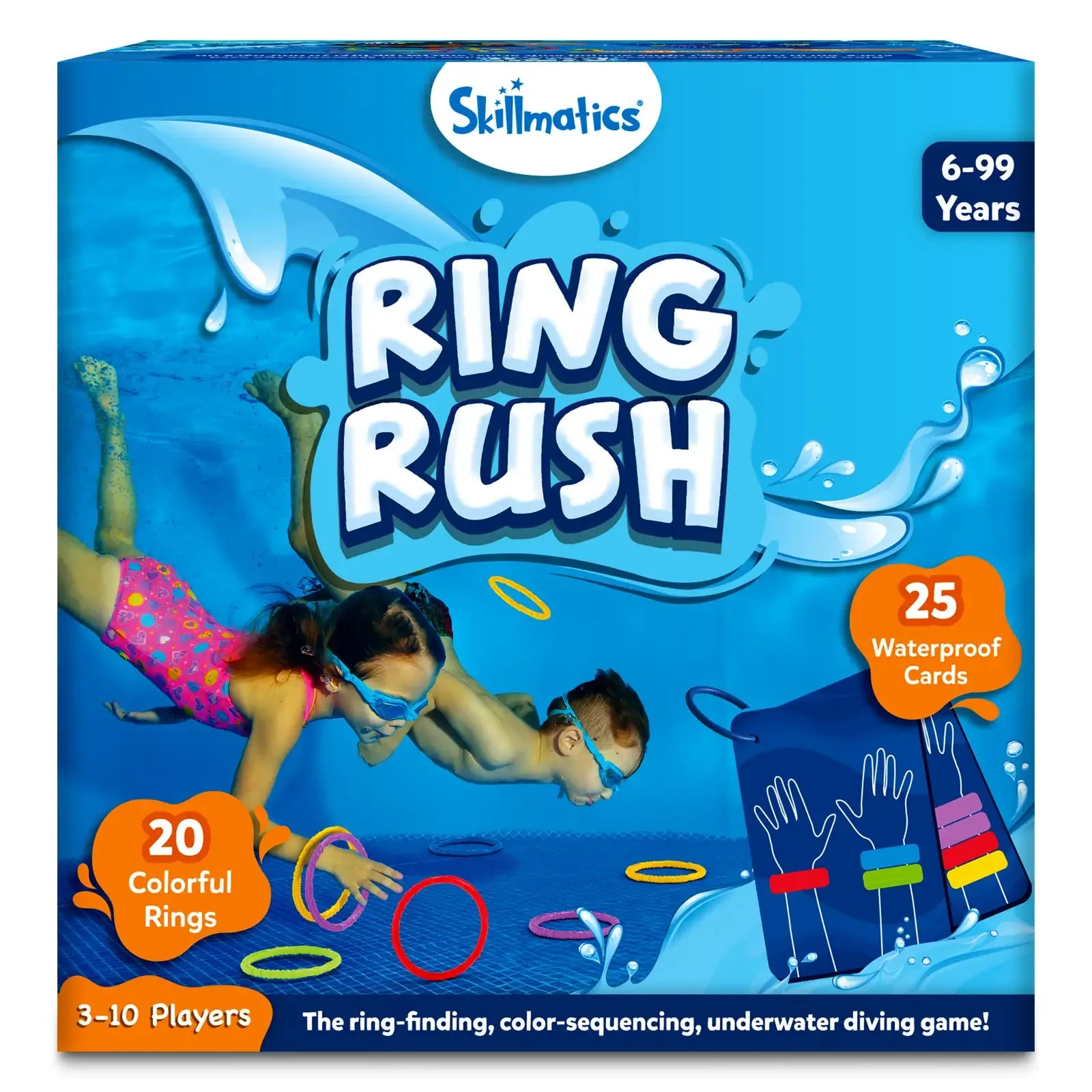
Ring Rush | Underwater Search and Find Game (ages 6+)
-
Ring Rush | Underwater Search and Find Game (ages 6+): Swim as fast as you can to grab and stack 'em in the correct order around your arms, and be the first to bolt back up to win a point! Order matters—stacking the right colors in the wrong sequence does not earn the point.
-
Ring Rush | Underwater Search and Find Game (ages 6+): The first to win 5 points is the RING RUSH champion! Knowing the win condition helps you plan round length and keep younger players engaged.
Pool play tips for smoother, fairer rounds
These tips are practical suggestions for running the game, not manufacturer instructions. Always prioritize water safety and supervise children in and around the pool.
- Match ring spread to swimming ability: For younger or less confident swimmers, keep rings in shallower water and closer to the starting point. Stronger swimmers can search a wider area.
- Use a clear signal: A whistle or a simple countdown gives everyone the same start and reduces false starts.
- Check the stack before awarding a point: Confirm both the colors and the order match the card. A quick visual check keeps the game honest without slowing it down.
- Keep rounds short: Because the first to five points wins, you can play several short rounds. This helps younger players stay focused and gives everyone more turns.
- Pair weaker and stronger swimmers: If ages or abilities vary widely, consider teams or a handicap (such as a shorter search area for younger players) so the game stays fun for everyone.
What to check before you buy
The supplied product information confirms the age range (6+) and the play loop, but does not list the exact number of rings, cards, or storage details. If those specifics matter to you—for example, if you have a very large pool or multiple children who want to play at once—check the full product listing or packaging before purchasing.
Ring Rush is a pool-only game: it requires swimmers who can dive and retrieve objects. It is not a dry-land matching game, so consider whether your child is comfortable underwater before buying.