Two Cuffs, One Decision
The Rio Cuff Bracelet and the Arlo Cuff Bracelet are close siblings in the LELET NY catalog: both are open resin cuffs at the same catalog price of USD 102.48, both come in a single O/S size, and the records explicitly recommend wearing them together. If you are choosing one, the decision comes down to color, inlay material, and how you want the cuff to sit in your everyday rotation.
This comparison sticks to what the supplied catalog confirms. Where a detail is not in the records, such as exact inner circumference or care instructions, we say so rather than guess.
What Each Cuff Is Made Of
-
Rio Cuff Bracelet: Hand-swirled resin in a soft cream hue, set with jade-dyed turquoise semi-precious stones. The cream base and turquoise stones give the Rio a light, natural look that reads warm rather than metallic.
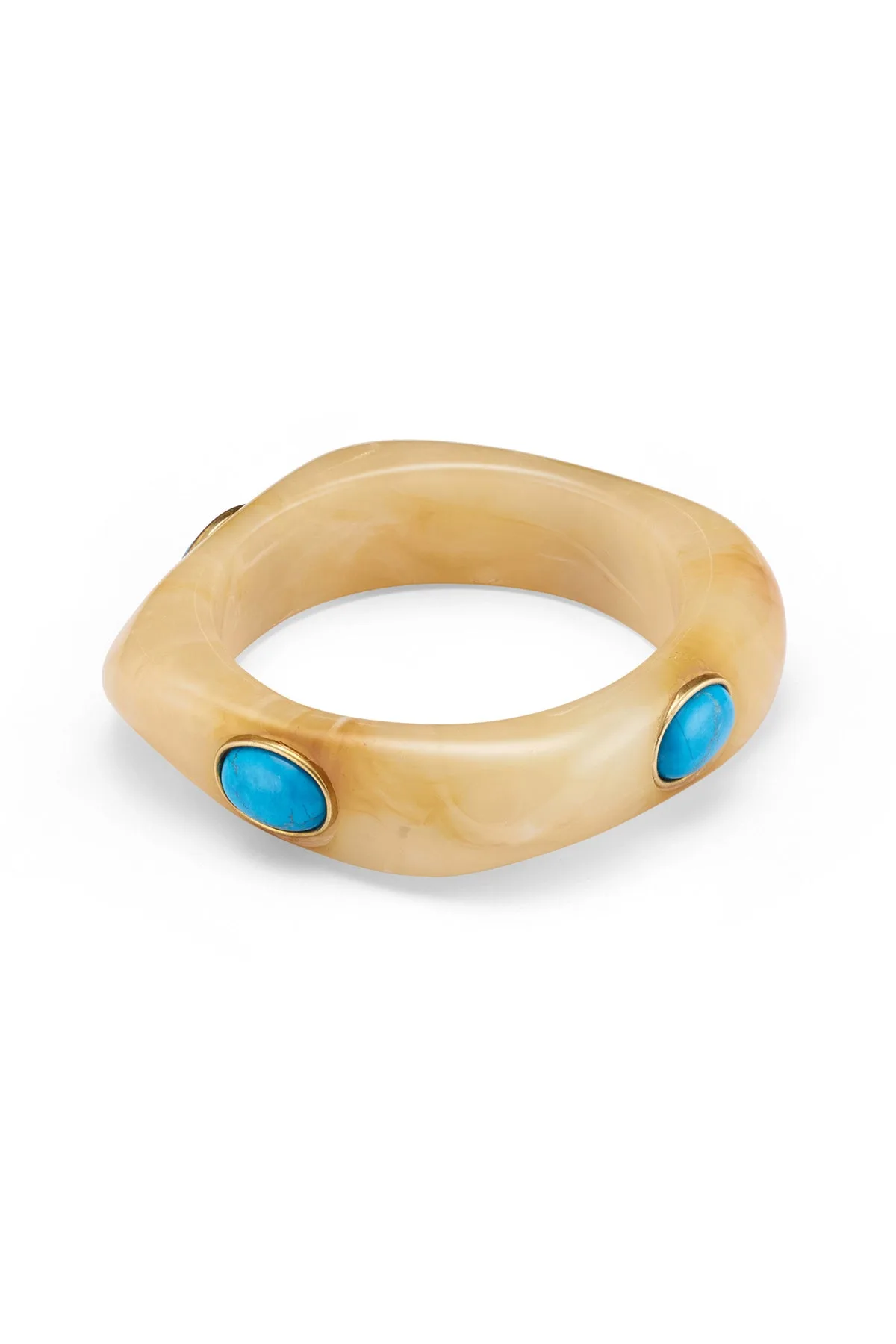
Rio Cuff Bracelet
-
Arlo Cuff Bracelet: Hand-swirled tortoise resin inlaid with genuine abalone shell. The tortoise-and-abalone combination is darker and more iridescent, so the Arlo leans richer and more traditional.
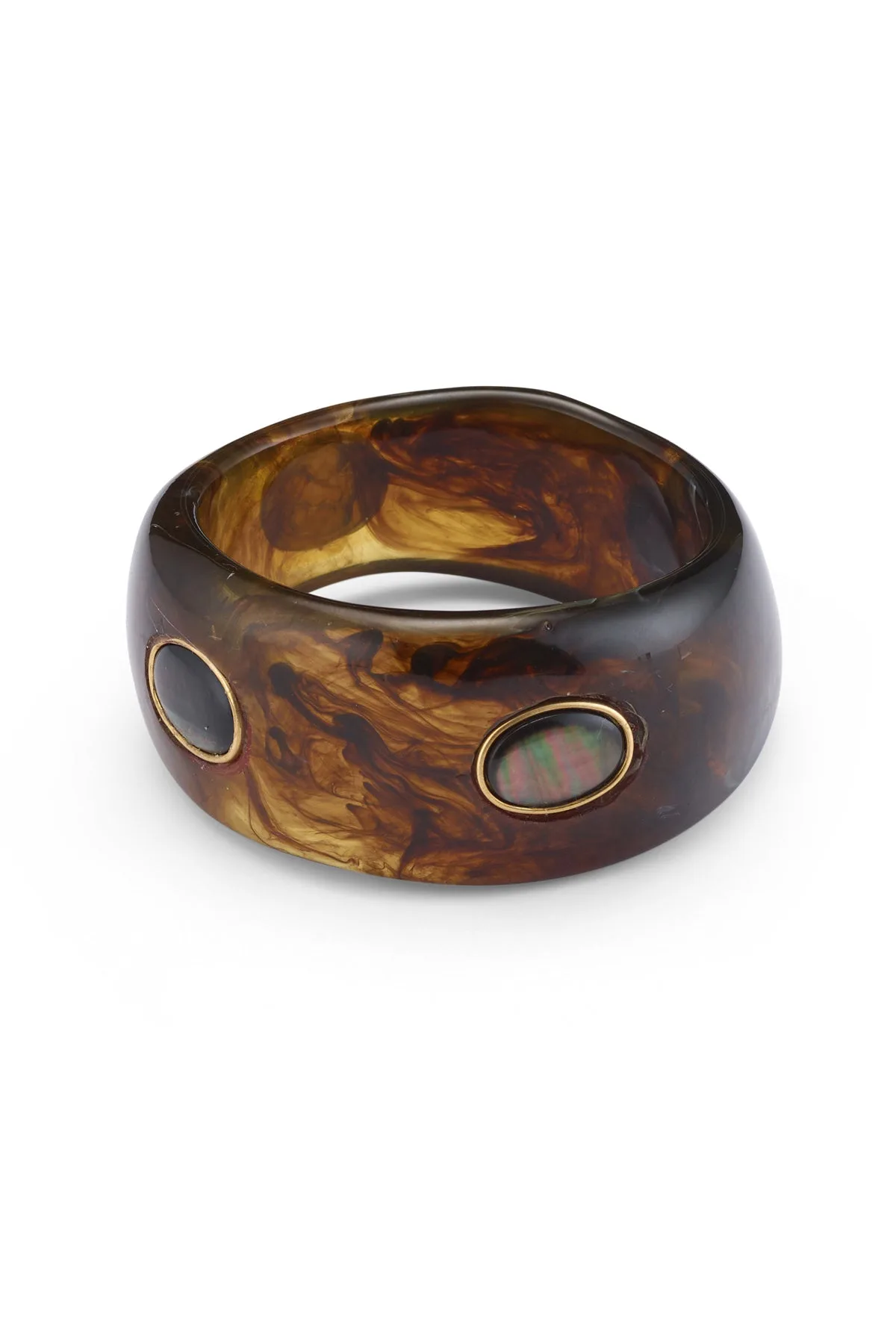
Arlo Cuff Bracelet
Rio vs Arlo at a Glance
Both cuffs share the same price, size option, and layering recommendation. The meaningful differences are the resin color and the inlay.
- Rio Cuff Bracelet: Soft cream hand-swirled resin with jade-dyed turquoise stones; listed variant is Turquoise / O/S; catalog price USD 102.48.
- Arlo Cuff Bracelet: Tortoise hand-swirled resin with genuine abalone shell inlay; listed variant is Abalone / O/S; catalog price USD 102.48.
- Shared traits: Open cuff format, one O/S size, same catalog price, and each record names the other as a stacking partner.
- Not confirmed in the records: Exact inner diameter, cuff opening width, weight, and care instructions are not supplied, so fit and cleaning guidance cannot be stated as fact.
How the Open Cuff Fit Works When You Only Have O/S
Neither cuff is offered in numbered sizes; the only size listed is O/S. That makes the open cuff shape the main fit variable. An open cuff can be positioned on the wrist rather than slid on like a closed bangle, which is often why shoppers searching for an open cuff bracelet fit or a cuff bracelet for small wrists consider this style in the first place.
The catalog does not provide an inner circumference or opening measurement, so we cannot promise a specific fit on a small or large wrist. The honest approach is to treat the O/S label as a starting point and check the product page's measurement details, if listed, before ordering. If fit is your deciding factor, that missing measurement matters more than the color choice.
Which Cuff Suits Your Wardrobe
- Choose the Rio Cuff if you wear light, warm palettes: The cream resin and turquoise stones sit naturally with white, tan, olive, and denim. It is the easier cuff to wear in summer and in casual daytime outfits.
- Choose the Arlo Cuff if you prefer deeper, glossier tones: Tortoise resin and abalone shell bring brown, amber, and iridescent flashes that work with black, navy, burgundy, and richer autumn dressing.
- Choose both if you plan to stack: Each product record explicitly recommends pairing with the other for a considered stack, so the pair is a supported combination rather than an improvised one.
A Note on Gold Cuff Styling
If you arrived searching for gold cuff bracelet styling, be aware that neither the Rio nor the Arlo is described as gold in the supplied records. They are resin cuffs with stone or shell inlay. You can still use gold-toned styling principles, such as mixing warm metals with cream or tortoise tones, but do not expect either piece to be a metal gold cuff based on the catalog text.
What the Catalog Does Not Confirm
The records do not include care instructions, water resistance, or cleaning methods for either cuff. They also do not state the exact dimensions or whether the resin can be adjusted. If you need those details, check the individual product page or contact the store rather than assuming. What the catalog does confirm is the material story, the single O/S size, the matching price, and the intended pairing, which is enough to choose between the two on look and layering.