Quick answer
Choose RISE by Sean Scott when you want a hyper-visual, signed-object moment that ends with the can handed out; choose a classic rising card trick when you need a borrowed deck, minimal props, and a close-up card effect. RISE is a dedicated gimmick with online instructions, not a substitute for a general rising card method.
What each effect actually is
RISE by Sean Scott is a can-inflation effect: a crushed and signed Red Bull can appears to inflate back to its original state, and the can is then handed out to be opened and even drank. It is not a card trick in the traditional sense, even though it is sold alongside cardistry and magic decks. Classic rising card tricks, by contrast, use a deck of cards and a method to make a chosen card rise from the pack. The two share a visual 'rise' idea but differ in props, setup, and audience expectation.
The RISE listing describes it as a hyper-visual effect performed on worldwide TV by professionals such as Dynamo and on Penn & Teller's 'Wizard Wars'. That television context tells you the effect is designed for strong visual moments, but it does not tell you how practical it is for your own close-up set. The classic rising card has a long history in card magic and is usually judged on angle management, reset time, and whether the deck can be borrowed.
The trade-off: visual punch vs borrowed-deck flexibility
RISE's main trade-off is that it is a dedicated gimmick. You cannot hand out the deck and perform a normal card routine with the same prop, and the effect depends on the can being signed and crushed as part of the presentation. In exchange, you get a moment that is easy for a lay audience to understand: a can returns to its original shape and is then opened. That clarity is valuable in a parlour or stage set where the visual has to read from a distance.
A classic rising card trick keeps you inside a deck of cards. That means you can carry one deck for multiple effects and potentially use a borrowed deck if your method allows it. The cost is that the 'rise' is a smaller visual moment, and the method often demands more careful angle control and audience management. If your show is built around card magic, the classic method integrates more naturally; if you want a stand-alone visual stunt, RISE does more work for you.
Instructions and learning curve
The RISE listing includes online instructions, which matters because the gimmick is not self-working. You will need to learn the handling, the signing procedure, and the reset. The catalog does not specify the instruction length or format beyond 'online instructions', so check the listing details before buying if you prefer video walkthroughs. Classic rising card methods vary widely: some are nearly self-working, others require significant sleight of hand. The comparison is not which is 'easier' in the abstract but which learning curve fits your current skill level and rehearsal time.
Key trade-offs at a glance
- Prop commitment: RISE requires a dedicated can gimmick and a signed can; a classic rising card trick uses a deck you may already carry. If you want one prop for multiple effects, the classic method is more flexible. Decide whether you are willing to carry a separate gimmick for one effect.
- Visual scale: RISE is described as hyper-visual and was performed on TV, so it is built to read at a distance. Classic rising card is a smaller, close-up moment. Match the scale to your venue. For parlour or stage, RISE has the stronger visual; for close-up, the card rise is more proportionate.
- Reset and examination: RISE ends with the can handed out to be opened and drank, which gives a strong finish but means you need a fresh can for repeat performances. Classic rising card methods vary in reset time; check the specific method before relying on it for multiple shows. Plan your can supply or your reset routine before adding RISE to a repeating set.
- Learning resources: RISE includes online instructions; the catalog does not state their length or format. Classic rising card methods may come with books, videos, or no instructions at all. Factor in how you learn best. Confirm the instruction format before buying if you rely on video learning.
Product facts
-
RISE (Gimmick and Online Instructions) BY SEAN SCOTT: RISE is performed on worldwide TV by professionals such as Dynamo and on Penn & Teller's 'Wizard Wars', and the crushed can is handed out to be opened and even drank. The televised context and hand-out ending show the effect is built for a strong visual finish, not a quick close-up card sequence.
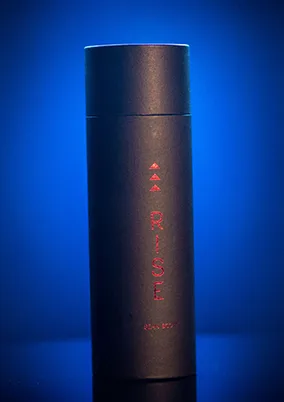
RISE (Gimmick and Online Instructions) BY SEAN SCOTT
Which should you choose?
Best for
- Performers who want a self-contained, hyper-visual moment with a signed object and a hand-out finish.
- Magicians playing parlour or stage sets where a can inflation reads clearly to a larger audience.
- Buyers who are comfortable with a dedicated gimmick and online instructions.
Not for
- Close-up workers who need a borrowed deck and a card-based effect.
- Performers who want one prop to cover many routines without a separate gimmick.
- Buyers who need detailed specification of instruction length before purchasing.