Quick answer
The Rising Star sleep clock helps toddlers learn when it's time to wake by rewarding them for staying in bed. Set it up consistently and pair it with a simple morning routine for the best results.
Why a reward-based sleep clock works
Toddlers don't understand time, but they do understand rewards. The Rising Star sleep clock turns the abstract idea of 'morning' into a concrete, positive moment. Instead of just telling your child to stay in bed, it gives them a reason to do so, which can reduce early morning battles.
The key is consistency. A sleep clock is a tool, not a magic solution. You'll need to use it every night and morning, and pair it with clear expectations. It also helps to start on a weekend or a day when you can be patient with the adjustment period.
Trade-offs to consider
Like any sleep training aid, the Rising Star clock may take a week or two to show results. Some children might initially get out of bed to check the clock, so you'll need to reinforce the rules. Also, the reward should be something simple and immediate, like a high-five or a small sticker, to keep the motivation strong.
If your toddler is very young (under 18 months), they may not yet understand the reward concept. In that case, you might want to wait a few months before introducing the clock.
How to use the Rising Star sleep clock
- Set the clock together: Place the clock in your child's room and set the wake-up time. Show your child how the clock looks when it's time to stay in bed and when it's time to wake up. Let them press the button to start the night. Involve your child from the start so they feel ownership of the routine.
- Explain the reward clearly: Tell your child: 'When the star appears, you can get up and we'll do a happy morning dance.' Make the reward simple and immediate. Avoid using the clock as a threat or punishment. The reward must be consistent and positive to reinforce the behavior.
- Use it every night: Consistency is crucial. Use the clock every night, even on weekends or holidays. If you skip nights, your child will get confused and the habit won't form. A break in routine can set back progress, so stay consistent.
- Handle early wake-ups calmly: If your child wakes before the clock says it's time, calmly remind them to go back to bed. Avoid turning on lights or giving attention. If they get up, walk them back without conversation. No reward for early wake-ups—only the clock's signal earns the reward.
- Praise the success: When your child waits for the clock, praise them warmly. Say, 'You waited for the star! Great job!' This reinforces the behavior and makes them proud. Positive reinforcement speeds up learning and builds your child's confidence.
About the Rising Star sleep clock
-
Rising Star - The rewarding sleep clock: The Rising Star is a different type of sleep clock because it rewards children for staying in bed, not just signaling when to wake up. This reward feature gives your toddler a positive incentive to stay in bed, which can make mornings calmer and more independent.
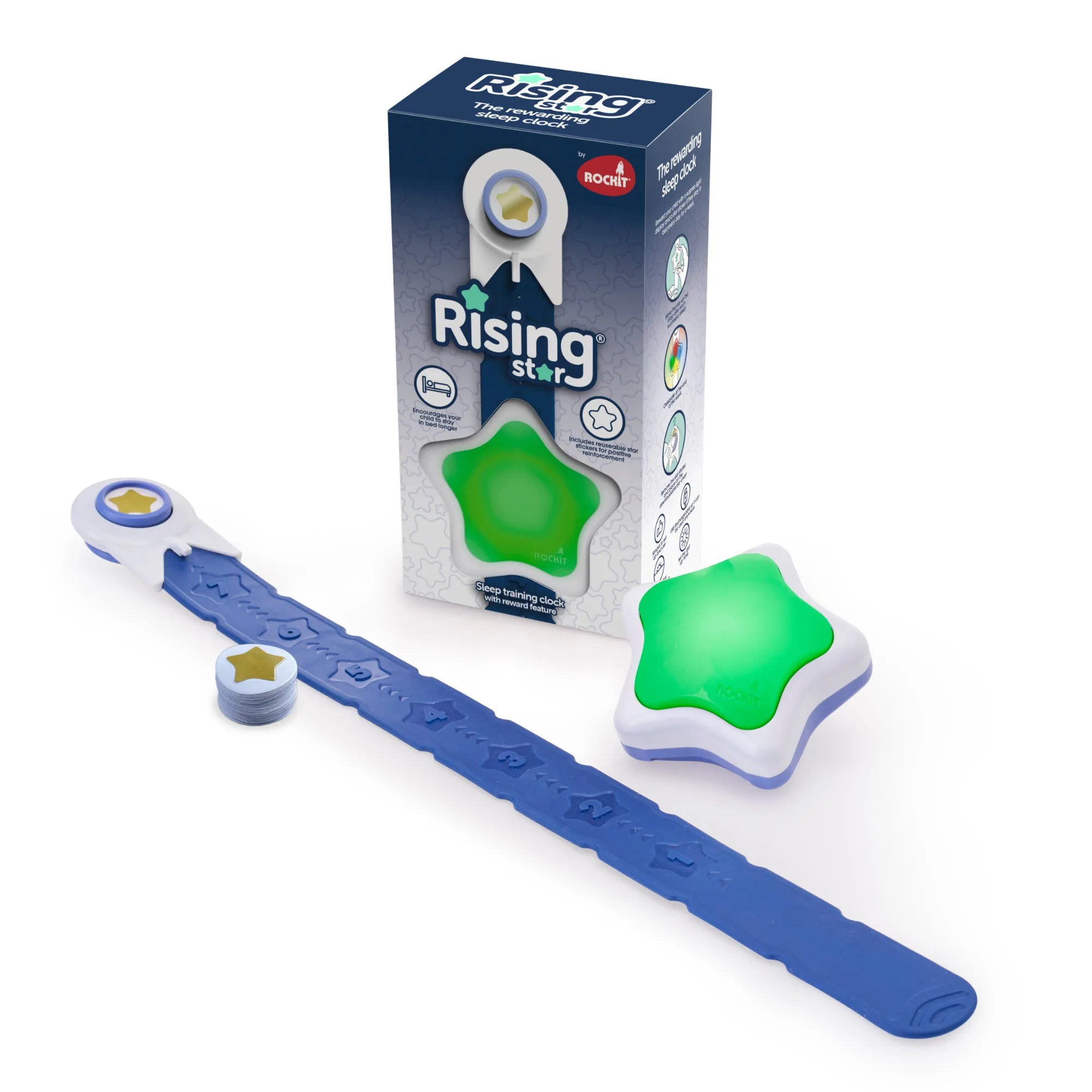
Rising Star - The rewarding sleep clock