Quick answer
A risograph print is made by layering bright, semi-opaque inks through stencils, creating a distinct textured look with slight registration shifts that make each print unique. A digital print is a precise, full-color reproduction with no variation between copies.
Why the difference matters to collectors
If you value handmade character and a tactile finish, a risograph print offers something a standard digital print cannot: subtle imperfections that give each piece its own personality. The slight misregistration and uneven ink coverage are features, not flaws.
For archival or reproduction work where color accuracy and uniformity are critical, a digital print is the better choice. It delivers consistent results every time.
Frequently asked questions about risograph vs digital print
How is the risograph printing process different from digital?
Risograph uses a stencil and drum system to apply one semi-opaque ink color at a time, so each color layer is applied separately. Digital printers apply all colors in one pass using toner or inkjet technology.
Why do risograph prints have a unique texture?
The ink sits on top of the paper rather than soaking in completely, and the stencil can leave slight gaps or uneven coverage. This creates a soft, grainy texture that varies from print to print. Expect each risograph print to look slightly different — that is part of its charm.
Can a risograph print match the color accuracy of a digital print?
No. Risograph inks are limited to a set of bright, opaque colors, and the layering process can cause slight shifts. Digital printing offers full CMYK and Pantone matching for precise color reproduction. Choose risograph for bold, graphic looks; choose digital for exact color matching.
Which one lasts longer?
Both can be long-lasting if kept out of direct sunlight. Risograph ink is soy-based and can fade faster in UV light, while digital toner or inkjet prints may have better lightfastness depending on the printer and paper used. Frame your risograph print behind UV-protective glass if displaying in a sunny room.
Is a risograph print more expensive than a digital print?
Per print, risograph is often comparable or slightly higher because of the manual setup and limited runs. Digital is cheaper for large quantities but lacks the handmade quality that justifies the price for collectors.
Example of a risograph print
-
A6 Leo Zodiac: Risograph printed in Neon Pink, Orange and Green on FSC Paper, with a retro brand concept based on the Leo zodiac sign. The three-color layering and neon palette are only possible with risograph's stencil process, giving the print a vibrant, handcrafted feel that a digital printer cannot replicate.
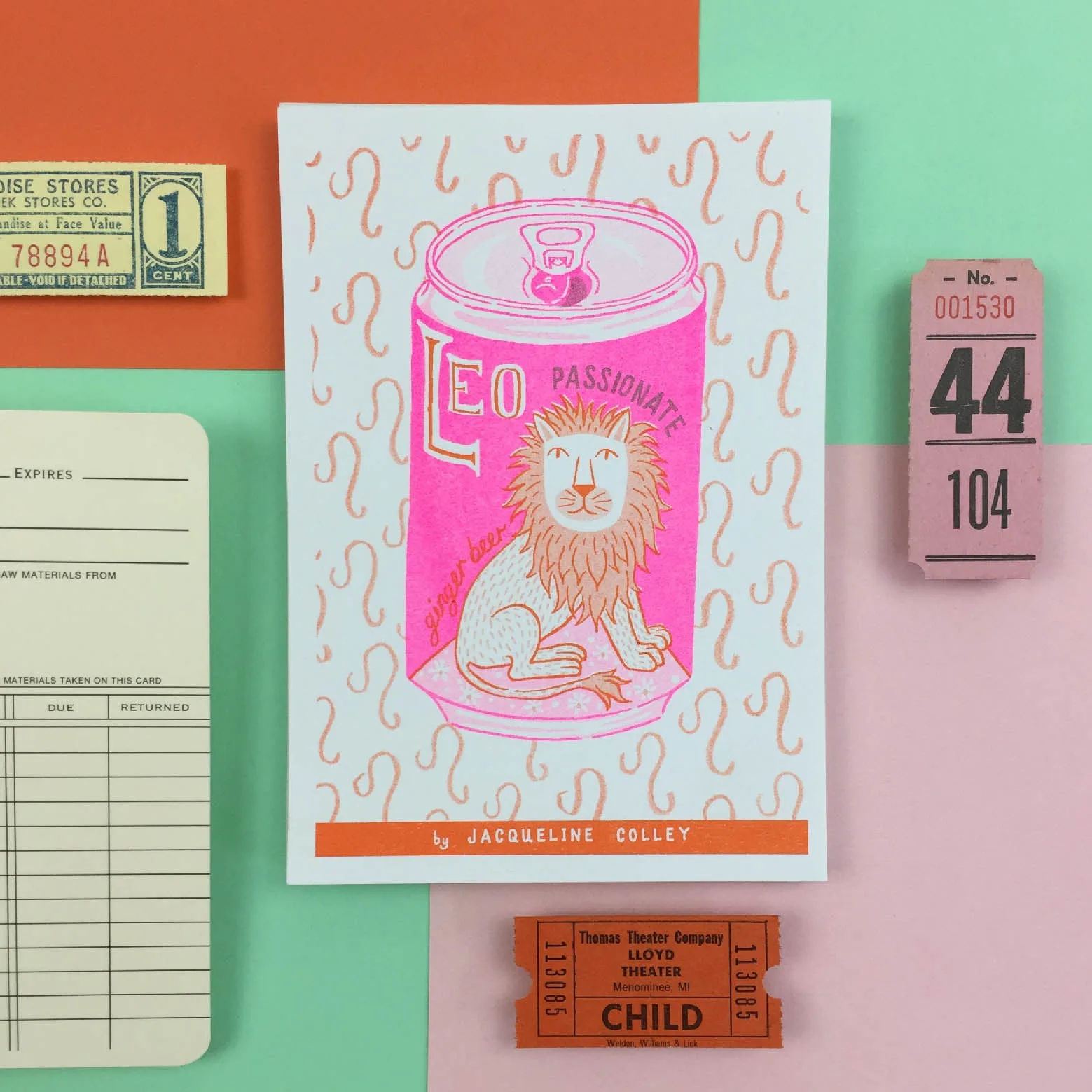
A6 Leo Zodiac