Why a Water Mat for Tummy Time?
Tummy time is a key part of your baby's early development, but not every baby enjoys being on the floor. A sensory play mat like the Riverbend Infant Water Mat adds a layer of discovery that can make those minutes more engaging. The mat's central water reservoir holds four colorful foam fish that drift and bob as your baby pushes or pats the surface, offering a visual reward for movement.
What the Riverbend Water Mat Offers
-
Riverbend Infant Water Mat: This plastic water mat features a river scene illustration and 4 colorful foam floating fish in the central water reservoir. The river scene and floating fish give your baby something to track and reach for, which supports eye-hand coordination and cause-and-effect learning during tummy time.
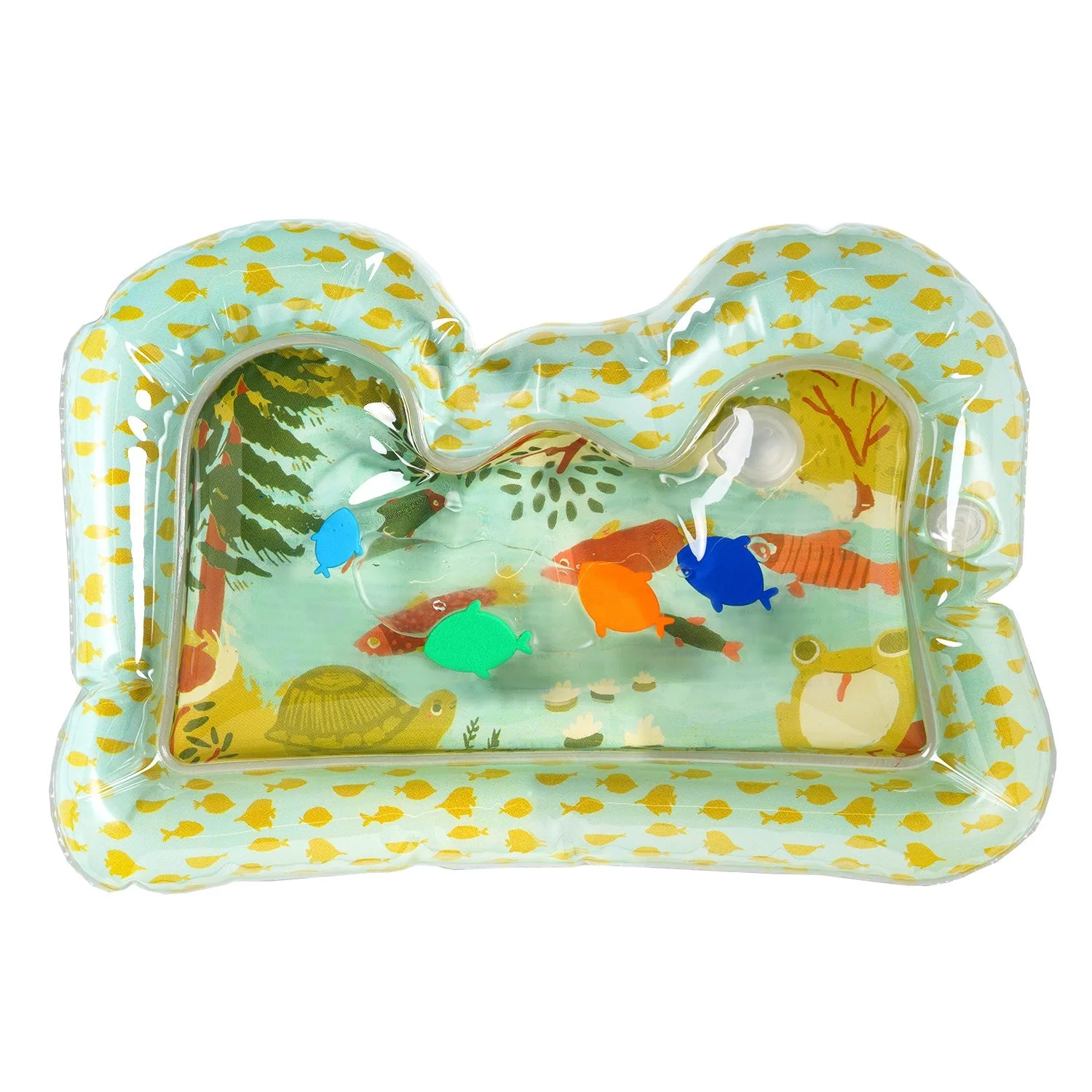
Riverbend Infant Water Mat
-
Riverbend Infant Water Mat: The inflatable outer rim offers another sensory texture for baby to explore. The raised rim provides a different tactile experience and can also help keep the mat flat and contained during play.
What to Consider Before You Buy
The Riverbend Water Mat is designed for supervised tummy time play. Because it contains water, it is not a toy for unsupervised use or for babies who are not yet able to lift their heads during tummy time without support. The mat is made of plastic, so it is easy to wipe clean, but the supplied information does not specify a maximum fill line or recommended water temperature. Always follow the included use and care instructions to keep the mat in good condition.
The mat's appeal depends on your baby's interest in water and movement. For a baby who enjoys visual stimulation and reaching, this infant water activity mat can be a fresh alternative to a stationary play mat. However, if your baby prefers textured fabrics or crinkle sounds, a different type of sensory toy might hold their attention longer.
Water Mat vs. Traditional Tummy Time Mats
- Sensory experience: The water mat offers a unique liquid-filled surface with moving objects, unlike a padded fabric mat that provides a soft, static surface.
- Portability and storage: When deflated and emptied, the water mat folds flat, making it easier to store or take along than a bulky foam mat.
- Cleaning: A plastic water mat can be wiped down quickly, while fabric mats may require machine washing. However, water mats must be thoroughly dried to prevent mold.
- Developmental focus: The water mat emphasizes cause-and-effect and visual tracking, whereas traditional mats may offer more varied textures, mirrors, or attached toys for tactile exploration.
Play Ideas for the Riverbend Water Mat
Place the mat on a flat, clean surface and inflate the outer rim according to the included instructions. Fill the central reservoir with enough water to allow the fish to float freely. Let your baby lie on their tummy and watch the fish move as they press or pat the mat. You can gently tap the mat to show how the fish respond, then let your baby experiment on their own.
For a change of pace, try placing the mat on a different surface, such as a hardwood floor or a low-contrast rug, to see if the visual difference captures your baby's attention. Always supervise play and check the mat for any leaks or damage before each use.