Quick answer
Treat the Roccia Vet Gomma Black Leather as a leather city hiker: break it in gradually, waterproof the upper with a leather-safe product, and keep the rubber rand and lug sole clean. Check fit before you treat anything, because a boot that slips at the heel will not improve with care alone.
Why the rubber rand changes the care routine
Most leather-boot advice focuses on the upper alone. On this model, a tonal rubber rand and rubber mudguard cover the lower edge of the upper, so you cannot treat that band as leather. Apply leather conditioner and waterproofing only to the exposed leather above the rubber, and wipe product off the rubber immediately. This keeps the shield doing its job without leaving a tacky film that collects grit.
Fit first: what to check before the first walk
The Roccia Vet Gomma is built on a lightweight platform sole and designed for everyday movement in the city, so a precise fit matters more than extra volume. Try the boots on late in the day with the socks you plan to wear. Your longest toe should sit a thumb's width from the front, and your heel should stay planted when you walk. If the heel lifts more than slightly, a thicker sock or a different size is a better fix than breaking them in and hoping.
When to use the spare laces
The boots ship with an extra set of laces in a contrast color. Use the spare set after the break-in period, not during it. Fresh laces change the tension you can apply through the D-ring system, and switching mid-break-in makes it harder to tell whether discomfort comes from the boot or the lacing.
Step-by-step care and break-in routine
- Check fit before treating: Try the boots on with your usual socks and walk on a hard floor. Confirm toe room and a planted heel before you apply any product. Common mistake: waterproofing a boot that is the wrong size and assuming break-in will fix it. If the heel slips or toes touch, exchange the size before you treat the leather.
- Break in gradually over short walks: Wear the boots for 30 to 60 minutes indoors or on short flat walks for the first few days, then increase time. Common mistake: wearing them for a full day out of the box and blaming the leather for blisters. Stop if you feel a hot spot; let the boots and your feet rest before the next walk.
- Brush off dry dirt after every wear: Use a soft brush on the leather and a damp cloth on the rubber rand and mudguard. Common mistake: scrubbing wet mud into the leather grain, which drives grit into the surface. Clean the rand separately from the leather so you do not spread mud onto the upper.
- Condition the exposed leather only: Apply a small amount of leather conditioner to the leather above the rubber rand, working it in with your fingers or a soft cloth. Common mistake: coating the rubber rand, which leaves a sticky layer that attracts dust. Wipe any conditioner off the rubber immediately with a dry cloth.
- Waterproof the leather, not the rubber: Use a leather-safe waterproofing product on the exposed upper and let it dry fully before wearing. Common mistake: spraying the whole boot, including the rubber, and trapping moisture under the film. Reapply waterproofing when water stops beading on the leather, not on a fixed calendar.
- Clean the lug sole and platform: Use a stiff brush or a blunt stick to clear mud and grit from the lug pattern after each outdoor walk. Common mistake: ignoring packed mud, which reduces grip and can dry and crack. Check the sole edges for small stones that can work into the rubber.
- Dry at room temperature: Stuff the boots with newspaper or a dry cloth and let them air-dry away from direct heat. Common mistake: putting leather boots near a radiator or in direct sun, which dries and stiffens the leather. Never store the boots damp; let them dry completely before lacing them up again.
Product facts
-
Roccia Vet Gomma Black Leather M: A tonal rubber rand and rubber mudguard shield the upper from moisture and wear. Condition and waterproof only the exposed leather, and keep the rubber clean so the shield keeps working.
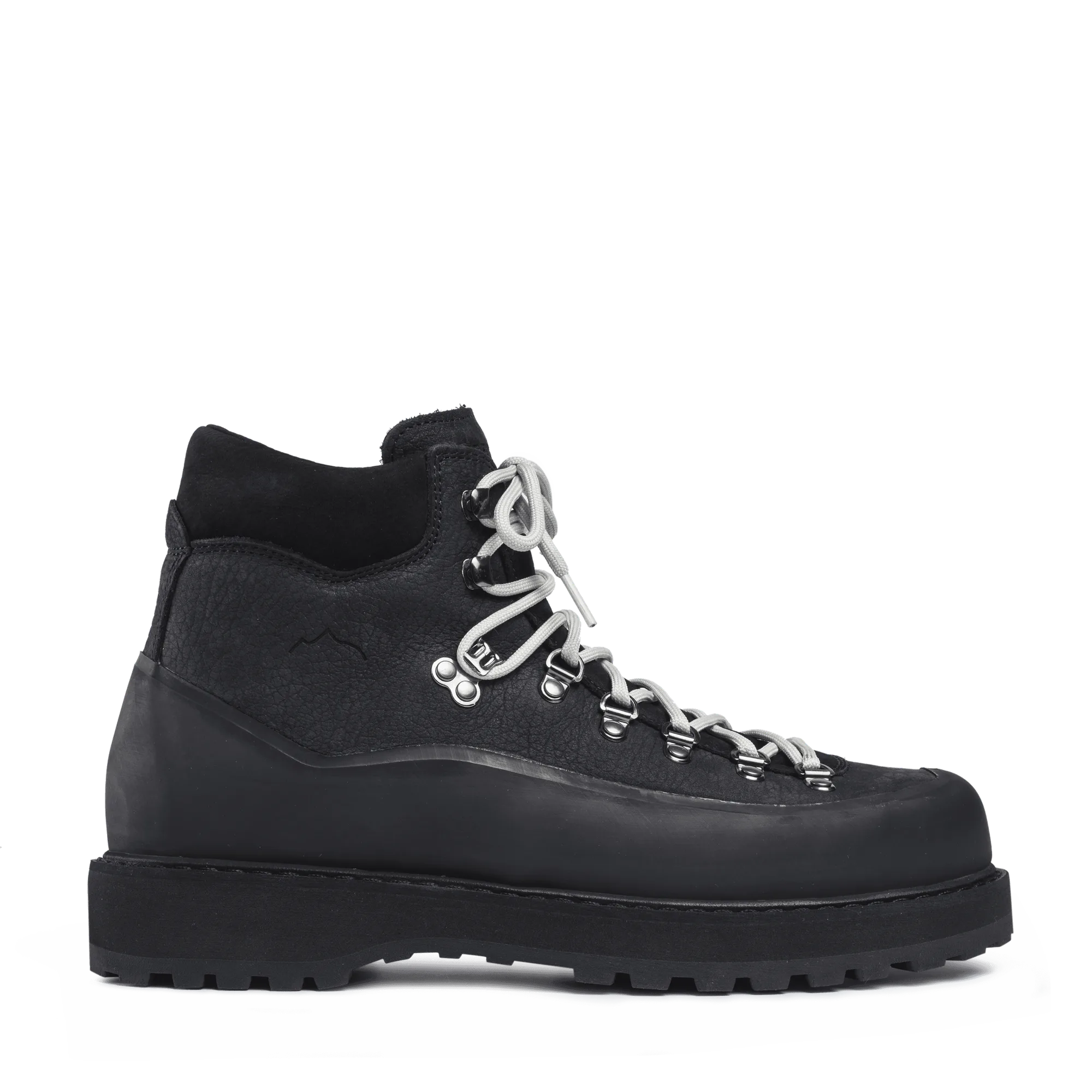
Roccia Vet Gomma Black Leather M
-
Roccia Vet Gomma Black Leather M: The classic D-ring lacing system stays true to its hiking roots, and an extra set of laces is included. D-rings let you adjust tension zone by zone, and the spare laces are useful once break-in is done.
-
Roccia Vet Gomma Black Leather M: Set on a lightweight platform sole and designed for everyday movement in the city. The boot is made for urban wear, so care should focus on keeping the leather supple and the sole free of grit rather than on heavy trail treatment.