Two species, two formulas
Rocco & Roxie makes separate allergy supplements for dogs and cats, and the differences go beyond the label. The dog version is a soft chew built around a 6-strain probiotic blend, tart cherry, and fish oil. The cat version is a multi-textured crunchy chew with a soft center, using SporeviaTM probiotic, tart cherry, fish oil, and Wellmune®. Both are vet-recommended daily formulas for seasonal allergy support, but they are not interchangeable.
If you are choosing between them, the first question is simply which pet you are feeding. The second is whether the texture and ingredient profile fit your pet's preferences and needs. The product records give you enough to compare those points honestly—and to see where information is still missing.
What the dog chew record shows
-
Rocco & Roxie Allergy Dog Chew: Soft chews in a duck flavor, made with a 6-strain probiotic blend, tart cherry concentrate, and fish oil from menhaden. These are the core active ingredients for skin and immune support; the soft texture may suit dogs that prefer chews over crunchy treats.
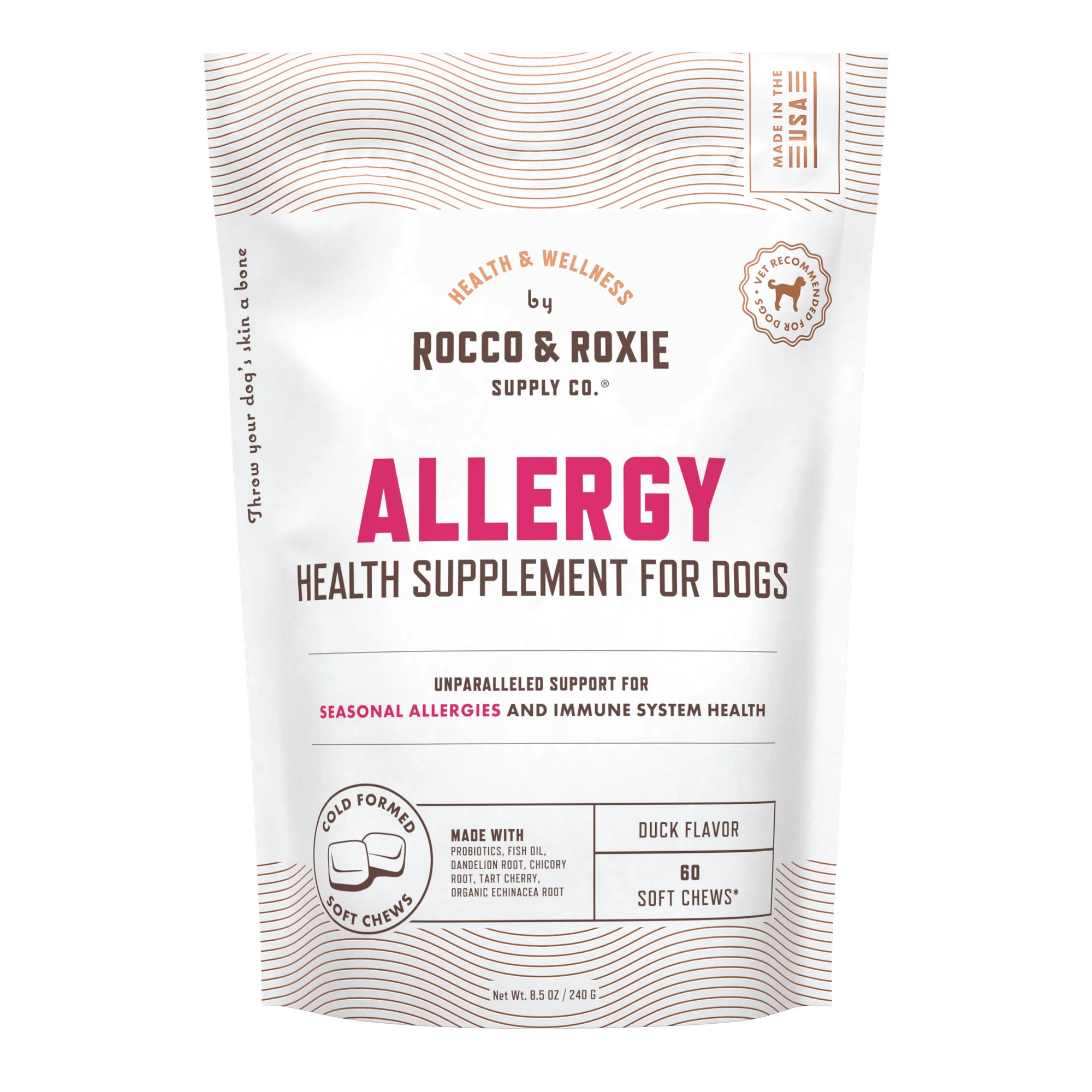
Rocco & Roxie Allergy Dog Chew
-
Rocco & Roxie Allergy Dog Chew: The probiotic blend includes chicory root and YEA-SACC® OA probiotic, and the chews are made without fillers, gums, or sweeteners. This tells you what is in the formula and what is excluded—useful if your dog has known sensitivities to common binders or sweeteners.
-
Rocco & Roxie Allergy Dog Chew: Made in the USA with domestic and global ingredients using a cold-form process to preserve ingredient integrity. The manufacturing method is part of the product's quality story, though it does not by itself guarantee results for every dog.
What the cat chew record shows
-
Rocco & Roxie Allergy Support for Cats: Multi-textured crunchy chews with a soft center, chicken-flavored, containing SporeviaTM probiotic, tart cherry, fish oil, and Wellmune®. The texture and flavor are designed for cats, and the probiotic strain is described as resilient to digestion—a different approach from the dog formula.
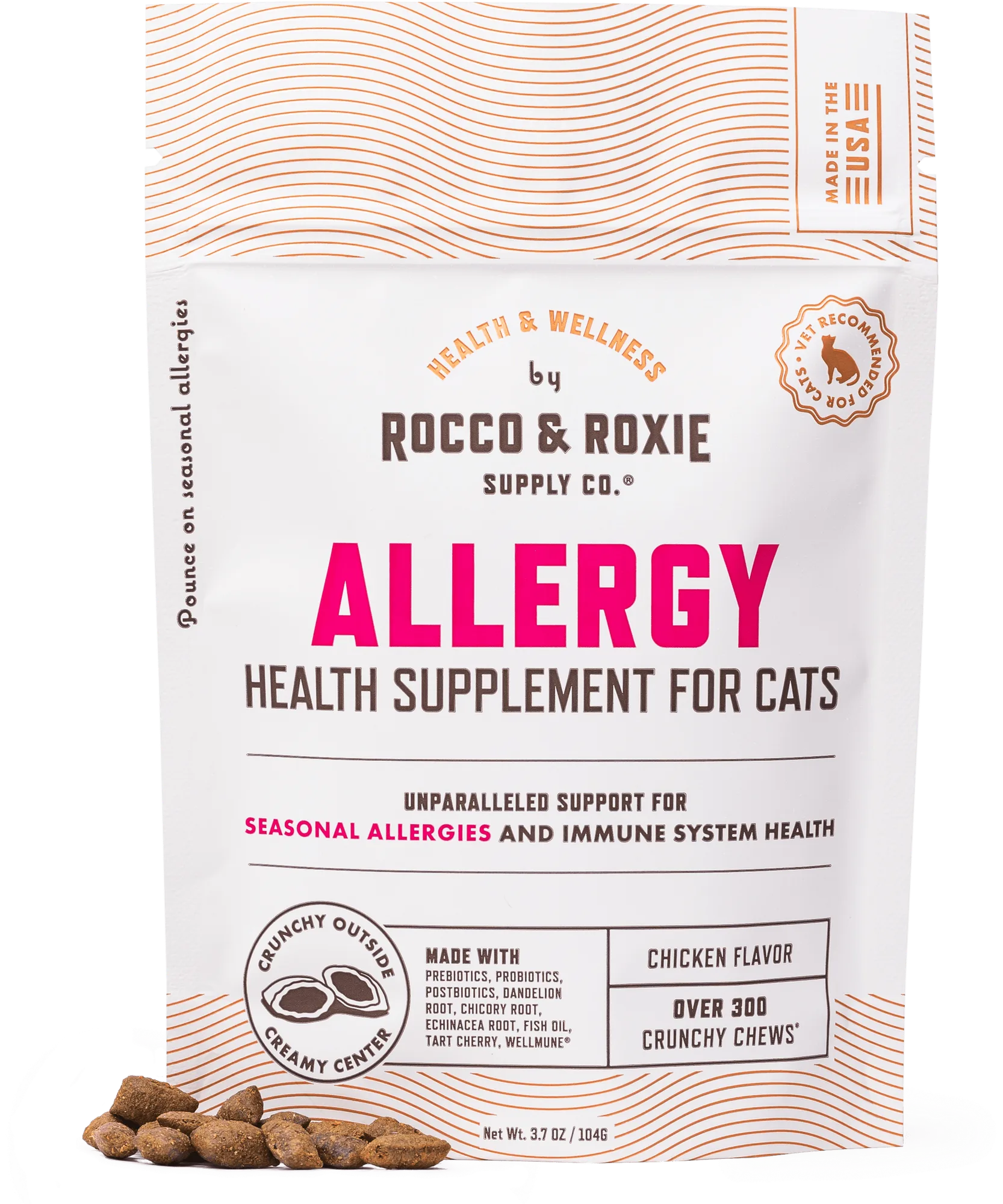
Rocco & Roxie Allergy Support for Cats
-
Rocco & Roxie Allergy Support for Cats: Made with no fillers, gums, or sweeteners, and made in the USA with domestic and global ingredients. Similar clean-label positioning to the dog chew, but the cat formula is not simply a smaller version of the dog product.
Side-by-side: texture, flavor, and key ingredients
The table below summarizes the main differences visible in the product records. It is not a complete nutritional comparison—always check the label for full ingredient amounts and feeding directions.
- Texture: Dog: soft chew. Cat: crunchy shell with soft center.
- Flavor: Dog: duck. Cat: chicken.
- Probiotic: Dog: 6-strain blend including chicory root and YEA-SACC® OA. Cat: SporeviaTM, described as resilient to digestion.
- Additional immune ingredient: Dog: not specified beyond the three key ingredients. Cat: Wellmune® included.
- Shared ingredients: Both include tart cherry concentrate and fish oil from menhaden (EPA and DHA).
- Form: Both are daily chews; the dog version is soft, the cat version is crunchy.
What the records don't tell you
Neither product record includes feeding amounts, frequency, or guaranteed analysis. That means you cannot use this comparison to decide how many chews to give—those details should come from the product packaging or your veterinarian. The records also do not list potential side effects or interactions, so if your pet is on medication or has a diagnosed condition, check with your vet before starting any supplement.
Another gap: the dog record mentions a 6-strain probiotic but does not name all six strains; the cat record names SporeviaTM but does not specify the strain count. If strain specificity matters to you, the label on the package is the place to confirm.
How to choose for your pet
Start with species: the dog chew is formulated for dogs, the cat chew for cats. Do not give one to the other, even if the ingredients look similar. Next, consider texture preferences. Some dogs gulp soft chews; some cats are picky about crunchy textures. The cat chew's dual texture is designed to appeal to cats, while the dog chew's soft format may be easier for dogs with dental issues—though that is a general observation, not a product claim.
Finally, look at the ingredient story. If you want a multi-strain probiotic for your dog, the dog chew fits. If you want a cat-specific formula with a resilient probiotic and Wellmune®, the cat chew is the match. Both are positioned as daily seasonal allergy support, so consistency matters more than switching between products.
A note on expectations
Supplements are not treatments for allergies. The product descriptions say they help soothe skin-related issues associated with seasonal allergies, but they do not claim to cure or prevent allergies. If your pet has severe itching, hair loss, or recurring infections, those are reasons to see a veterinarian rather than to rely on a chew alone. Use these products as part of a broader plan that may include veterinary care, environmental management, and consistent feeding.