Quick answer
Solve the Rocktail Kingdom 1000-piece puzzle by sorting pieces into color and shape groups first, then building the border and large landmarks before hunting hidden objects. Play the included audio story in the background to pick up thematic clues, and open the secret envelopes only after the main image is complete.
Why color sorting matters more than piece hunting early on
The Rocktail Kingdom puzzle packs 223 hidden objects into a detailed mountain scene, which means the image has many small, similar-looking areas. If you start by hunting hidden objects, you will spend hours scanning loose pieces with no structure. Sorting by color and texture first creates smaller, manageable pools of pieces that match specific regions of the artwork.
A common mistake is sorting into too many categories at once. Start with four broad groups: border pieces, dark mountain areas, bright sky or water areas, and detailed foreground elements. Refine those groups only after the border is built.
When to use the audio story and secret envelopes
The puzzle includes a 2-hour audio story and two secret envelopes with bonus tasks. The audio story is designed to be enjoyed while assembling, and it can provide thematic cues that help you notice details you might otherwise overlook. However, it is not a required step, and some solvers prefer to work in silence.
The secret envelopes are best saved for after the main puzzle is complete. Opening them early can distract from the primary build and reduce the satisfaction of a separate bonus challenge. Treat them as a second layer of play rather than part of the initial solve.
Step-by-step solve process
- Sort pieces by broad color and texture: Empty the box onto a large flat surface and create four piles: border pieces, dark mountain tones, bright sky or water tones, and detailed foreground pieces. Keep the box lid or reference image visible. Common mistake: sorting into too many piles too soon, which slows you down. Checkpoint: every piece should belong to one of the four piles before you start building.
- Build the border first: Assemble the straight-edge pieces into a frame. Use the reference image to confirm corner orientation. Common mistake: forcing a piece that almost fits; if it requires pressure, it is wrong. Checkpoint: the border should close completely with no gaps before you move inward.
- Fill large landmarks using color piles: Work on the most distinct areas next, such as a large rock formation or a body of water, using the corresponding color pile. Place pieces loosely and adjust as you go. Common mistake: completing one tiny section before establishing neighboring areas, which makes alignment harder. Checkpoint: at least two major landmarks should be connected to the border before you hunt for hidden objects.
- Hunt hidden objects in completed regions: Once a region is fully assembled, scan it for the 223 hidden objects. Use the audio story or reference image for thematic hints, but do not rely on them as a checklist. Common mistake: searching loose pieces for hidden objects before the surrounding area is built. Checkpoint: mark found objects on a separate sheet or use the box image to track progress.
- Open the secret envelopes after the main build: When the full image is complete, open the two secret envelopes and follow the bonus tasks. Common mistake: opening them early and losing pieces or focus. Checkpoint: the main puzzle should be fully assembled and stable before you introduce bonus materials.
Product facts
-
1000 Pcs Puzzle for Adults with Hidden Tasks | Rocktail Kingdom: Includes 223 hidden objects to find while assembling. Knowing the exact count helps you track progress and decide when to switch from building to focused hidden-object hunting.
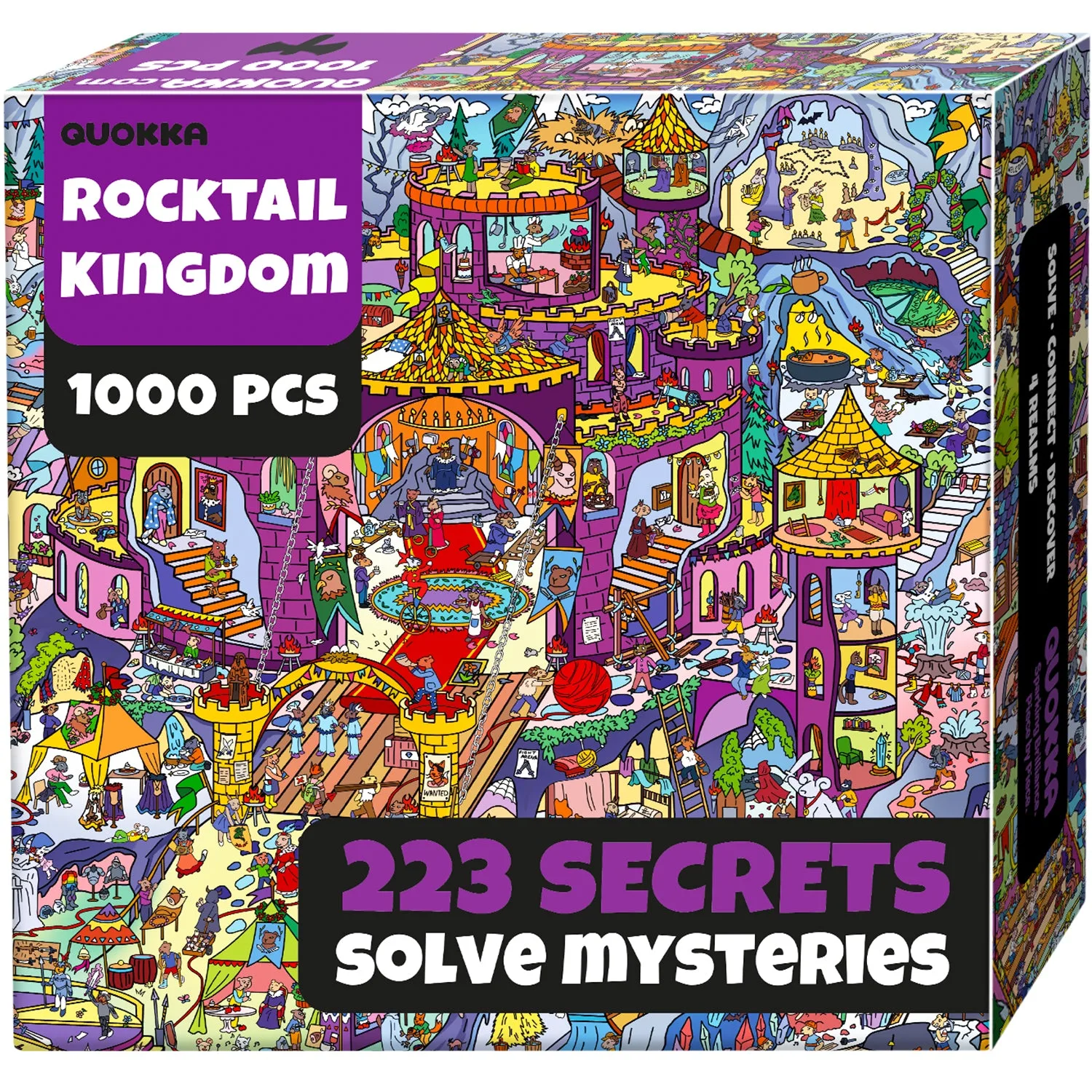
1000 Pcs Puzzle for Adults with Hidden Tasks | Rocktail Kingdom
-
1000 Pcs Puzzle for Adults with Hidden Tasks | Rocktail Kingdom: Comes with a 2-hour immersive audio story. You can time your session around the story or use it as background atmosphere without feeling pressured to finish in one sitting.