Every parent wants their baby’s skin to stay soft, smooth, and healthy. But did you know that the secret to resilient baby skin lies in its outermost layer—the skin barrier? This protective shield is made up of skin cells held together by a lipid matrix rich in ceramides. When this barrier is strong, it locks in moisture and keeps out irritants. When it’s weak—common in newborns and babies with sensitive or eczema-prone skin—the result can be dryness, redness, and discomfort.
Ceramides are naturally occurring lipids that make up about 50% of the skin’s barrier. Unfortunately, factors like genetics, harsh weather, and even frequent bathing can deplete ceramide levels. That’s why replenishing them through a targeted baby skincare routine is essential. In this article, we’ll explore the science behind ceramides, why they matter for your baby’s skin barrier, and how you can incorporate them into daily care using gentle, effective products like Mustela’s Stelatopia foam shampoo and Stelatopia intense eczema relief.
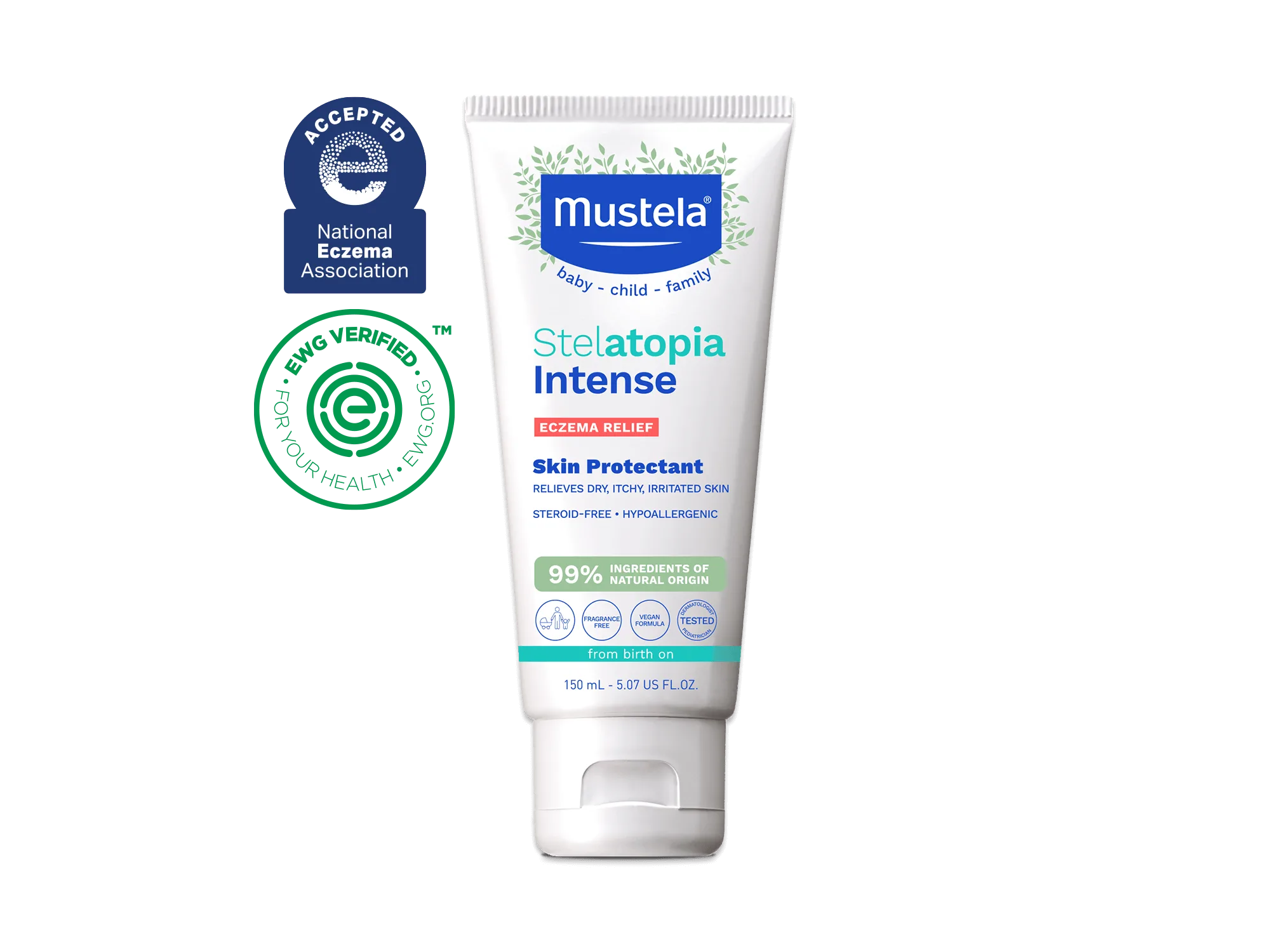
Stelatopia intense eczema relief
What Are Ceramides and Why Do They Matter for Baby Skin?
Ceramides are waxy lipid molecules that naturally occur in the stratum corneum—the outermost layer of the skin. Think of them as the “mortar” between the brick-like skin cells. Together, they form a waterproof barrier that prevents moisture loss and blocks environmental aggressors like bacteria, allergens, and pollution. In babies, this barrier is thinner and more fragile, making ceramide depletion especially problematic.
When ceramide levels drop, the skin barrier becomes compromised. This leads to transepidermal water loss (TEWL), which dries out the skin and makes it more susceptible to irritation and inflammation. For babies with conditions like eczema, a lack of ceramides can worsen flare-ups. Supplementing the skin with ceramides helps restore the barrier, improve hydration, and reduce sensitivity. That’s why many pediatric dermatologists recommend ceramide-rich products for infant skincare.
- Ceramides act as the skin’s natural glue, holding cells together for a strong barrier.
- Low ceramide levels are linked to dryness, eczema, and increased sensitivity in babies.
- Topical ceramides can replenish depleted lipids and reinforce the skin’s defense system.
How Ceramides Support Baby Eczema Relief and Sensitive Skin
Eczema (atopic dermatitis) affects up to 20% of infants and is characterized by a defective skin barrier that loses moisture and allows irritants in. Research shows that babies with eczema have significantly lower ceramide levels in their skin—especially ceramide 1 and ceramide 3. Applying ceramide-based moisturizers helps fill those gaps, reducing water loss and calming inflammation.
For parents seeking gentle eczema relief, products that combine ceramides with other soothing ingredients like avocado perseose, shea butter, and sunflower oil can be highly effective. Mustela’s Stelatopia intense eczema relief is specifically formulated to restore the skin barrier in babies prone to eczema. It’s fragrance-free, hypoallergenic, and clinically tested to reduce itching and redness. Consistent use can help break the itch-scratch cycle and keep your baby comfortable.
- Choose ceramide creams labeled “fragrance-free” and “for sensitive skin” to avoid irritation.
- Apply immediately after bathing to lock in moisture—ideally within three minutes.
- Look for products with multiple ceramide types (e.g., ceramide NP, AP, EOP) for comprehensive barrier repair.
Building a Ceramide-Rich Baby Skincare Routine
A consistent routine helps maintain your baby’s skin barrier. Start with a gentle cleanser that doesn’t strip natural oils. Mustela’s Stelatopia foam shampoo is an excellent choice—it’s soap-free and enriched with ceramides to cleanse without drying. Follow with a ceramide-rich moisturizer or balm applied to slightly damp skin to seal in hydration.
Don’t forget about bath time frequency. For babies with dry or eczema-prone skin, limit baths to 5–10 minutes in lukewarm water, and use a gentle, lipid-replenishing cleanser. After drying, apply a barrier cream like Stelatopia intense eczema relief to problem areas. For daily face care, a lightweight ceramide lotion can keep cheeks soft without clogging pores. Consistency is key—apply moisturizer twice daily, especially during cold months or when using indoor heating.
- Use a gentle, ceramide-infused cleanser like Mustela’s Stelatopia foam shampoo for bath time.
- Apply moisturizer within three minutes of bathing to maximize absorption.
- For extra protection on dry patches, layer a thicker balm over the moisturizer.
The Science Behind Lipid Replenishment: Why Ceramides Work
The skin barrier is a complex structure composed of lipids (ceramides, cholesterol, and free fatty acids) arranged in a precise ratio. Studies show that topical application of ceramides can integrate into the skin’s existing lipid matrix, restoring its structural integrity. This not only reduces TEWL but also improves the skin’s ability to retain water and resist irritants.
In clinical trials, ceramide-based moisturizers have been shown to significantly improve skin hydration and reduce eczema severity in infants. They work by mimicking the skin’s natural lipids, which is why they’re often called “barrier repair” ingredients. For babies with very sensitive skin, look for formulations that also include anti-inflammatory ingredients like niacinamide or oat extract. Mustela’s Stelatopia intense eczema relief combines ceramides with patented avocado perseose to soothe and protect.
- Ceramides mimic the skin’s natural lipids, making them highly biocompatible and effective.
- Look for products with a balanced lipid ratio (ceramides, cholesterol, fatty acids) for best results.
- Clinical studies show ceramide creams can reduce eczema flare-ups by up to 50% in infants.
Tips for Choosing the Best Ceramide Products for Your Baby
Not all ceramide products are created equal. When shopping for your baby, prioritize products that are fragrance-free, dye-free, and formulated for sensitive skin. Check the ingredient list for ceramide NP, ceramide AP, or ceramide EOP—these are the most common types used in skincare. Also, look for products that contain other barrier-supporting ingredients like shea butter, squalane, or colloidal oatmeal.
Avoid products with harsh preservatives, alcohols, or essential oils that can irritate delicate skin. Mustela’s Stelatopia line is specifically designed for babies with eczema-prone skin and includes ceramides alongside natural ingredients. For on-the-go cleansing, home compostable fragrance-free wipes are a gentle option that won’t strip the barrier. They’re made with plant-based fibers and are safe for even the most sensitive skin.
- Always patch-test a new product on a small area of your baby’s skin before full use.
- Choose products in opaque, airless pumps to protect ceramides from degradation.
- Combine a ceramide moisturizer with a gentle cleanser for a complete barrier-supporting routine.
Ceramides are the unsung heroes of baby skincare, working behind the scenes to fortify your little one’s delicate skin barrier. By choosing products that replenish these essential lipids, you can help prevent dryness, reduce eczema flare-ups, and keep your baby’s skin healthy and comfortable. For a trusted, science-backed option, explore Mustela’s Stelatopia intense eczema relief—it’s specially formulated to deliver the ceramide support your baby’s skin needs.