Quick answer
For large wall areas, a roller cover is faster and gives a more even finish, while a brush is best for edges, corners, and detailed trim work.
Why tool choice matters for wall painting
The tool you pick directly affects how your paint goes on and how long the job takes. A roller cover covers broad surfaces quickly with a consistent texture, while a brush offers precision for cutting in and tight spots. Understanding these differences helps you avoid streaks, drips, and extra coats.
Roller cover vs paint brush: trade-offs at a glance
- Speed and coverage: A roller cover paints large areas in a fraction of the time. Its microfiber nap holds more paint and applies it evenly across broad surfaces. A brush covers slowly and can leave visible stroke marks if not used carefully. Use a roller for the main wall surface to save time and get a uniform coat.
- Precision and control: A brush gives you pinpoint control for edges, corners, and around trim. It’s essential for cutting in where a roller can’t reach. However, it requires a steady hand and more skill to avoid drips and uneven lines. Keep a brush for cutting in and detail work, but don’t rely on it for large flat areas.
- Finish quality and texture: A quality roller cover like Clare’s German microfiber option produces a smooth, consistent texture with minimal splatter. A brush can create visible brush marks unless you use long, even strokes and the right technique. For most walls, the roller wins on appearance. For a professional-looking wall finish, a roller cover is the better choice.
Product facts
-
Roller Cover: Made of premium, German microfiber, our shed-resistant roller cover delivers even, efficient coverage with minimal splatter. That means fewer touch-ups and less mess when painting large wall sections, so you get a flawless-looking finish faster.
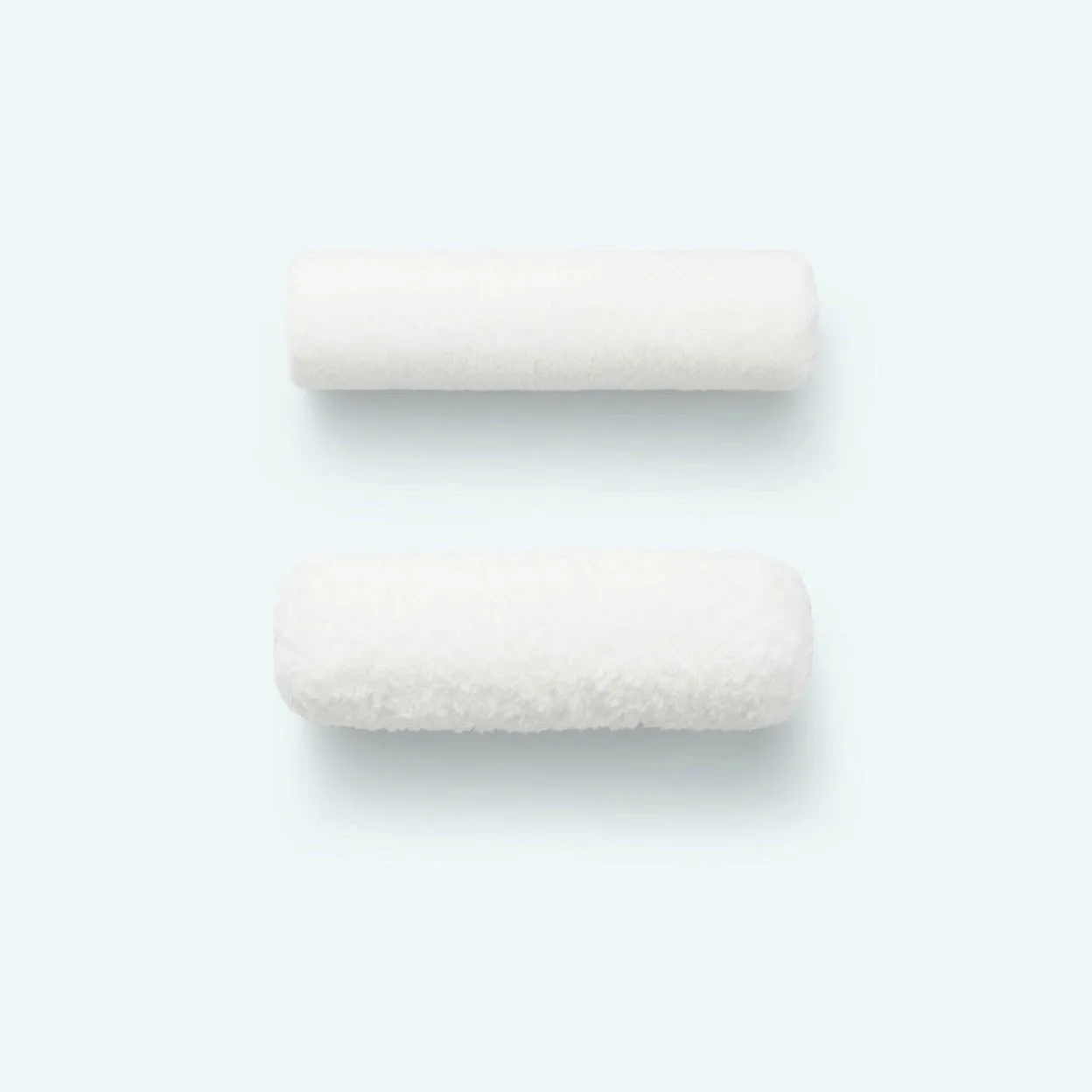
Roller Cover
Which tool fits your project?
Best for roller cover
- Painting large wall areas quickly and evenly
- Achieving a smooth, streak-free finish with less effort
Not for roller cover
- Tight corners, edges, or detailed trim work where a brush is necessary