Quick answer
Choose a rollerball if you want fast, no-mess, targeted application on pulse points and you don't need to measure drops; choose a dropper if you blend your own recipes, need precise dosing, or apply oils to larger areas like the back or feet. For most daily routines, a rollerball wins on convenience, while a dropper wins on control. Many people keep both: a dropper for mixing and a pulse roller for on-the-go use.
How each applicator actually works
A rollerball uses a metal or glass sphere set into the bottle neck. Tipping the bottle lets oil flow around the ball, and rolling it across skin deposits a thin, even trail. You get a consistent, small dose each pass, but you can't easily count drops. A dropper is a separate pipette or a dropper-top insert. You squeeze or tip to release individual drops, so you can count them into a carrier oil, a diffuser, or your palm. The trade-off is that drops can fall faster than you expect, and you need a free hand and a moment of focus.
Neither method changes the oil itself, only how you meter it. That means the right pick depends on where you apply, how often, and whether you follow a recipe or a ready-made blend.
Speed, mess, and travel: the practical differences
Rollerballs are faster and tidier. You uncap, roll, recap, and go, with no risk of dripping onto clothes or a bag. They're ideal for pulse points: wrists, temples, behind the ears. Because the dose per pass is small, you can build up gradually. The downside is you can't easily share a rollerball without cleaning the ball, and if the ball clogs with thicker oils, flow slows.
Droppers are messier but more flexible. You can add three drops to a diffuser, mix a custom blend in a separate bottle, or apply a larger amount to a wide area. They're less convenient in a purse or car because the pipette can leak if tipped, and you need a clean hand to avoid contamination. For travel, a rollerball is usually the safer bet; for home blending, a dropper is the workhorse.
Dose control and blending: when precision matters
If you follow a recipe, dilute essential oils in a carrier, or track exactly how much you use, a dropper gives you countable drops. That precision matters for strong oils and for anyone who wants a repeatable blend. Rollerballs are pre-diluted or ready-to-use in many cases, so you're trusting the maker's ratio rather than measuring your own. That's a feature, not a flaw, if you want simplicity.
One more factor: rollerballs apply a thin film that absorbs quickly, especially when the formula includes a lightweight carrier like fractionated coconut oil. Droppers let you place a concentrated drop exactly where you want it, but you may then need to spread it yourself. If you dislike greasy hands, a rollerball keeps the oil on the ball, not your fingers.
Matching the applicator to the moment
Think in terms of scenarios. A 2 a.m. wake-up, a mid-afternoon slump, or a queasy stomach on a commute all favor a rollerball because it's one-handed and silent. A weekend blending session, a diffuser refill, or a massage oil project favors a dropper because you're measuring and mixing. You don't have to pick one forever; the best way to apply essential oils often depends on the task, not loyalty to a bottle style.
If you're new to oils, start with a rollerball for the specific job you have in mind, then add a dropper bottle when you want to experiment with your own ratios.
Decision rules: pick your applicator in under a minute
- If you apply to pulse points only: Choose a rollerball. The ball delivers a thin, even trail exactly where you roll, and you can layer passes without overdoing it. Best for wrists, temples, behind ears, and other small, targeted spots.
- If you measure, mix, or refill a diffuser: Choose a dropper. Countable drops let you follow recipes, dilute accurately, and adjust strength drop by drop. Best for home blending, DIY recipes, and precise dilution.
- If you need one-handed, no-mess application: Choose a rollerball. No pipette to leak, no drops to spill, and no need for a free hand or a flat surface. Best for travel, commutes, and middle-of-the-night use.
- If you apply to large areas or share with someone: Choose a dropper, or decant into a clean rollerball you can wipe down. Droppers let you dispense into a palm or carrier oil for broader coverage. Best for back, feet, massage, and multi-person use.
Ready-to-use rollerballs that fit the rollerball side of the debate
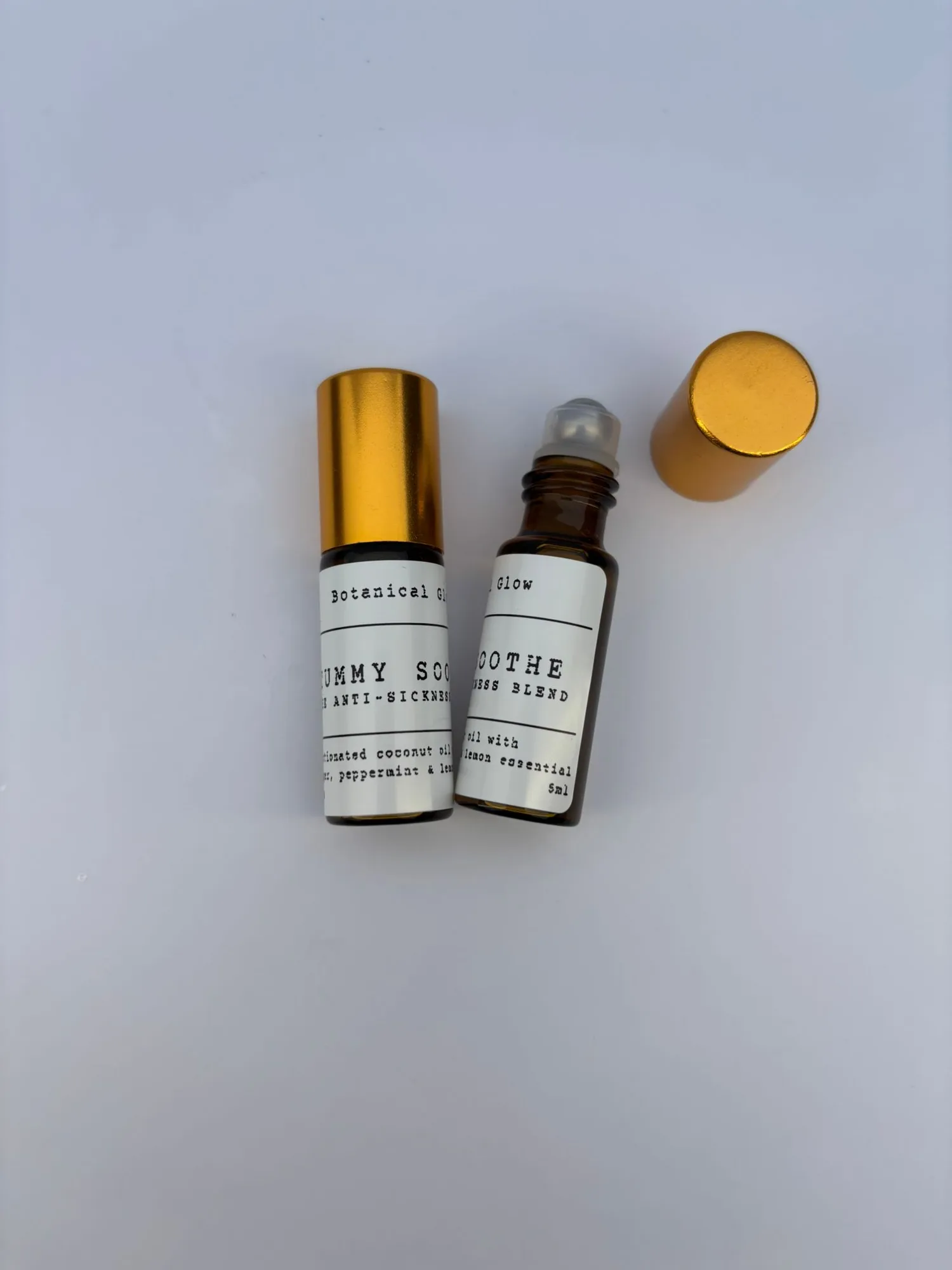
- Tummy Soothe Pulse Roller - Botanical Glow: Tummy Soothe Pulse Roller is a warming and refreshing blend designed to help settle the stomach, made with fractionated coconut oil for quick absorption and a smooth glide. If your main need is on-the-go digestive comfort, a pre-blended rollerball removes the measuring step and keeps the oil targeted to pulse points.
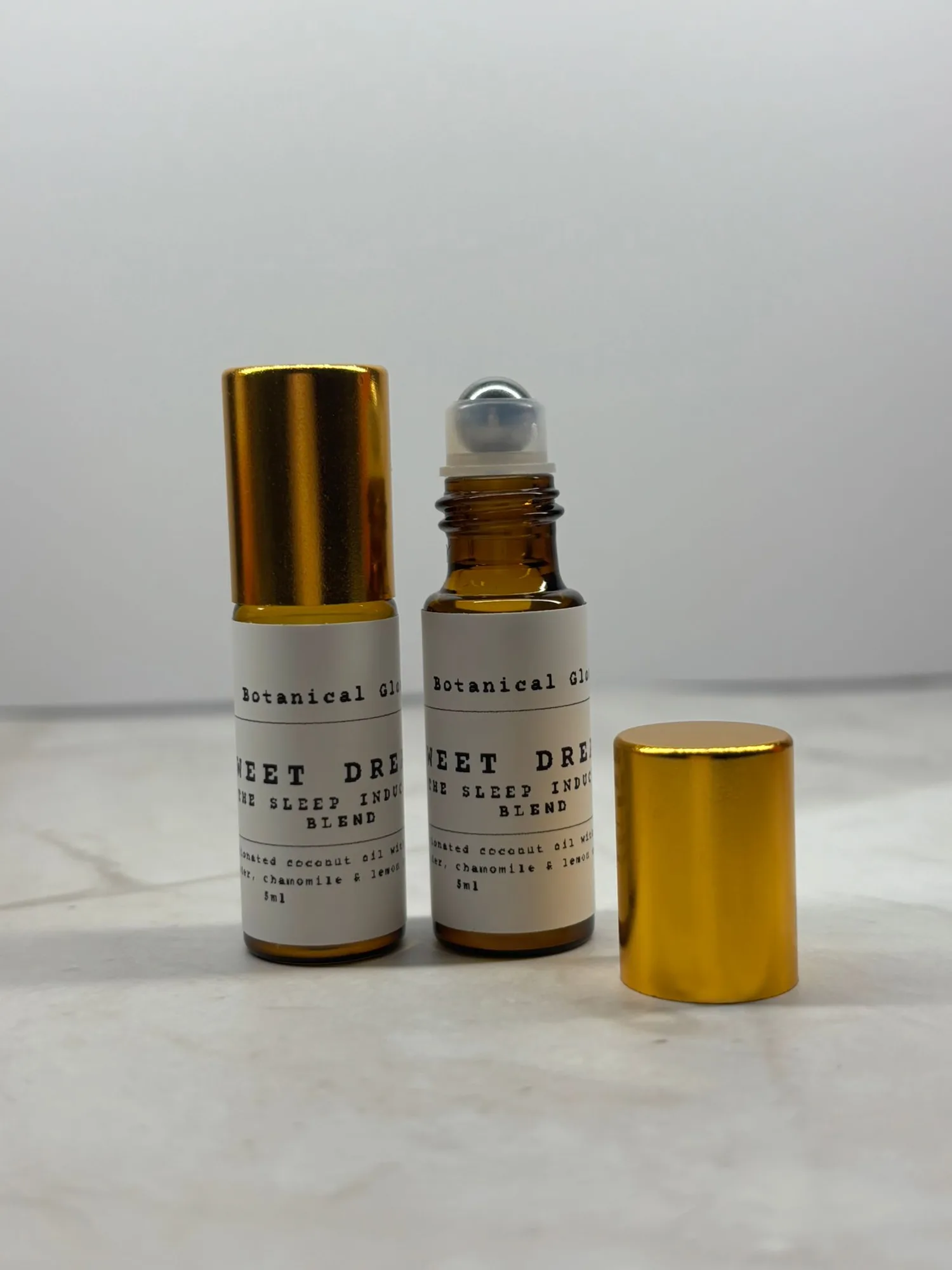
- Sweet Dreams Pulse Roller - Botanical Glow: Sweet Dreams Pulse Roller is a soothing blend created to calm the mind and relax the body, blended with fractionated coconut oil for quick absorption and no residue. A bedtime rollerball lets you apply by feel in low light without counting drops, which suits a wind-down routine better than a dropper.
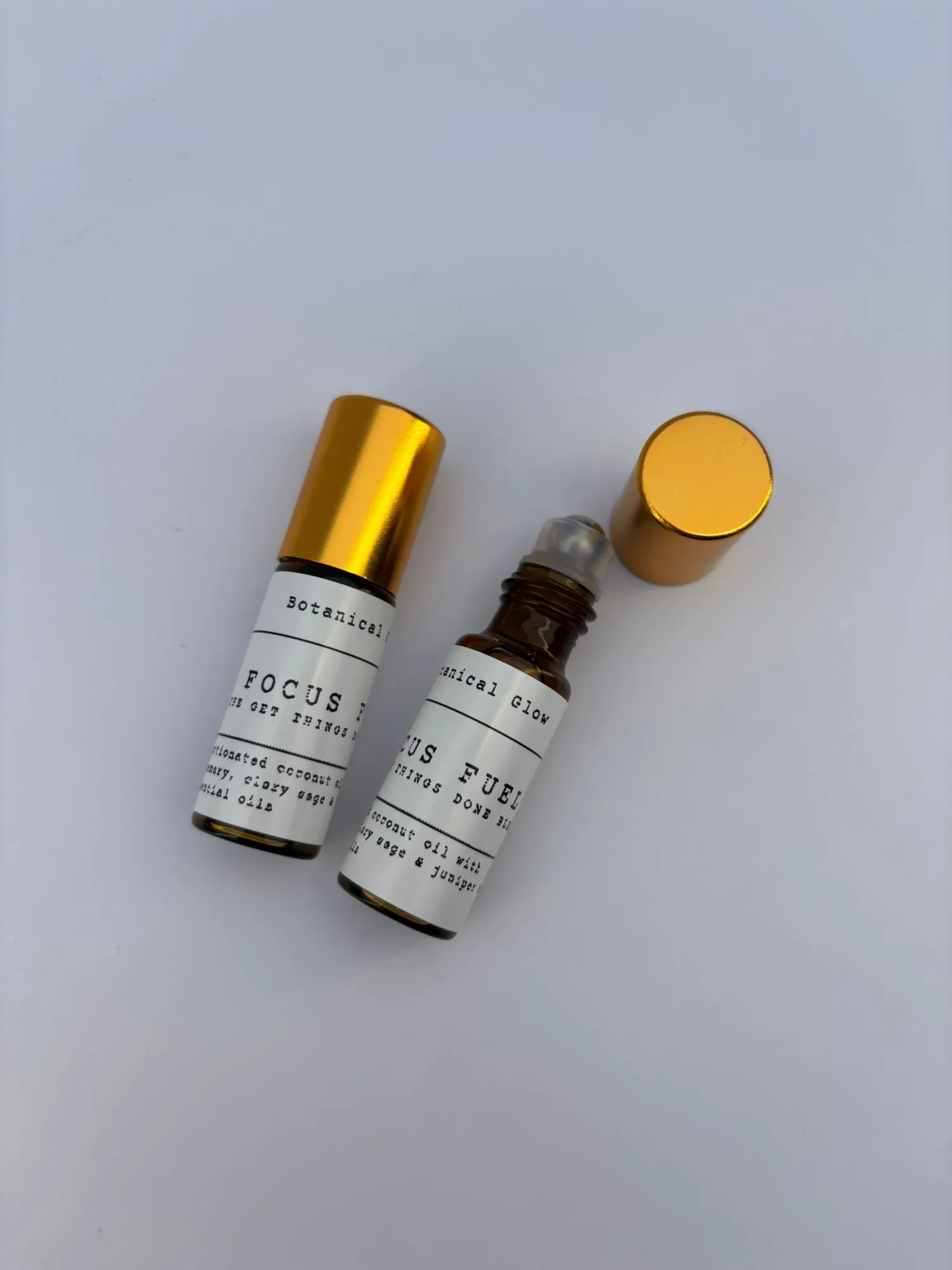
- Focus Fuel Pulse Roller - Botanical Glow: Focus Fuel Pulse Roller is an invigorating blend designed to support concentration and mental clarity, with quick absorption and a portable format. For desk or study use, a rollerball is faster and less messy than a dropper, and the small format fits a pocket or pen case.
Who should choose which
Choose a rollerball if you
- want fast, targeted application on pulse points with no measuring
- prefer a portable, leak-resistant format for a bag, desk, or bedside table
- are buying a ready-made blend rather than mixing your own
Choose a dropper instead if you
- need to count drops for recipes, dilution, or diffuser refills
- apply oils to larger areas like the back, feet, or during massage
- want to adjust the strength of a blend drop by drop