Quick answer
Choose a rope toy that matches your dog's mouth size and play style, then check it for loose strands before every session. A rope toy with a woven-in ball suits chase-and-tug play, while a plain playing rope works better for fetch and gentle tugging.
Why rope size matters more than rope colour
A rope that is too thin for your dog's mouth encourages the dog to chew at the ends rather than grip the body of the toy. A rope that is too thick is hard to carry and may be dropped quickly. Match the rope's thickness to your dog's jaw size and the length to the space where you play.
Rope toys also fray. Loose strands are the main reason rope play needs supervision, so pick a rope you can inspect easily and replace when the ends start to unravel.
When a woven-in ball changes the game
A rope toy with a woven-in ball adds a fixed shape at one end, which can make the toy easier to spot during fetch and gives the dog a target to grab. It is not a chew toy, though. The ball is held in place by the rope, so tugging and chewing at the join can shorten the toy's life.
If your dog mostly wants to shake and tug, a woven-in ball is a practical choice. If your dog prefers to carry a long rope or you want a simple fetch toy, a plain playing rope may be easier to use.
How to choose and use a rope dog toy
- Measure your dog's mouth: Open your hand and compare the rope's thickness with the width of your dog's muzzle. The rope should fit comfortably in the mouth without being so thin that it slips between the teeth. Common mistake: choosing a rope by length alone and ignoring thickness. A rope that is too thin is more likely to be chewed at the ends rather than gripped.
- Match the style to the game: Pick a rope toy with a woven-in ball for chase and tug games, or a plain playing rope for fetch and carrying. Common mistake: using a tug-style toy as a solo chew toy. Choose the toy for the game you actually play, not the game you plan to start.
- Set a play boundary: Keep rope play on soft ground and stop if the dog starts to chew or shred the rope. Common mistake: letting the dog win the rope and take it away to chew. Rope toys are interactive toys, so put them away after each session.
- Inspect before every session: Run the rope through your hands and look for loose strands, frayed ends or a loose ball. Retire the toy if the rope is coming apart. Common mistake: waiting until a strand is swallowed before replacing the toy. A quick check takes seconds and prevents the most common rope-toy problem.
Product facts
-
Rope Toy with Woven-in Ball: Rope Toy with Woven-in Ball The woven-in ball gives your dog a clear grab point for chase and tug games, but check the join for fraying after each session.

Rope Toy with Woven-in Ball
-
Playing Rope 40cm: Trixie Playing-Rope for Dogs A simple playing rope is easy to throw and carry, making it a practical option for fetch and gentle tug play.
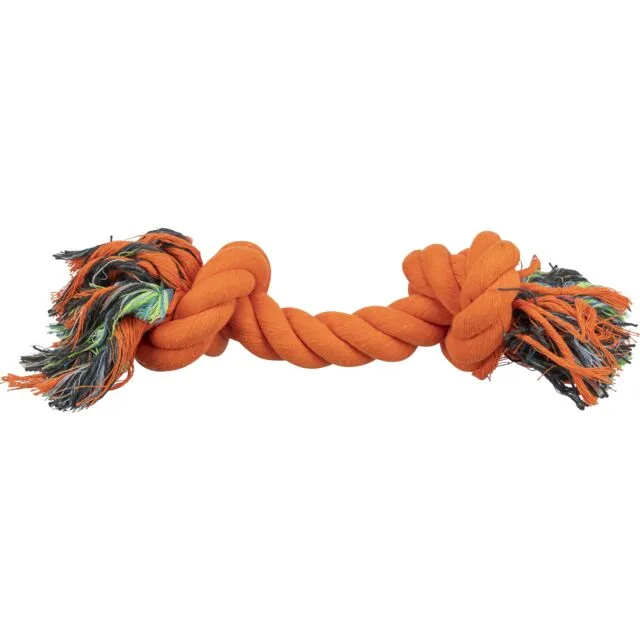
Playing Rope 40cm