Quick answer
Dilute rosemary essential oil to 1–2% in a carrier oil, then massage it into sore muscles after yoga using slow, upward strokes. For a 2% blend, mix 12 drops of rosemary oil into 30 ml (1 oz) of carrier oil. Always do a patch test first, and avoid applying it to broken skin or your face.
Why rosemary oil fits a post-yoga recovery routine
After a strong flow or a long hold class, your muscles feel warm and tired. Rosemary essential oil has a classic, herbaceous aroma that many people find refreshing in a post-practice massage blend. Its scent can help you shift from active movement into a calmer state, which is a useful signal for recovery. You can also diffuse it while you stretch or rest. The key is to treat it as part of a routine, not a quick fix: dilute it properly, apply it with intention, and give your body time to settle.
Choose a carrier oil and set up your space
Rosemary essential oil is highly concentrated and should not go on your skin neat. Pick a carrier oil you already tolerate well, such as jojoba, sweet almond, or fractionated coconut oil. If you have nut allergies, jojoba or fractionated coconut oil are safer choices. Set up a small towel, your diluted blend, and a comfortable seat or mat. A common mistake is grabbing whatever oil is closest without checking the label; a carrier oil is not the same as an essential oil, and using the wrong bottle can lead to irritation.
Dilute rosemary oil correctly for skin
For most adults, a 1–2% dilution is a sensible starting point for a post-yoga massage. That means 6 drops of rosemary essential oil in 30 ml (1 oz) of carrier oil for a 1% blend, or 12 drops for a 2% blend. If you are new to essential oils or have sensitive skin, start at 1%. Measure drops into a small glass bottle or bowl, then swirl—do not shake—to combine. A common mistake is adding drops directly to your palm and guessing the ratio; that makes it hard to repeat a safe blend. Label your bottle with the date and dilution so you know exactly what you are using next time.
Do a patch test before your first full massage
Apply a small amount of your diluted blend to the inside of your forearm and wait 24 hours. If you notice redness, itching, or burning, wash it off with soap and water and do not use it on larger areas. This step is easy to skip when you are eager to soothe sore muscles, but it is the simplest way to catch a reaction before it spreads. If you are pregnant, nursing, or managing a medical condition, ask a qualified healthcare provider before using rosemary oil.
Massage sore muscles with slow, deliberate strokes
Pour a small amount of your diluted blend into your palm and warm it between your hands. Work on one muscle group at a time, using slow strokes toward your heart. Spend 30–60 seconds on each area, and keep the pressure comfortable—never press into a joint or an area that feels sharp or swollen. A common mistake is rubbing hard and fast; that can leave you more tense, not less. Breathe steadily as you massage, and stop if anything feels wrong.
Pair the massage with a short wind-down
After you massage, lie on your back with your knees bent or take a gentle seated forward fold for a few breaths. This gives the oil time to absorb and lets your nervous system downshift. If you prefer aromatherapy for yoga recovery, add a few drops of rosemary oil to a diffuser in the room while you rest. Keep the room ventilated, and avoid diffusing for more than 30–60 minutes at a time. A common mistake is rushing straight back to your phone or chores; even five quiet minutes can make the routine feel more complete.
Your post-yoga rosemary oil routine in 5 steps
- Step 1: Gather your supplies: Set out your rosemary essential oil, a carrier oil, a small glass bottle or bowl, and a towel. Check that your carrier oil is not expired and that your rosemary bottle is tightly closed before you start. Checkpoint: if you do not have a carrier oil, pause here—do not apply rosemary oil neat.
- Step 2: Make a 1–2% dilution: Add 6 drops of rosemary oil to 30 ml of carrier oil for a 1% blend, or 12 drops for 2%. Swirl gently to combine and label the bottle with the date. Common mistake: adding drops directly to your palm without measuring, which makes the strength unpredictable.
- Step 3: Patch test and wait: Apply a small amount to your inner forearm and wait 24 hours. If your skin stays calm, proceed. If you see redness, itching, or burning, wash it off and do not use the blend. Checkpoint: never skip this step if you have sensitive skin or have not used rosemary oil before.
- Step 4: Massage each sore area: Warm a small amount of the blend in your palms and massage one muscle group at a time with slow strokes toward your heart. Spend 30–60 seconds per area and keep pressure comfortable. Common mistake: rubbing hard and fast, which can increase tension instead of easing it.
- Step 5: Rest and diffuse if you like: Lie down or take a gentle stretch for a few minutes. If you enjoy aromatherapy, add a few drops of rosemary oil to a diffuser and keep the room ventilated. Next step: store your labeled blend in a cool, dark place and use it within a few weeks.
Product facts
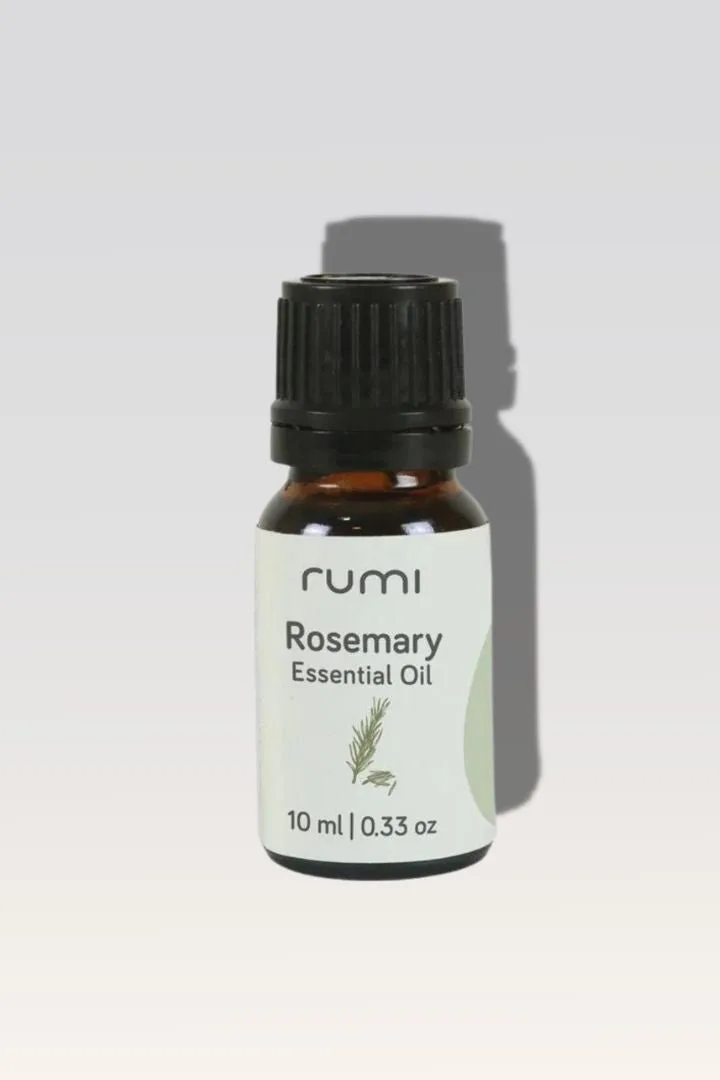
- Essential Oil – Rosemary: Rumi Earth Rosemary Essential Oil comes in a convenient 10 ml bottle and is described as versatile for diffusers, massage oils, or personal care recipes. A 10 ml bottle is a practical size for testing a dilution and keeping a small recovery blend on hand without committing to a large bottle.
- MU SunSoft Joggers Narrow Open + Pockets 30" - Moss: Rumi SunSoft Joggers are made from lightweight yet squat-proof SunSoft fabric and are designed for low-impact activities and all-day coziness. After a post-yoga massage, soft joggers are an easy layer to pull on for the rest of your day without pressing on freshly massaged muscles.