What a bezel setting actually changes
A bezel setting wraps a metal rim around the entire edge of the diamond. On a round bezel diamond ring, that continuous rim creates a smooth, protected outline instead of exposed prongs. The Birdy Grey Round Bezel Diamond 14K Solid White Gold Ring pairs this with a low-profile design, so the stone sits closer to the finger rather than rising high above it.
That single design choice drives most of the pros and cons: fewer edges to catch, a different visual footprint, and a more limited set of size and carat combinations than you might find in a prong setting. The rest of this guide breaks down where those differences matter.
Where the low-profile bezel wins
These are the practical advantages of a bezel set ring, not abstract style points.
- Fewer snag points for daily wear: A bezel covers the diamond’s girdle with metal, so there are no prong tips to catch on sweaters, hair, or bag straps. If you wear rings constantly and dislike checking prongs, this is the main reason to choose bezel over prong.
- A low profile sits closer to the hand: The low-profile design keeps the ring from standing tall. That can feel more comfortable under gloves or when you rest your hand on a desk, and it changes how the ring reads visually—more flush and modern than a high-set solitaire.
- A clean, continuous outline: The bezel rim frames the round cut without interrupting it. Some wearers prefer this uninterrupted look to the four or six points of light a prong setting creates around the stone.
- 14K solid white gold is the starting point: This ring is offered in 14K solid white gold, so the metal choice is fixed. That simplifies the decision if white gold is already your preference, but it means you are not choosing between metal colors here.
Where a bezel setting asks you to compromise
A bezel is not automatically better. These are the trade-offs to weigh honestly.
- Less exposed diamond surface: Because metal wraps the edge, a bezel can make the diamond appear slightly smaller or more contained than the same carat weight in a prong setting. If you want maximum spread and sparkle visibility, prongs usually show more of the stone.
- A different kind of sparkle: Prong settings let light enter the diamond from more angles. A bezel still reflects light, but the rim changes the pattern. This is a preference call, not a quality ranking—visit a mirror in different lighting if you can.
- Sizing range is limited: The supplied record lists ring sizes 5, 5.5, and 6 only. If you wear a size outside that range, this specific ring may not be an option, regardless of how much you like the setting.
- Carat choices stop at 3ct: The ring is available in 1ct, 1.5ct, 2ct, 2.5ct, and 3ct. That is a useful spread for a low-profile ring, but it does not go larger or smaller in the supplied information.
The exact configuration to check before you decide
-
Round Bezel Diamond 14K Solid White Gold Ring - Diamond: Round-cut diamond in a bezel setting with a low-profile design, offered in 14K solid white gold. These three details—round cut, bezel, low profile—are the core of the pros and cons above. Confirm you want all three together, not just one.
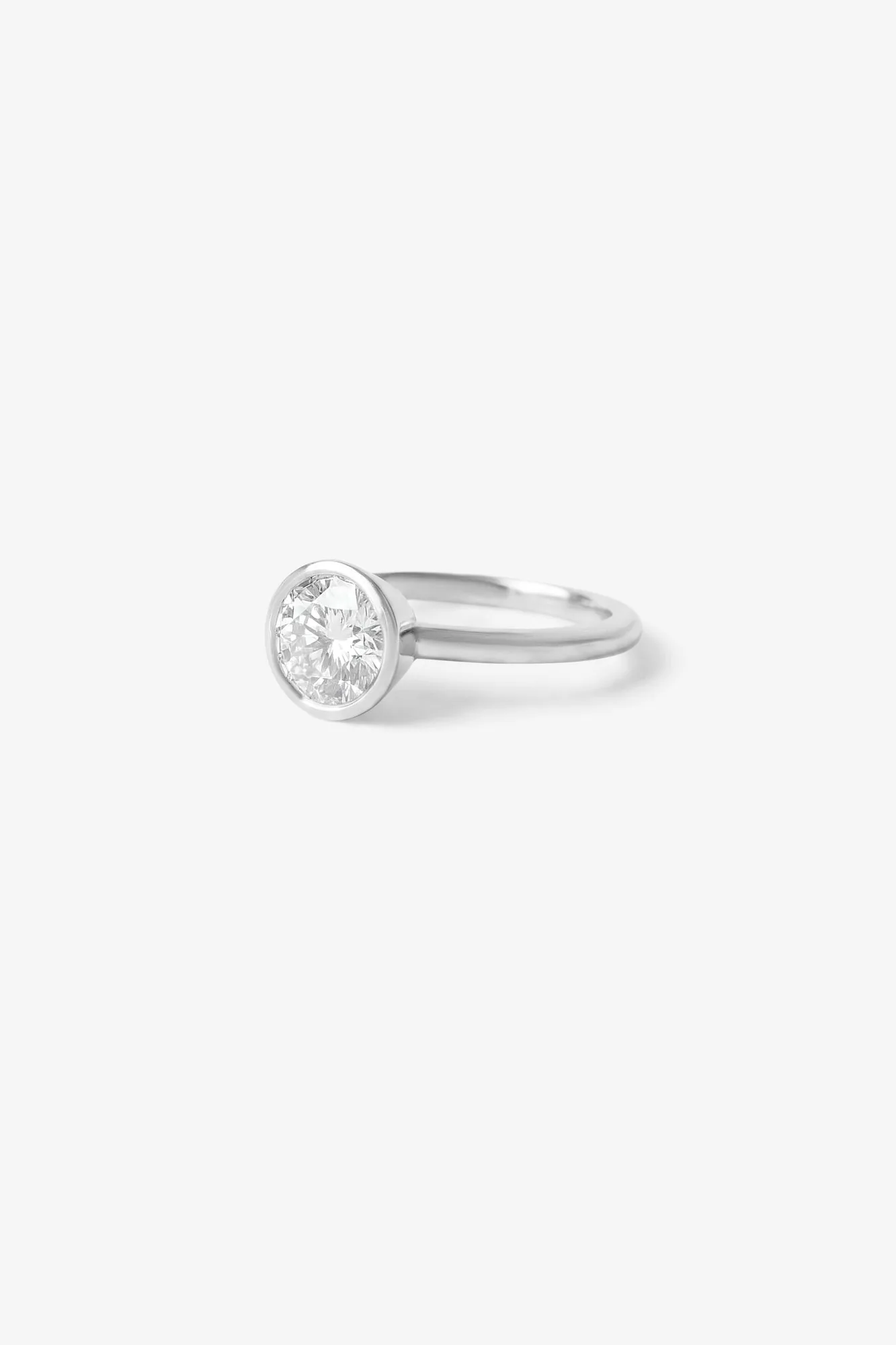
Round Bezel Diamond 14K Solid White Gold Ring - Diamond
-
Round Bezel Diamond 14K Solid White Gold Ring - Diamond: Available in ring sizes 5, 5.5, and 6. Size availability is the first practical filter. If your size is outside this range, the setting debate is moot for this ring.
-
Round Bezel Diamond 14K Solid White Gold Ring - Diamond: Available in 1ct, 1.5ct, 2ct, 2.5ct, and 3ct carat sizes. Carat size changes how much of the low-profile look you get. A 1ct bezel reads very differently from a 3ct bezel, so choose the carat with the setting in mind.
Bezel vs prong: a quick decision table
Use this to see which setting matches your habits. The right answer depends on how you wear the ring, not on which setting is objectively better.
- If you wear your ring every day and dislike maintenance: Bezel has the edge. Fewer exposed edges mean fewer things to catch and less worry about prong tips.
- If you want the diamond to look as large as possible: Prong usually wins. A bezel rim can visually contain the stone, while prongs leave more of the diamond edge exposed.
- If you prefer a low, flush silhouette: Bezel is the natural fit. The low-profile design of this ring keeps the stone close to the finger, which is harder to achieve with tall prongs.
- If you need a size outside 5–6: Look beyond this specific bezel ring. The supplied sizes are limited, so prong styles with broader sizing may be the only route.
How to choose your carat size in a low-profile bezel
In a bezel setting, carat weight affects both presence and proportion. A 1ct round bezel ring will look compact and subtle—well suited to a low-profile everyday ring. As you move up through 1.5ct, 2ct, 2.5ct, and 3ct, the stone covers more of the finger and the bezel rim becomes a larger visual element.
There is no universal correct carat. The useful approach is to decide whether you want the ring to read as delicate or substantial, then choose the smallest or largest carat that fits that goal within the supplied range. Because the setting is low-profile, a larger carat will not sit dramatically higher, but it will still change the ring’s footprint.
The sizing and arrival details that decide it
The ring is listed in sizes 5, 5.5, and 6, and every supplied variant shows Standard Production as the estimated arrival. That means you should confirm your size before ordering, because the range leaves little room for adjustment. If you are between sizes, the low-profile bezel may feel different from a high-set ring, so use the size that matches your usual ring fit rather than sizing up for the setting.
The supplied information does not include a resizing policy or a delivery timeline beyond Standard Production. Treat those as open questions to confirm with the store before you buy, especially if you are working toward a specific date.
Who should choose this bezel ring—and who should not
Choose the Round Bezel Diamond 14K Solid White Gold Ring if you want a low-profile diamond engagement ring or everyday ring, you wear size 5, 5.5, or 6, and you prefer a smooth bezel over prongs. It makes the most sense for someone who values low maintenance and a clean outline over maximum exposed diamond surface.
Look at a prong-set alternative if you need a size outside that range, want the diamond to appear as large as possible, or prefer the more open light play of prongs. Neither choice is a downgrade—they simply suit different habits and priorities.