Quick answer
Clean the O-ring seal monthly with mild soap and water, dry it fully, and apply a thin layer of food-grade silicone grease to keep it pliable. Store the locket closed when not in use to protect the seal and stone.
Why the O-ring seal needs routine care
The O-ring is the only barrier between your pills and moisture, so a dry, cracked, or dirty seal defeats the purpose of a sealed locket. Unlike a simple clasp, the seal relies on a snug fit and smooth surface to work; grit or residue can create tiny gaps. Routine care also prevents the seal from sticking to the metal, which can make the locket hard to open and damage the ring over time.
Cleaning the lapis stone without damage
Lapis is a porous stone, so avoid soaking it or using ultrasonic cleaners. Instead, wipe the stone with a barely damp soft cloth and dry immediately. Harsh chemicals or abrasive polishes can dull the stone’s finish or seep into cracks. When cleaning the silver around the stone, keep water away from the setting as much as possible.
When to replace the seal
Inspect the O-ring each time you clean it. If you see cracks, flattening, or a persistent film that won’t rinse off, replace it. A stretched or hardened seal won’t provide a reliable moisture barrier, even if it looks intact. Replacement O-rings are inexpensive and widely available; match the size to your locket’s groove. Since the product listing does not specify the exact O-ring dimensions, measure the old ring or contact the manufacturer for the correct size before ordering.
Step-by-step care routine
- Open and empty the locket: Remove all pills and set them aside in a clean, dry container. Work over a soft surface to avoid losing small parts. Never clean the locket with pills inside—residue or moisture can contaminate them.
- Remove the O-ring: Use a plastic pick or your fingernail to gently lift the O-ring from its groove. Avoid sharp metal tools that can scratch the seal or the locket. If the ring feels stuck, apply a drop of mild soapy water to loosen it—never force it.
- Clean the seal and locket: Wash the O-ring and the locket’s interior with mild dish soap and warm water. Use a soft brush to reach corners, then rinse thoroughly. Skip alcohol or harsh cleaners—they can dry out the rubber and damage the stone.
- Dry completely: Pat all parts dry with a lint-free cloth and let them air-dry for at least an hour before reassembly. Any trapped moisture can encourage mold or rust. Check the groove for water droplets—a cotton swab helps soak up hidden moisture.
- Apply silicone grease: Put a tiny amount of food-grade silicone grease on your fingertip and rub it around the O-ring until it’s barely shiny. Wipe off excess. Too much grease attracts dust; a thin film is enough to keep the seal supple.
- Reinstall the O-ring: Press the ring back into its groove, ensuring it sits evenly and doesn’t twist. Close the locket to test the seal—it should feel snug but not forced. If the lid doesn’t close easily, the ring may be misaligned; reopen and reseat it.
- Clean the lapis stone and silver: Wipe the stone with a damp soft cloth and dry immediately. Polish the silver with a non-abrasive jewelry cloth, avoiding the stone. Never soak the stone or use ultrasonic cleaners—lapis is porous and can be damaged.
Product facts
-
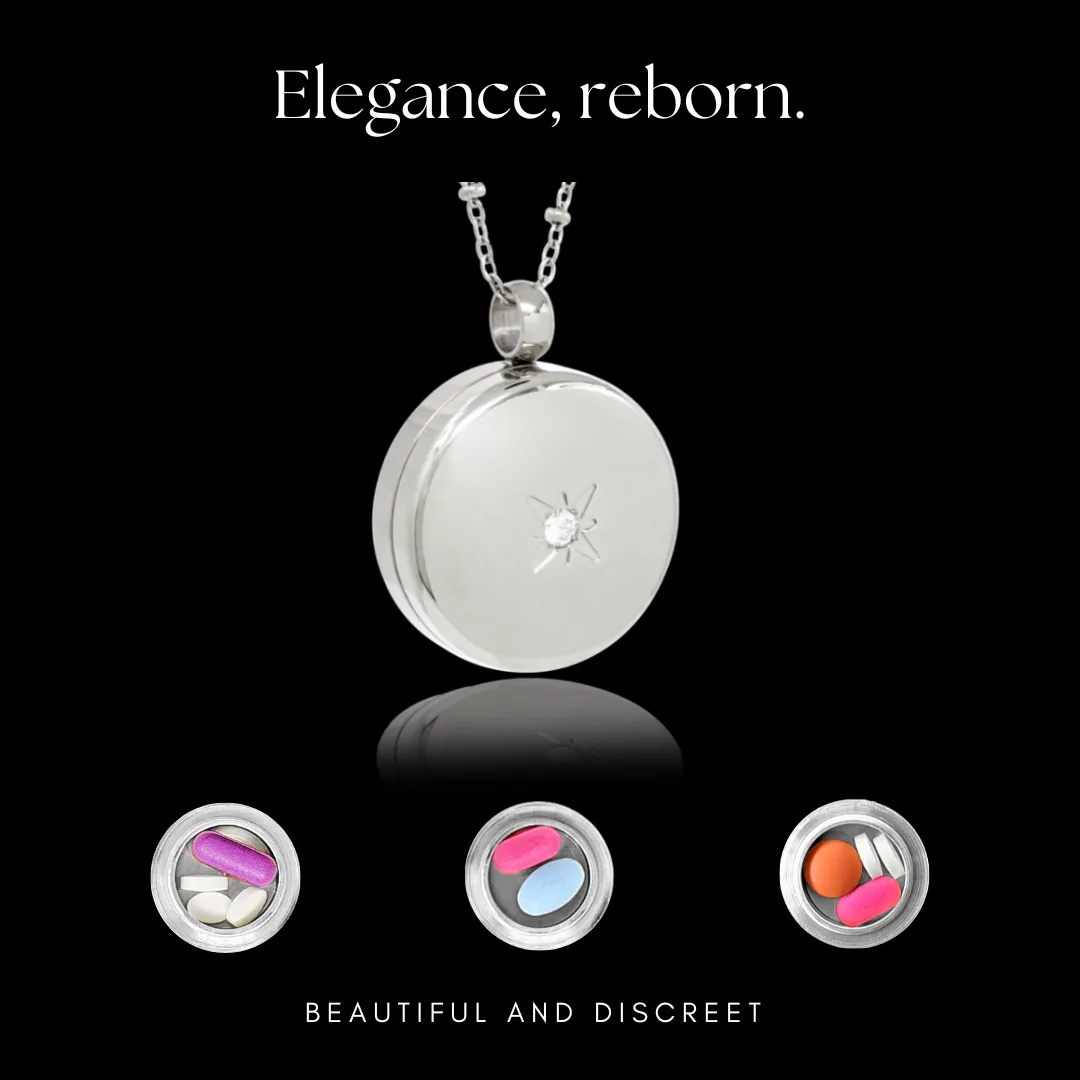
Round Silver with Lapis Pill Locket Necklace O-ring Seal - 25mm: Round silver pill locket with an O-ring seal and a lapis stone, made of polished 316L stainless steel. The O-ring seal is the key moisture barrier, so keeping it clean and pliable is essential for protecting pills; the stainless steel body resists rust but still benefits from gentle cleaning.

Round Silver with Lapis Pill Locket Necklace O-ring Seal - 25mm