Quick answer
Choose round planters for tight corners, single statement plants, and a softer look. Choose rectangular planters when you want to line a windowsill, edge a walkway, or group several small plants in a row. If you need to fill a specific footprint, measure first: round shapes waste less floor space in corners, while rectangular ones use straight edges efficiently along walls.
Planters come in many shapes, but the choice often comes down to round or rectangular. The shape affects how the planter fits your space, how plants grow, and how the whole arrangement feels. A round pot can soften a sharp corner, while a rectangular one can turn a bare windowsill into a tidy row of greenery.
This comparison looks at the practical differences between round and rectangular planters, using real examples from our catalog. You will see how each shape handles space, plant pairing, and maintenance, so you can pick the one that works for your home.
How shape affects space and placement
Round planters have a small footprint relative to their volume, which makes them easy to tuck into corners or place beside furniture without sharp edges catching. They work well as single accents. Rectangular planters, by contrast, have straight sides that sit flush against walls, windowsills, or railings. That makes them ideal for lining up multiple plants or creating a defined edge.
If you are working with a narrow balcony or a tight entryway, a rectangular planter can use the full length of the space, while a round one might leave awkward gaps. In an open room, a round planter can be placed anywhere without looking out of alignment, whereas a rectangular one often looks best when its long side runs parallel to a wall or window.
- Measure the length and width of your intended spot before buying; round planters need clearance for their widest point.
- For corners, a round planter often fits better because it does not have corners that bump into walls.
Plant pairing: which shape suits which plants
Round planters give plants an even amount of soil around the root ball, which suits mounded or trailing plants that spill over the edges. A single flowering plant or a small shrub looks balanced in a round pot. Rectangular planters, on the other hand, are great for plants that grow upright and can be spaced in a row, like herbs, grasses, or small succulents.
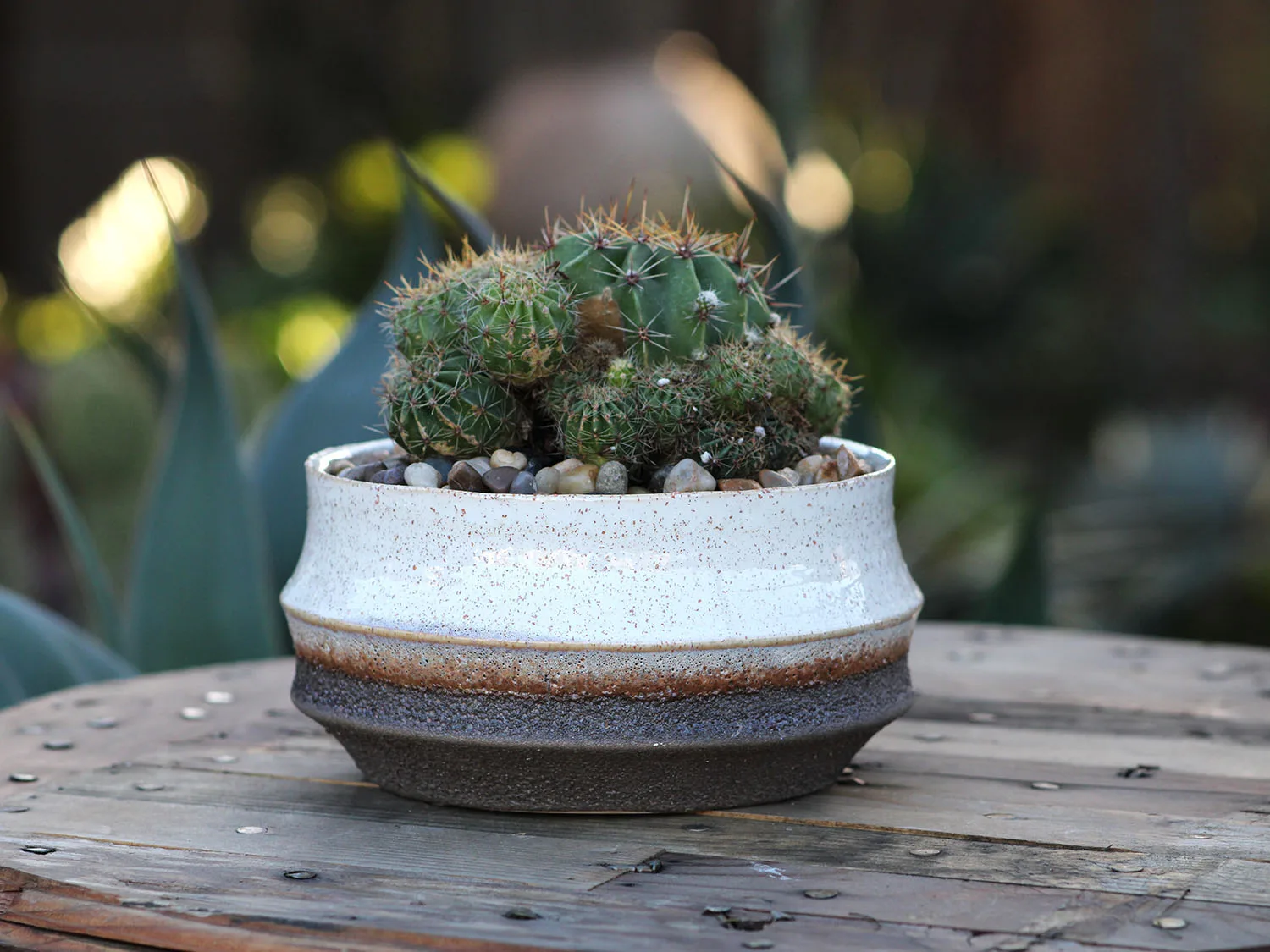
The Art Decor Rectangular Planter By Plantatorem is a low white rectangular planter designed to hold a pair of small plants side by side on a table or sill. Its straight walls and stepped base make it a natural fit for two matching plants or a small collection. For a round alternative, the Santa Barbara Bowls are ceramic drop-in planters with a bowl shape that suits a single plant or a small arrangement on a shelf or windowsill.
Santa Barbara Bowls
- Group plants with similar water and light needs when planting in a rectangular planter.
- In round planters, avoid mixing plants that grow at very different rates, as the faster one may crowd the other.
Material and style considerations
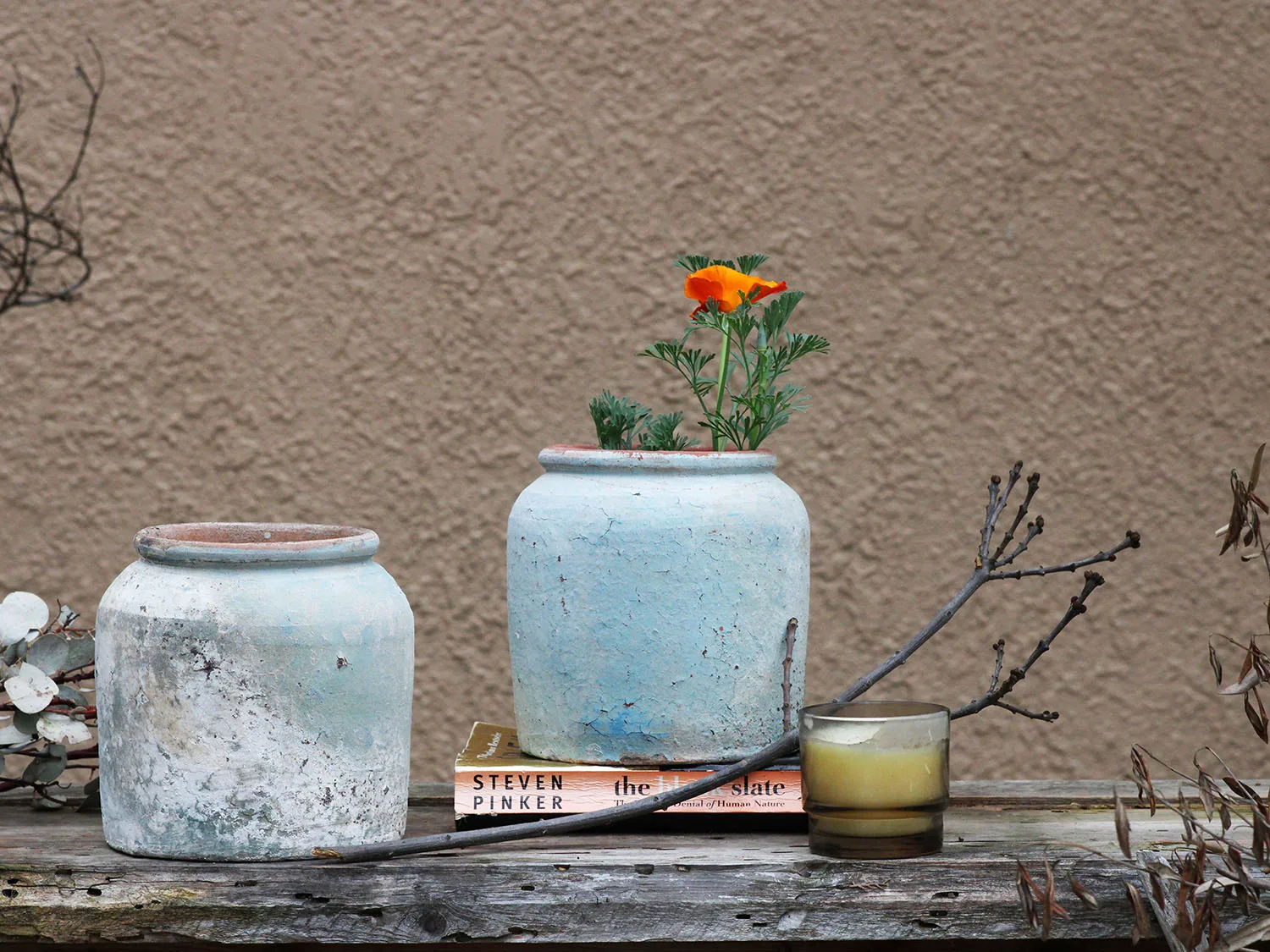
Both shapes come in a range of materials, from ceramic to concrete to resin. The shape you choose can influence the overall style: round planters often feel softer and more traditional, while rectangular ones lean modern and architectural. The LOW JAR PLANTER from PLANTATOREM is a ceramic planter in a low jar shape, offered in an aged color assortment, and suits both indoor and outdoor settings. Its rounded form works well as a decorative accent.
For a more contemporary look, the Tall Square Planter By Plantatorem is a modern urban planter with a tall, square silhouette. It is available in black and in two sizes, sold as a set of 2 or as a single pot. Square and rectangular shapes like this can create a strong vertical line, while round planters tend to blend more softly into the background.
- Consider the finish: glossy ceramics show reflections, while matte finishes hide water spots.
- If you plan to move the planter often, lighter materials like resin are easier to handle.
Maintenance and practical trade-offs
Round planters can be trickier to clean because there are no corners, but their smooth interior makes it easy to remove root balls. Rectangular planters have corners where soil and moisture can collect, so they may need more thorough cleaning between seasons. Both shapes require drainage holes or a way to manage excess water; if a planter lacks drainage, use a liner or add a layer of gravel, though this is not a substitute for proper drainage.
When it comes to watering, round planters dry out more evenly, while rectangular ones may dry faster at the ends. This means you might need to water rectangular planters more carefully to keep moisture consistent. If you are prone to overwatering, a round planter with a single plant can be more forgiving.
- Always check for drainage holes; if missing, drill them or use a nursery pot inside.
- In rectangular planters, water the ends slightly more if they dry out faster.
Trade-offs at a glance
- Space efficiency: Round planters fit better in corners and tight spots; rectangular planters use straight edges to line walls and windowsills efficiently. Measure your space and consider how the planter will sit relative to walls and furniture.
- Plant pairing: Round planters suit single mounded or trailing plants; rectangular planters are better for rows of upright plants like herbs or grasses. Think about the number and type of plants you want to grow together.
- Maintenance: Round planters are easier to clean but may dry out more evenly; rectangular planters have corners that can collect debris but may dry faster at the ends. Choose based on how much time you want to spend on cleaning and watering.
Product facts
- Art Decor Rectangular Planter By Plantatorem: A low white rectangular planter from the Avenue Concrete range, built to hold a pair of small plants side by side on a table or sill. The sides rise straight, then the base steps inward on a short angled plinth. The rectangular shape and low profile make it ideal for windowsills or narrow tables where you want to display two small plants neatly.
- Santa Barbara Bowls: Ceramic drop-in planters designed for indoor use, with a bowl shape and clean, modern look. Available in Rustic Gold and Rustic Ivory finishes, size 7.5" x 4.0". The round bowl shape suits a single plant or a small arrangement, and the drop-in design makes it easy to swap plants or move them without repotting.
- Tall Square Planter By Plantatorem: A modern urban planter suited to both indoor and outdoor settings, with a tall, square silhouette. Available in Black, in sizes 12" L x 12" W x 35.5" H and 15" L x 15" W x 39.5" H, sold as a set of 2 or as a single pot. The square shape and tall height create a strong vertical accent, and the option to buy a single or a set gives flexibility for different spaces.
Which shape fits your space?
Best for
- Small apartments or rooms with tight corners where a round planter can tuck in neatly.
- Windowsills or narrow ledges where a rectangular planter can hold a row of small plants.
- Gardeners who want to grow herbs or succulents in a straight line.
Not for
- Those who need to fill a very specific rectangular footprint and want no wasted space—choose rectangular.
- People who frequently rearrange furniture and want a planter that looks good from any angle—round is more forgiving.
- Anyone who wants a uniform row of identical plants—rectangular planters make alignment easier.
The right shape depends on your space and your plants. Round planters offer flexibility and a softer look, while rectangular ones bring order and efficiency. Use the trade-offs above to decide, and remember that the best planter is the one that fits both your room and your routine.