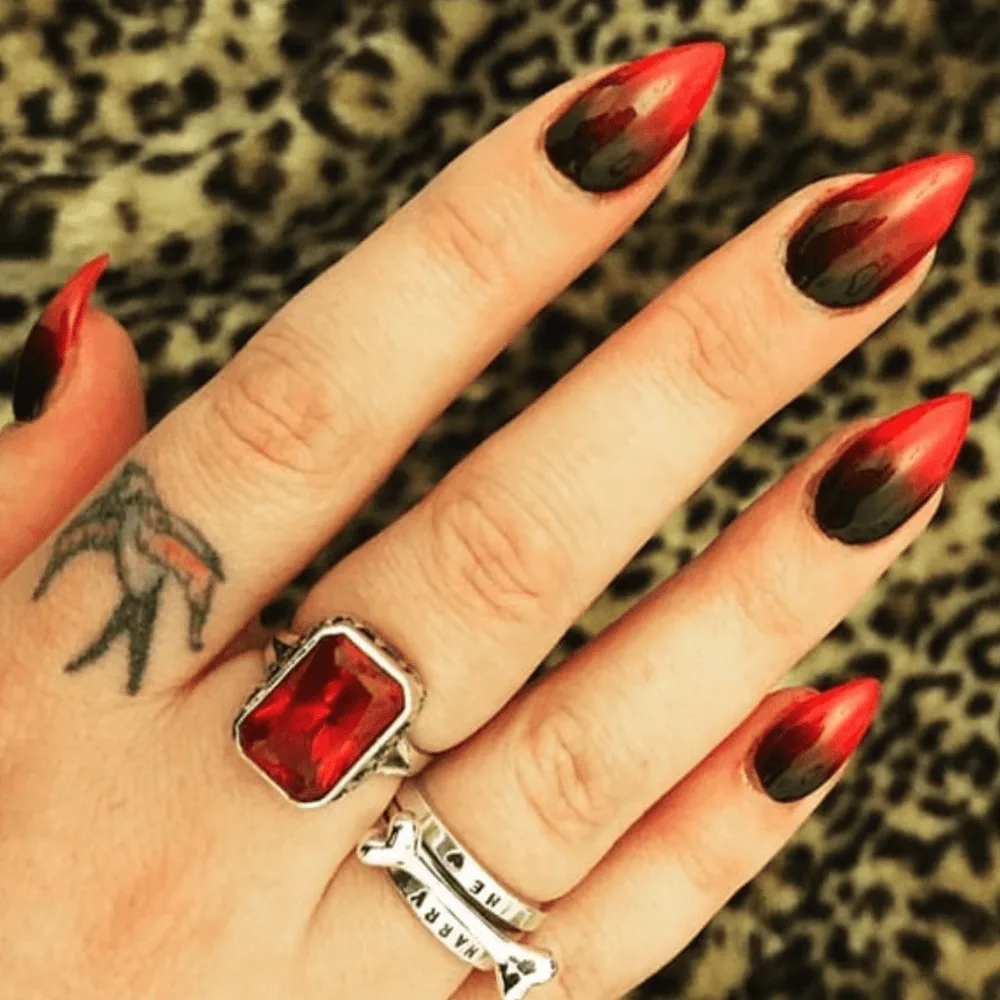
Quick Answer
Choose Ruby Red Polaris if you want a high-contrast, head-turning red statement with a synthetic ruby, and you prefer a lower price. Choose Champagne Peach Polaris if you want a softer, warm-toned stone that reads as ice Cubic Zirconia and you don't mind paying a little more for that lighter look. Both share the same oversized 14x10mm octagon cut, sterling silver setting, and oxidised finish, so the real decision comes down to color and stone type.
What Both Polaris Rings Share
Before comparing the differences, it helps to know what you're getting either way. Both the Ruby Red Polaris and the Champagne Peach Polaris are built on the same foundation: an oversized 14x10mm octagon stone set in sterling silver, finished with an oxidised treatment that adds contrast and clarity around the stone. The settings are handmade from masters, so you won't find these exact pieces elsewhere. Both are named after Polaris, the current north star, and both are designed to be noticed. If you like the silhouette and the size, you're already halfway to a decision.
Stone Type and Color: The Core Difference
The Ruby Red Polaris uses a synthetic ruby, which gives it a deep, saturated red that catches light aggressively and creates strong contrast against the oxidised silver. It's a bold, classic gemstone color that reads as dramatic and intentional. The Champagne Peach Polaris uses an ice Cubic Zirconia in a champagne-peach tone, which is lighter, warmer, and more subdued. Where the ruby demands attention with intensity, the champagne peach invites a closer look with subtlety. Neither is better in the abstract; they simply pull the eye in different ways. If you want a ring that announces itself from across the room, the ruby is the stronger choice. If you prefer a stone that shifts with the light and feels softer against the skin, the champagne peach is the one.
Price and Value Trade-Off
The Ruby Red Polaris is listed at USD 82.41, compared to a catalog comparison price of USD 123.00. The Champagne Peach Polaris is listed at USD 91.02, also against a catalog comparison price of USD 123.00. That's roughly a nine-dollar difference at the listed prices, with the ruby coming in lower. Both offer the same oversized format and handmade sterling silver construction, so the price gap reflects the stone choice rather than a difference in build quality. If budget is the deciding factor, the ruby edges ahead. If you're drawn to the champagne peach color, the small premium is the cost of that specific look.
Styling the Two Stones
A red synthetic ruby pairs naturally with black, charcoal, deep green, and other dark tones, which makes it an easy fit for gothic and alternative wardrobes. It also works as a single pop of color against an all-black outfit. The champagne peach ice Cubic Zirconia is more versatile in lighter palettes: creams, warm neutrals, dusty pinks, and soft gold or rose gold metals. It can read as romantic or understated depending on what you wear it with. Because both rings use an oxidised sterling silver finish, they share a slightly darkened metal tone that keeps them from feeling too polished or traditional. That finish is what ties the two pieces together even when the stones pull in opposite directions.
Metal Options and Fit Considerations
Both Polaris rings offer metal as an available option type, so you can choose the metal finish that matches your other jewelry. The catalog does not list specific metal choices beyond that, so if you need a particular finish, check the product page before ordering. On fit: the 14x10mm octagon stone is oversized, which means the ring will sit prominently on the finger. If you have shorter fingers, a larger stone can dominate the hand, so consider how much visual weight you want. If you have longer fingers, the octagon shape will balance well. Neither ring is subtle, so the fit question is less about size and more about whether you want that much stone on your hand every day.
Trade-Offs at a Glance
- Color Intensity: Ruby Red Polaris uses a synthetic ruby for a deep, saturated red. Champagne Peach Polaris uses ice Cubic Zirconia in a lighter champagne-peach tone. Pick red for maximum impact, peach for a softer, warmer look.
- Price: Ruby Red Polaris is listed at USD 82.41; Champagne Peach Polaris is listed at USD 91.02. Both share a catalog comparison price of USD 123.00. The ruby costs less; the peach costs about nine dollars more.
- Stone Type: Synthetic ruby versus ice Cubic Zirconia. Both are set in sterling silver with an oxidised finish and the same 14x10mm octagon cut. The stone choice is the main difference; the build is otherwise the same.
- Styling Range: Red pairs well with dark, gothic, and alternative outfits. Champagne peach suits lighter, warmer, and more romantic palettes. Match the stone to the clothes you actually wear most.
Product Facts
- Ruby Red Polaris: Ruby Red Polaris features an oversized 14x10mm octagon synthetic ruby set in sterling silver with an oxidised finish. The synthetic ruby gives you a saturated red with strong contrast against the darkened silver, and the large octagon cut makes it a statement piece rather than a subtle everyday ring.
- Champagne Peach Polaris: Champagne Peach Polaris features an oversized 14x10mm octagon ice Cubic Zirconia stone set in sterling silver with an oxidised finish. The ice Cubic Zirconia in champagne peach offers a lighter, warmer alternative to red, with the same oversized format and handmade setting, so you get the same silhouette in a softer color.
Which Polaris Ring Is Right for You?
Best for
- Anyone who wants a bold, high-contrast red statement ring
- Shoppers building a gothic or dark-toned wardrobe
- Buyers who prefer a lower listed price for the same oversized format
Not for
- Anyone who wants a subtle, understated stone
- Shoppers who prefer warm, light, or romantic color palettes
- Buyers who need a specific metal finish that isn't listed in the available options