Quick answer
Most rug problems come down to three habits: vacuum with the right setting and direction, blot stains immediately instead of rubbing, and give new wool rugs several weeks to settle before you worry about shedding. If you are still deciding on a rug, start with a swatch so you can test color, texture, and shedding in your own light before committing to a full-size piece.
Rugs take more daily abuse than almost anything else in a dining room: chair legs, dropped forks, red wine, and a vacuum that may be too aggressive for the pile. The good news is that most of what people worry about, including shedding and stains, has a simple, repeatable fix.
Below are the questions we hear most often, answered one at a time so you can jump straight to the issue in front of you.
Why does my new rug shed?
Shedding is normal on many new rugs, especially wool and wool-blend flat weaves. Short fibers that were not fully locked into the weave work their way loose during the first weeks of foot traffic and vacuuming. It looks alarming in the canister, but it is usually a settling process rather than a defect.
Give a new rug four to six weeks of regular, gentle vacuuming before you judge it. If shedding continues heavily after that, check whether your vacuum beater bar is too aggressive for the pile, and switch to suction-only passes.
- Vacuum more often but with less force during the first month.
- Empty the canister after each pass so you can see whether shedding is actually decreasing.
Is wool rug shedding different from synthetic shedding?
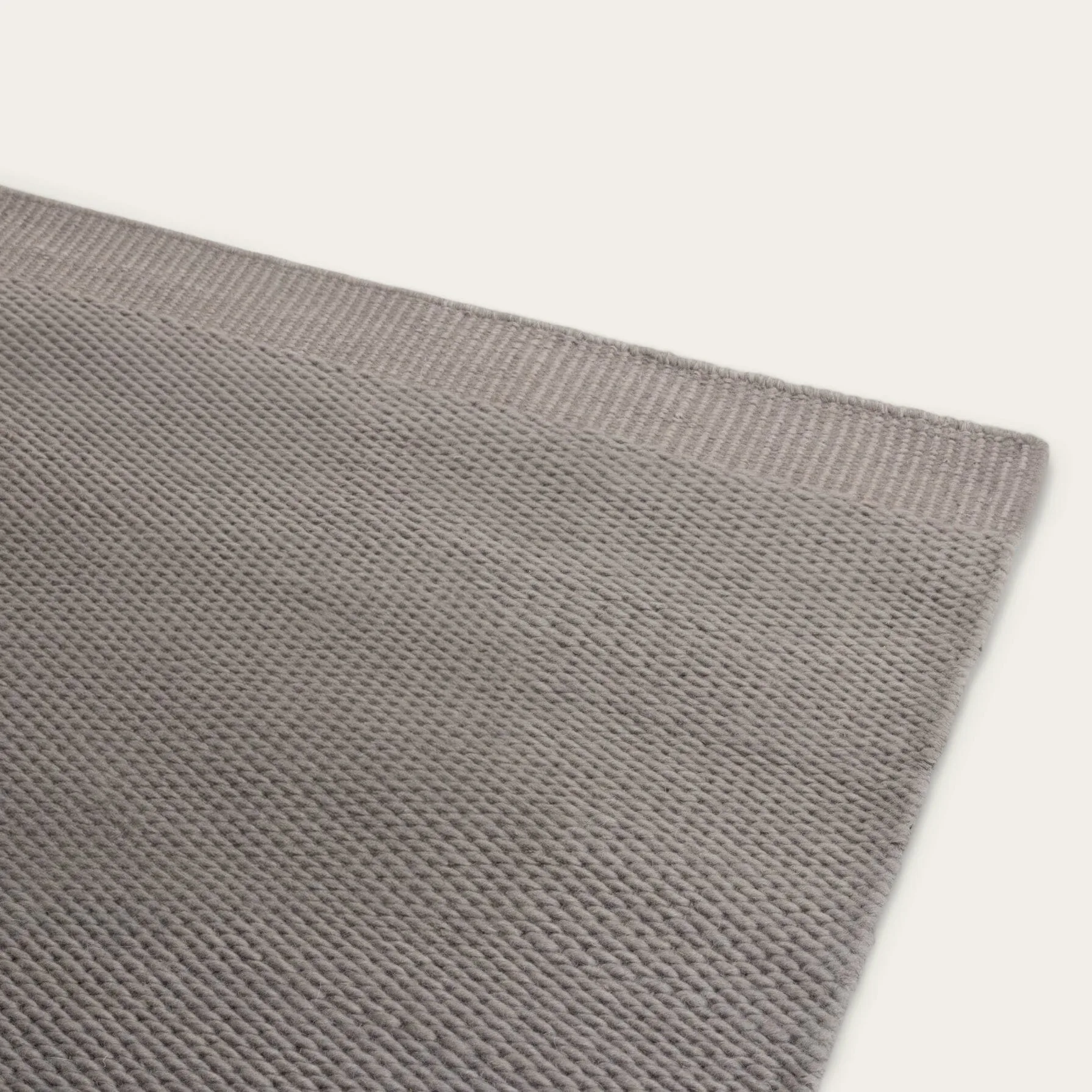
wool rug
Wool tends to shed short, curly fibers that clump in the canister, while synthetic rugs more often release long, straight strands from cut edges. Both calm down with time, but wool responds especially well to gentle, consistent vacuuming rather than occasional deep passes.
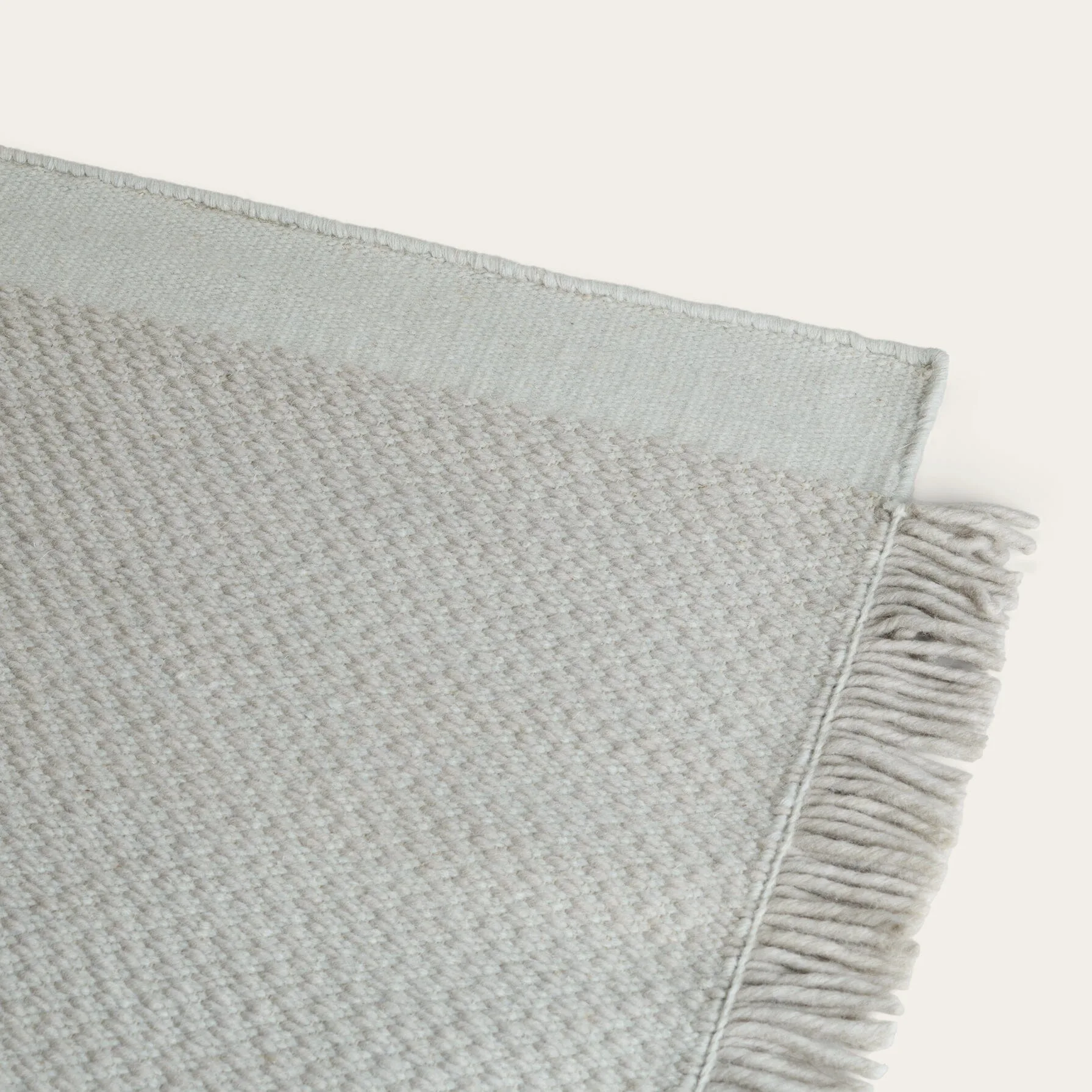
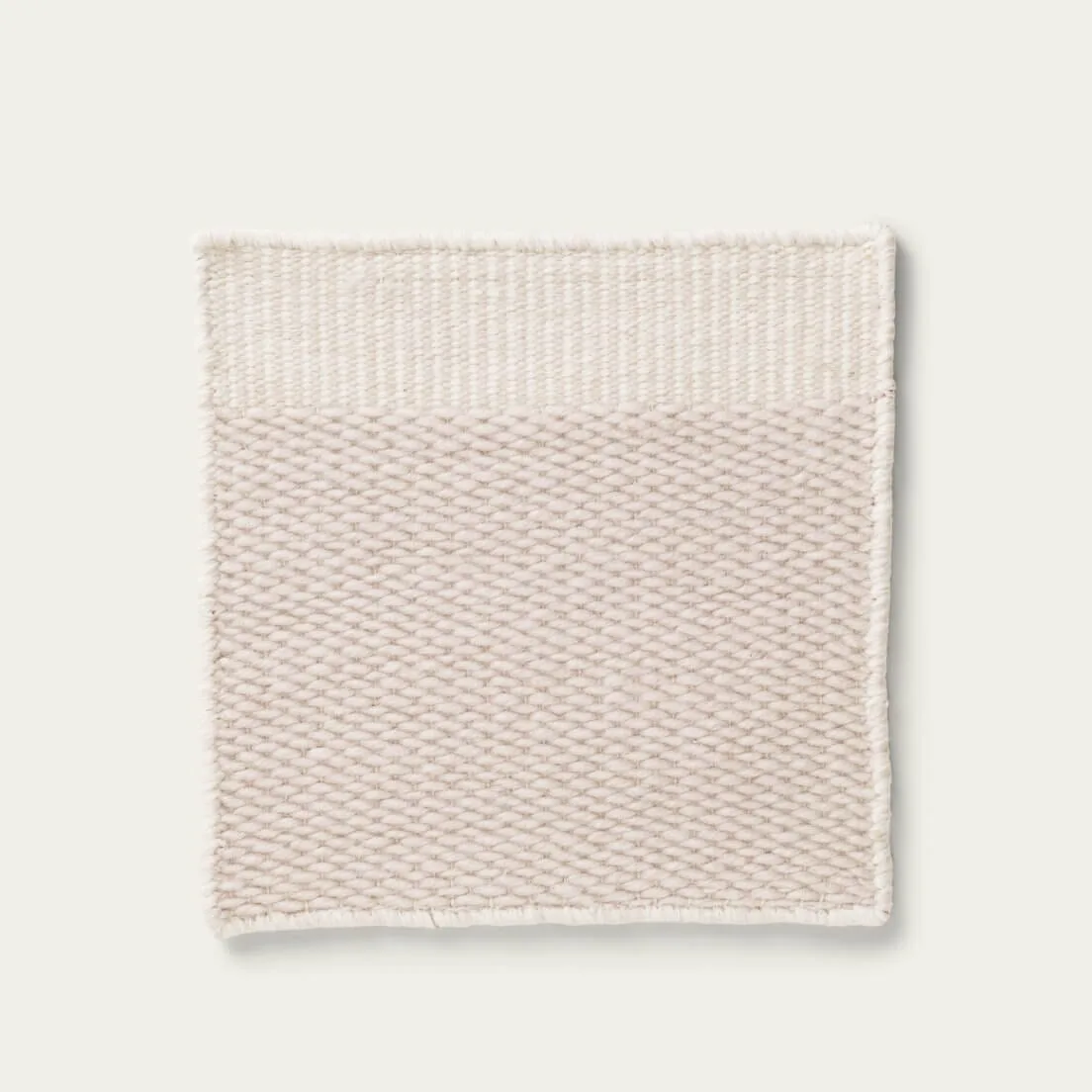
If you want to preview how a wool weave behaves before buying a full rug, a swatch lets you handle the pile, test a vacuum pass, and see the fiber type up close. The Fringe Wool Rug Swatch is a flat weave with soft fringe, made of 88% New Zealand wool and 12% cotton, and it comes in Fog Gray, Sunset Tan, and Sage Green.
- A swatch is the cheapest way to test shedding and texture before a full-size purchase.
- Note the fiber content: wool and cotton blends behave differently from all-synthetic pile.
How should I vacuum a rug without damaging it?
Set the vacuum to the correct height for your pile and work in slow, overlapping passes. On flat weaves and fringed rugs, use suction only and skip the rotating brush, which can catch fringe and pull yarn. Vacuum in the direction of the weave when you can, and go back and forth across it on the next pass.
High-traffic zones under a dining table need more frequent light vacuuming, not more aggressive vacuuming. Two quick weekly passes beat one harsh monthly pass. If your vacuum has a bare-floor setting, that is often the safest choice for delicate weaves.
- Lift fringe out of the way or vacuum it with a handheld on low suction.
- Rotate the rug twice a year so wear and fading stay even.
What is the fastest safe way to remove a stain?
Blot, do not rub. Press a clean white cloth onto the spill from the outside in, working toward the center so you do not spread the stain. Plain water handles many fresh food and drink spills; for greasy marks, a drop of mild dish soap in cool water usually does the job.
After blotting, rinse with a barely damp cloth and dry the area with a towel or fan. Never soak a wool rug, and never scrub a stain you cannot see, because you can distort the pile before the stain even lifts.
- Test any cleaning solution on a hidden corner first.
- Blot red wine immediately; the longer it sits, the harder it is to lift.
Do I need a rug pad and regular rotation?
A pad keeps the rug from sliding, cushions chair legs, and helps the weave hold its shape. It also reduces the friction that speeds up shedding and wear. Rotation matters just as much: sun exposure and foot traffic both fade and flatten one side faster than the other.
If your rug sits under a dining table, check the edges every few months for curling or fraying. Catching a lifted corner early is far easier than repairing a worn edge later.
- Trim loose fibers with scissors; do not pull them.
- Rotate 180 degrees twice a year for even wear.
Rug care quick reference
Shedding timeline
Expect loose fibers for the first four to six weeks on new wool and wool-blend rugs. If shedding is still heavy after two months, switch to suction-only vacuuming.
Vacuum setting
Use suction only on flat weaves and fringe; reserve the beater bar for low-pile, unfringed rugs. Slow, overlapping passes beat fast, forceful ones.
Stain response
Blot from the outside in with a white cloth and cool water; add mild dish soap only for grease. Never rub, soak, or scrub a wool rug.
Rug details worth knowing before you buy
- Fringe Wool Rug Swatch: Flat weave construction with soft fringe, made of 88% New Zealand wool and 12% cotton, available in Fog Gray, Sunset Tan, and Sage Green. The wool-cotton blend explains the shedding you may see early on, and the swatch format lets you test vacuuming and stain behavior before buying a full rug.
- Single Tall Glass Pro: A single tall glass in Smoke Gray, sold as one piece. Keeping one spare glass on hand means a dropped drink at the table does not turn into a rug stain emergency mid-dinner.
Most rug care comes down to patience and consistency: gentle vacuuming, immediate blotting, and a pad that keeps everything in place. Handle those three, and a good rug will hold its color and texture through years of dinners.