Quick answer
Order a sample before buying any rug you cannot see in person, especially if you are considering a custom size or a high-investment piece like ADA Ochre. A small sample resolves rug color matching under your actual lighting and confirms texture and weave. For custom orders, where returns and cancellations do not apply, sampling is not optional—it is your only safety net.
What a rug sample actually tells you
A sample shows the true color, texture, and edge finish of a rug in your space. Screens distort color; a physical swatch under your lamp at 7 p.m. does not. You can also feel the weave density and see how the rug behaves on your floor—whether it slides, curls, or lies flat. For reversible rugs like ADA or HUGO, a sample lets you check both faces before you commit.
When a sample is essential versus optional
Custom-size rugs are made to your specifications and cannot be returned or cancelled. That makes sampling essential. For standard plastic rugs, a sample is still wise if you are matching an existing palette or ordering a large size. If you are replacing an identical rug you already own, you can skip the sample. Otherwise, treat the small cost as insurance.
How to test a sample for color matching
Place the sample on your floor and view it at different times of day—morning, afternoon, and under artificial light. Compare it against your wall color, sofa, and any fixed elements like stone or wood. For rugs with two faces, flip the sample to see the reverse expression. If the sample looks good in all three lighting conditions, you have a match. If it shifts dramatically, consider a different colorway.
Sample return policy and custom order rules
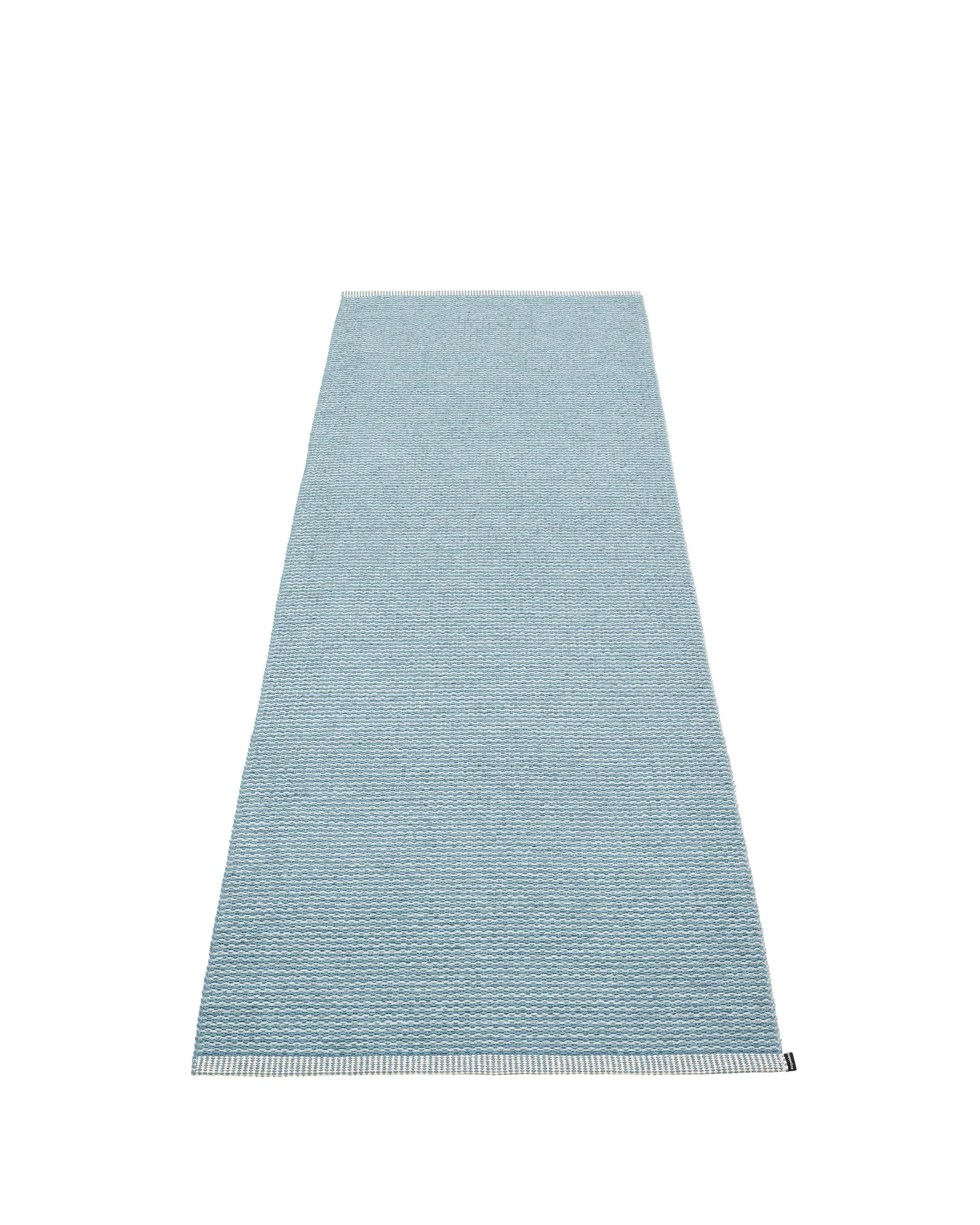
Sample return policies vary by retailer; check whether samples are returnable and if there is a restocking fee. More importantly, understand that custom-size rugs are non-returnable and non-cancellable because they are woven specifically for you. That policy applies to MONO Dark Blue - Custom Rug. Standard plastic rugs like ADA Ochre or MONO Linen - Runner Rug may have a return window, but you still pay return shipping and risk color mismatch. Sampling avoids that hassle entirely.
How to order and use a sample efficiently
Order samples of your top two or three color choices at once to compare side by side. Keep the samples in the room for at least 24 hours before deciding. If you are ordering a custom rug, use the sample to confirm the exact color and weave before you finalize dimensions. For standard sizes, use the sample to decide whether the pattern scale works in your space—a dot pattern like HUGO reads differently at full size than on a small swatch.
Decision rules for ordering a rug sample
- If you are ordering a custom-size rug: Always order a sample first. Custom rugs are non-returnable and non-cancellable, so a sample is the only way to confirm color and weave before production. No sample, no custom order.
- If you are matching an existing color scheme: Order samples of your top two color choices and view them in your room under daylight and artificial light. Compare against fixed elements like flooring and cabinetry. If the sample looks good in all lighting, proceed.
- If you are ordering a standard plastic rug: A sample is optional but recommended for large sizes or high-contrast patterns. Check the return policy first; if returns are costly, a sample is cheaper. Sample when the return shipping cost exceeds the sample cost.
- If you are replacing an identical rug: You can skip the sample if you are reordering the exact same product and color you already own and love. No sample needed for exact reorders.
Product facts that affect your sample decision
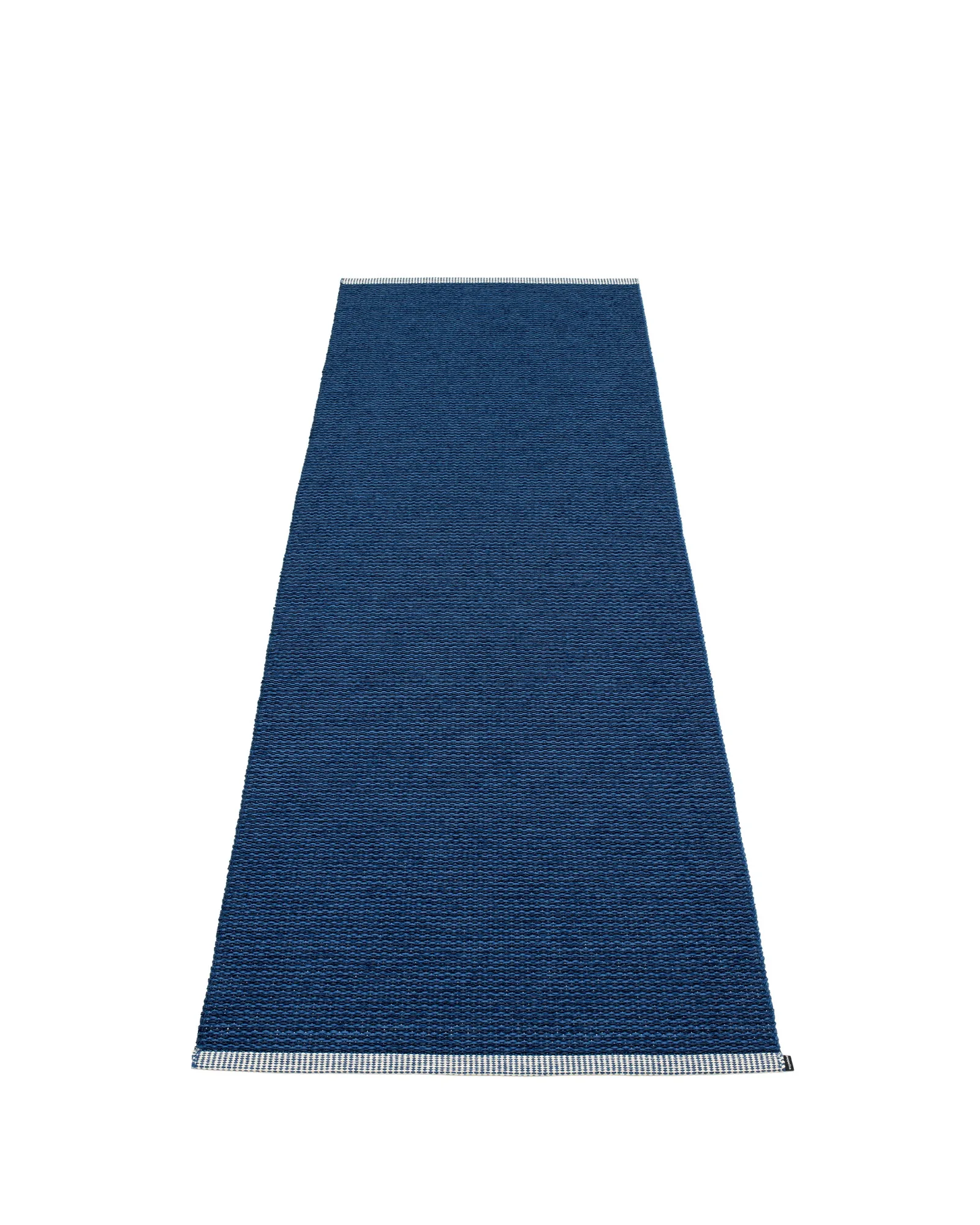
- MONO Dark Blue - Custom Rug: Custom orders are woven especially for you and have a lead time of approximately 2–3 weeks. Because each rug is created on traditional shuttle looms, slight size variations may occur as a natural part of the weaving process. As custom-size rugs are made to your specifications, returns and cancellations do not apply. Because you cannot return or cancel a custom rug, a sample is your only way to verify color and texture before committing. The 2–3 week lead time also means a mistake costs you weeks, not just money.
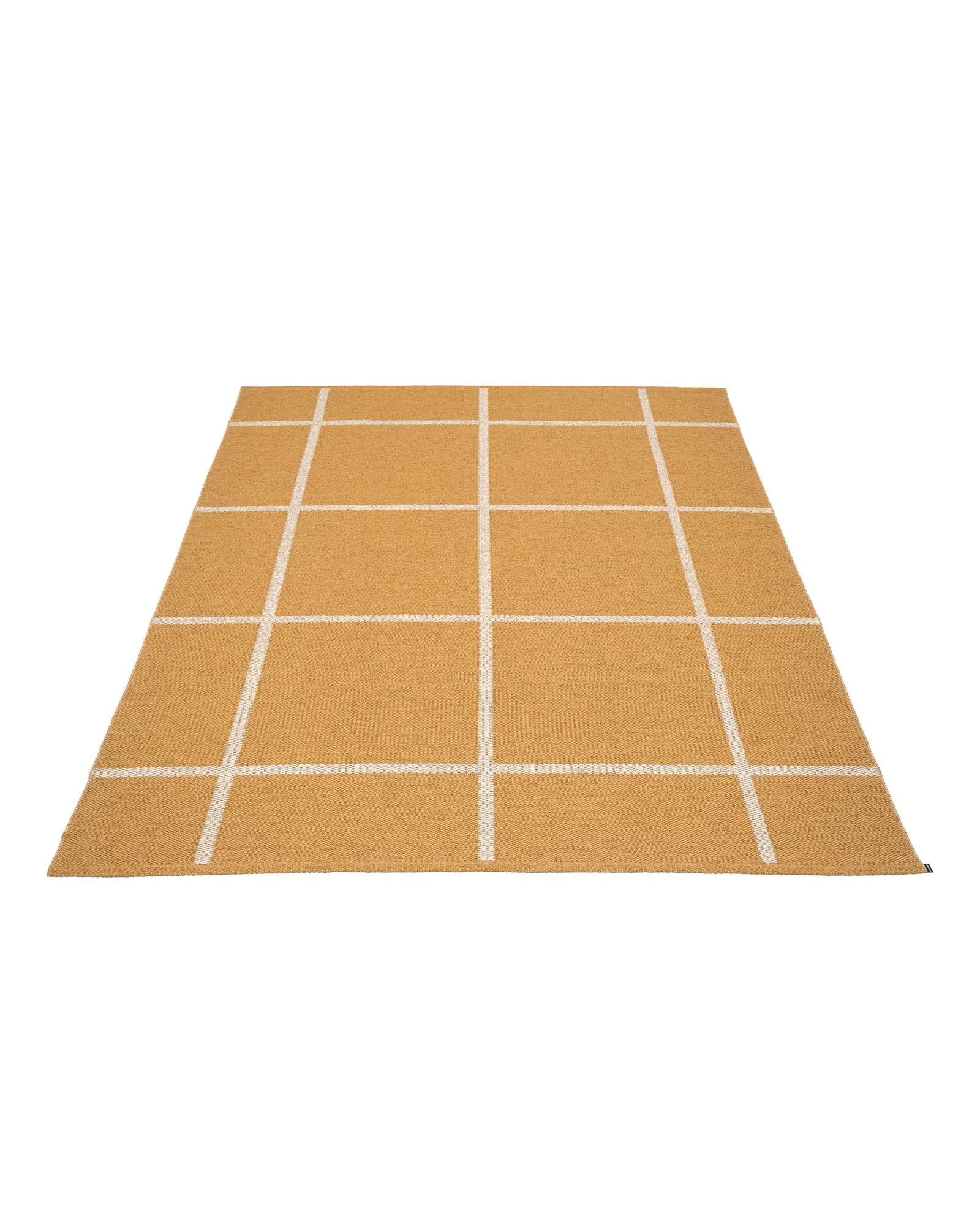
- ADA Ochre - Area Rug: ADA is defined by a clean grid pattern where evenly spaced lines intersect to create a composed and structured surface. The reversible construction offers two harmonious expressions in one rug, while the welded edges ensure a strong, defined finish that supports the geometry of the design. A sample lets you see both reversible faces and judge how the grid scale feels in your room. The welded edges also mean the rug lies flat and defined, which you can confirm with a sample.
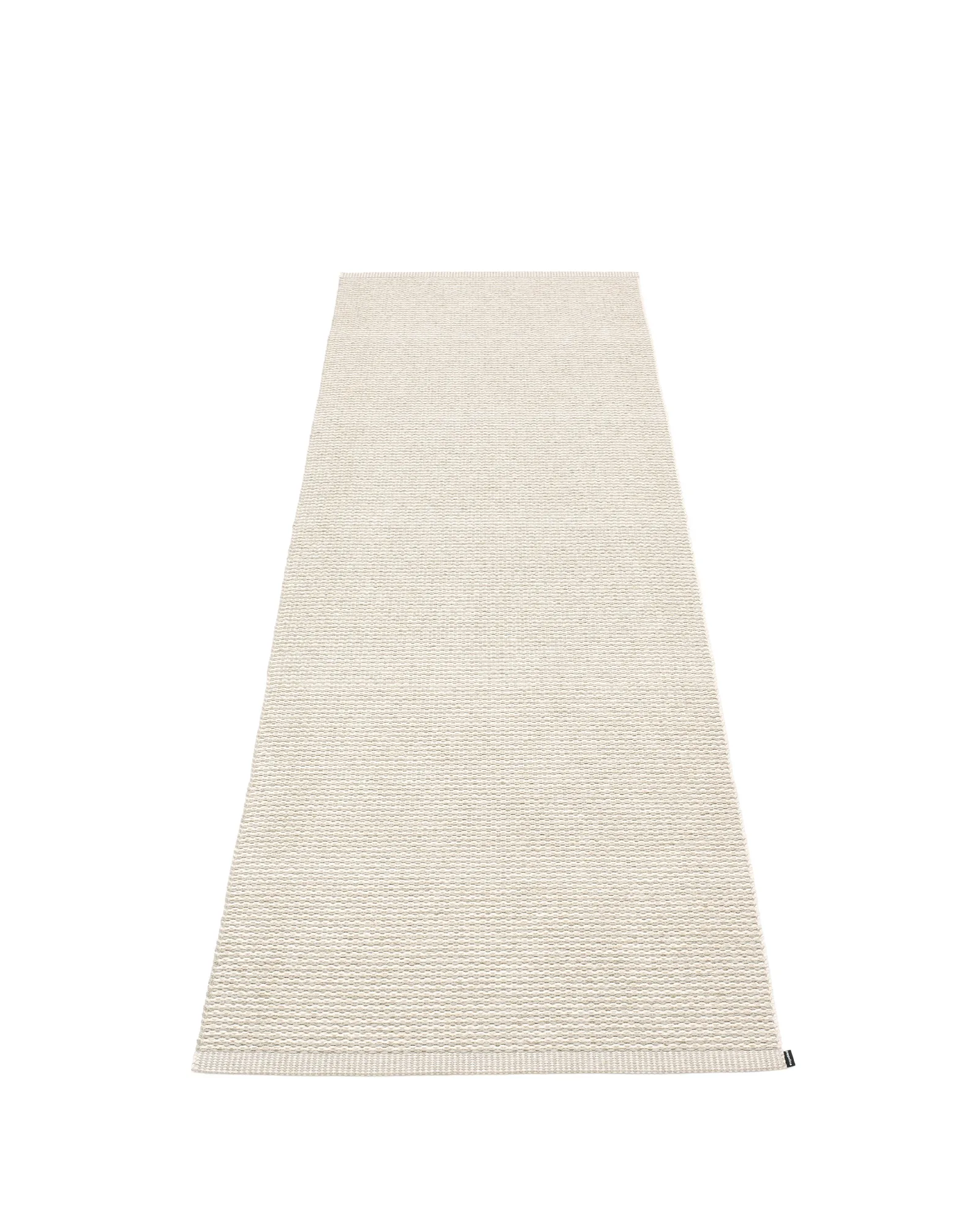
- MONO Linen - Runner Rug: MONO is defined by simplicity and refined design. Its monochrome palette and contrasting, double-folded hemmed edges showcase subtle craftsmanship and attention to detail. The slightly softer weave makes this rug even more comfortable to walk on. If you are choosing between MONO Linen and another neutral, a sample reveals the subtle tone difference and the softer underfoot feel that photos cannot convey.
Is sampling right for you?
Best for
- Shoppers considering a custom-size rug who cannot afford a color or texture mistake
- Anyone matching a rug to existing furniture, flooring, or wall color
- Buyers choosing between two similar neutrals or reversible patterns
Not for
- Shoppers reordering the exact same rug they already own
- Buyers who have seen the exact rug in person and are certain of the color
- Those unwilling to wait for a sample before placing a custom order