Quick answer
Rustic Tourmaline Cork Fabric is a soft, pliable printed cork that suits small bags, wallets, and pouches where you want a natural look without stiff, crack-prone material. Treat it like a lightweight cork: use a sharp needle, a Teflon or walking foot, and keep seams simple.
Why printed cork changes your project planning
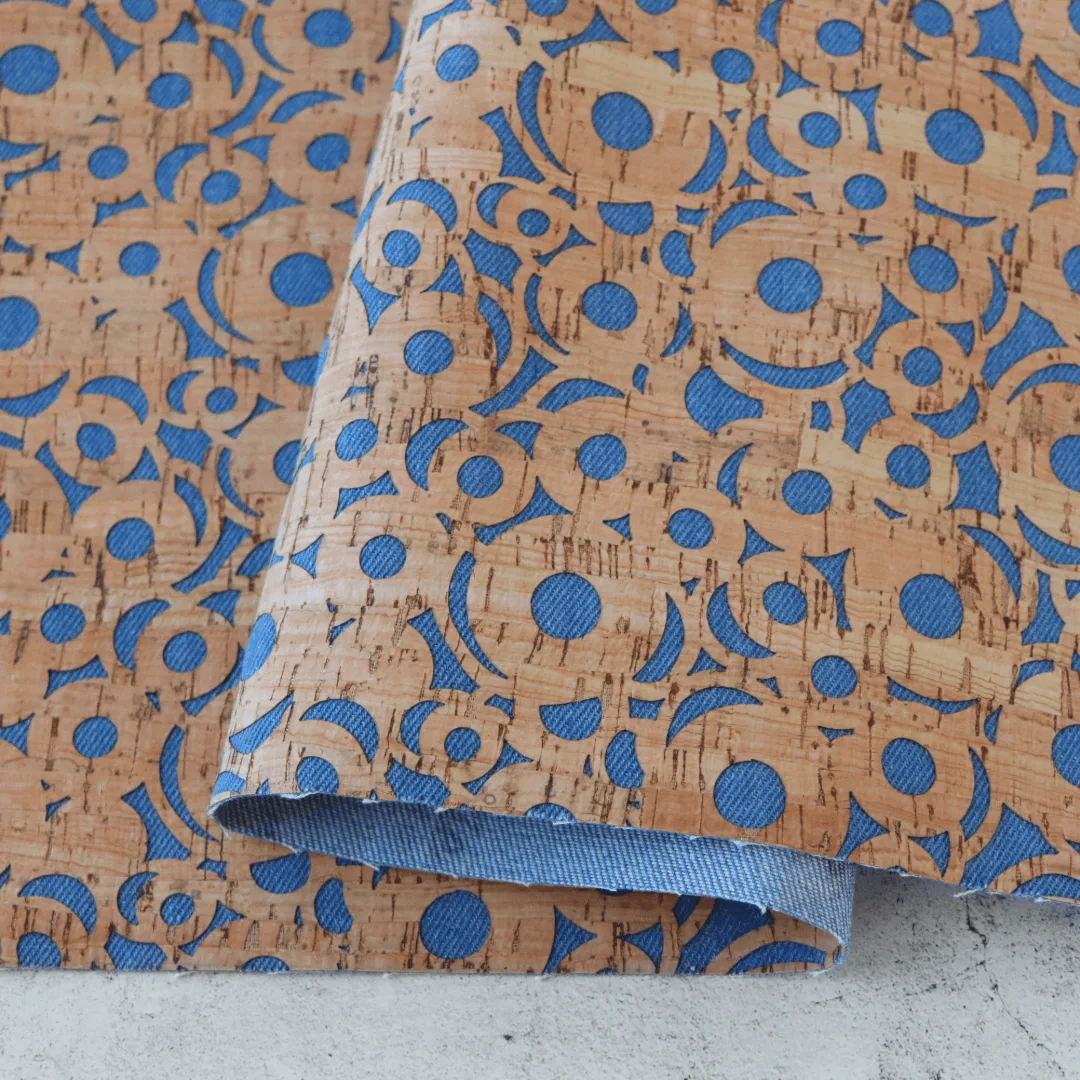
Printed cork carries its color and pattern on the surface, so the placement of motifs matters more than with a solid cork. On a small wallet or card holder, a bold print can dominate the front panel; on a larger tote, the same print reads as an accent. Plan your cut around the most visible panel first, then use the offcuts for pockets or tabs.
Because Rustic Tourmaline is described as soft and pliable rather than stiff, it drapes more than firm cork. That makes it comfortable for curved edges and small gussets, but it also means large, unsupported panels may need a backing or interfacing to hold their shape. The catalog does not list a specific backing weight, so test a scrap with your intended interfacing before cutting the main pieces.
Where this cork is less suitable
If you need a cork that stands up like a structured board for a rigid box bag or a large briefcase, this soft cork may not be the best match on its own. It is designed for bag making and detailed sewing, not for projects that demand a hard, self-supporting shell. Similarly, if you want a solid, unprinted surface, a printed cork will show pattern seams where you join pieces, so plan those joins deliberately or choose a solid cork instead.
Rustic Tourmaline Cork Fabric FAQ
What should I sew with Rustic Tourmaline Cork Fabric?
Start with small, detailed projects where the print is a feature: a zip pouch, a card wallet, a small crossbody bag, or a key fob. The cork is soft and pliable, so it handles curves and small pieces well. For larger totes, add a backing or interfacing to give the body structure. Cut a test piece with your chosen interfacing before committing to a large bag.
Which needle and foot should I use?
Use a sharp needle sized for medium-weight fabric, such as a universal or microtex needle in a size that matches your thread and backing. A Teflon foot or walking foot helps the cork feed without sticking. The catalog does not specify a needle size, so test on a scrap first. If the cork drags, switch to a walking foot before changing tension.
Can I sew printed cork on a domestic machine?
Yes. The product is described as sewing beautifully on both domestic and industrial machines. The main adjustment is presser foot pressure: reduce it if the cork shows marks, and use a fresh sharp needle to avoid skipped stitches. Sew a short test seam on a scrap to check for marks before topstitching.
How do I handle the print when cutting?
Lay out your pattern pieces on the cork and check that the print sits where you want it on the finished project. Mark the right side clearly, because cork has a distinct face and backing. For small wallets, center a motif on the front panel; for bags, decide whether the print should run vertically or horizontally before cutting. Photograph your layout before cutting so you can repeat it if you need a replacement piece.
What are good cork fabric wallet projects?
A card holder, a bifold wallet, or a small zip wallet are all good matches because they use small panels and few seams. Because the cork is soft, avoid designs that rely on crisp folded edges without interfacing. Use a thin interfacing on the outer panel if you want a firmer wallet. Make a test wallet from scraps first to check folded thickness.
How should I finish seams and edges?
Cork does not fray like woven fabric, so you can leave some edges raw, but visible edges look better bound or topstitched. Use a longer stitch length to avoid perforating the cork, and avoid unpicking seams, which can leave permanent holes. If you need to secure an edge, a narrow binding or a facing gives a clean result. Clip curves carefully and press lightly from the back to avoid flattening the print.
Product facts
-
Rustic Tourmaline Cork Fabric: Consists of a thin layer of 100% natural cork bonded to a backing, and is described as soft, pliable, and consistent enough to sew on domestic and industrial machines. You can use your regular home machine without special equipment, and the consistent thickness helps seams feed evenly.
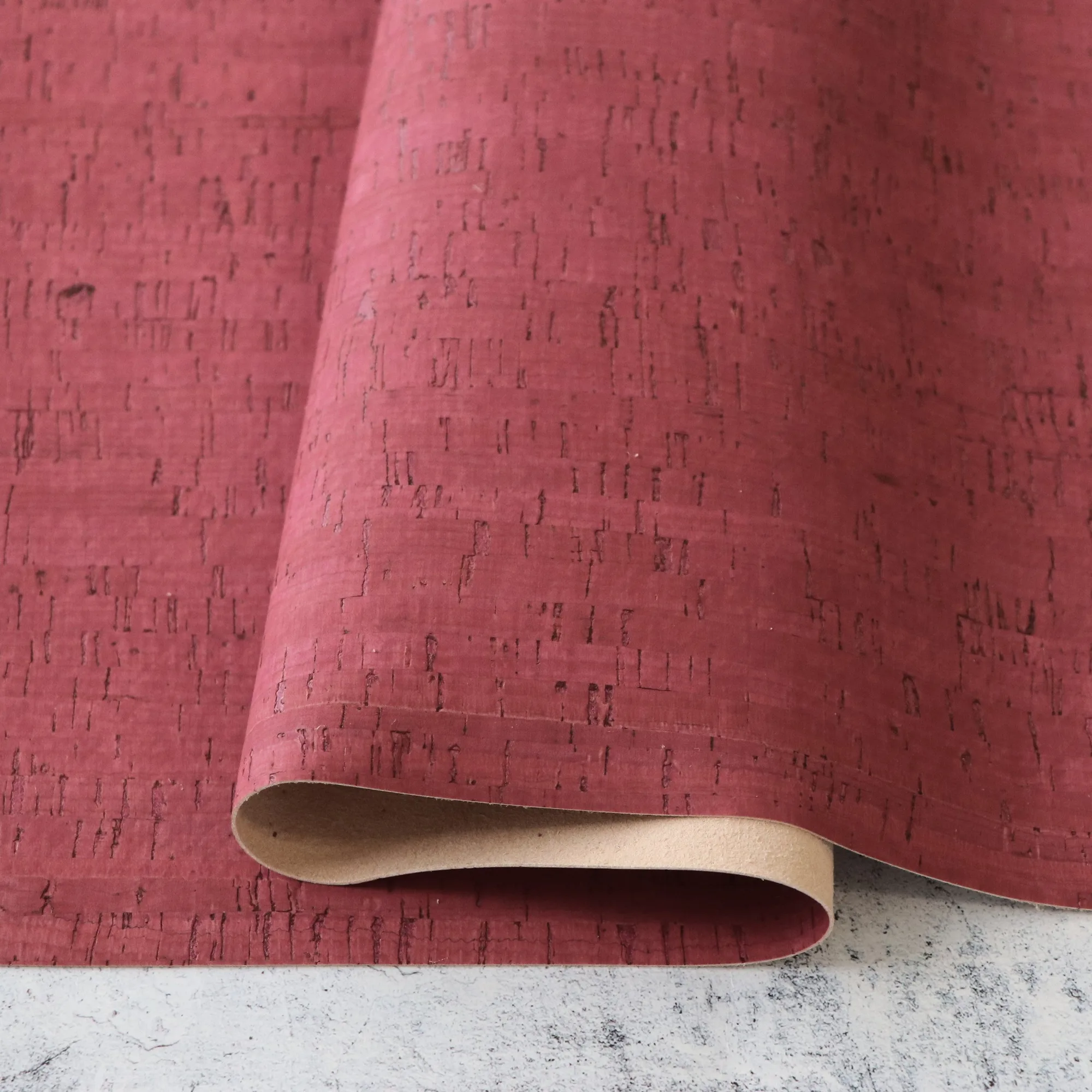
Rustic Tourmaline Cork Fabric