Why Compare the Rustle to Other EDC Knives?
Most everyday carry knives are folding pocket knives built for quick access and compact storage. The Leatherman Rustle takes a different approach: it is a fixed blade Santoku-style chef knife designed for meal prep outdoors. If you are deciding between the Rustle and a more traditional EDC knife, the choice comes down to how you actually use a blade during your day.
Rustle Knife Key Specifications
-
Rustle™: High-performance MagnaCut® stainless steel is tough, holds its edge longer, and resists corrosion. MagnaCut is a premium blade steel that outperforms many common EDC steels in edge retention and corrosion resistance, making it a strong choice for food prep and outdoor use.
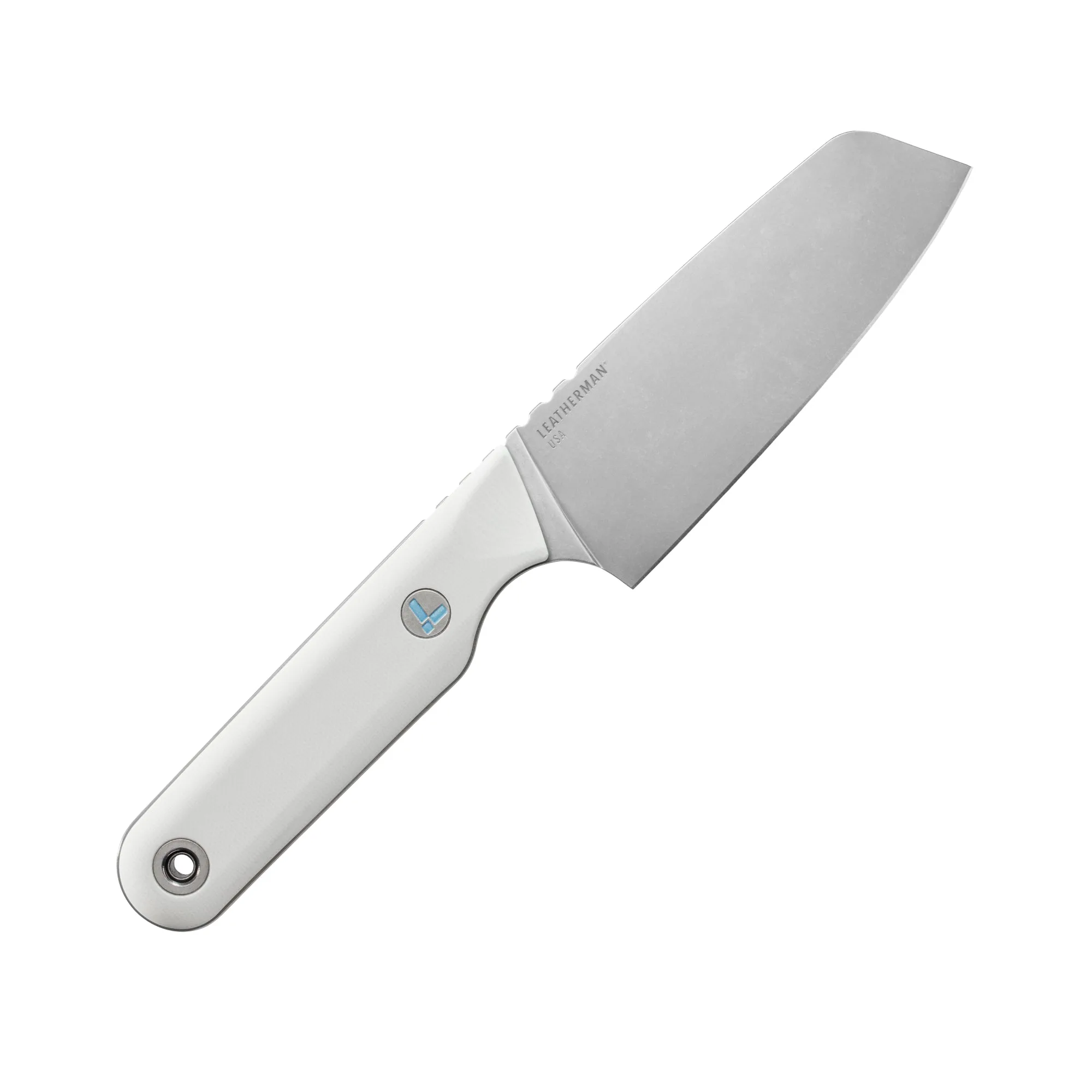
Rustle™
-
Rustle™: Its versatile Santoku blade and ergonomic handle streamline mealtime prep without adding bulk to your kit. The Santoku shape is optimized for slicing and dicing, unlike a typical EDC drop-point or tanto blade, so it excels in the kitchen rather than general utility tasks.
-
Rustle™: The machined and oiled G10 handles are durable, textured for grip, and weather resistant. G10 is a rugged handle material that provides a secure grip even when wet, which is important for a knife used around food and outdoors.
-
Rustle™: The rugged Kydex sheath protects your blade in outdoor environments. A Kydex sheath offers secure retention and protects the blade from the elements, but it also means the knife is worn on a belt or pack rather than clipped in a pocket like a folder.
Rustle vs Typical EDC Folding Knife: Key Differences
The following comparison highlights the main trade-offs between the Rustle fixed blade and a conventional folding EDC knife. These differences help you decide which tool fits your daily routine.
- Blade Shape and Purpose: The Rustle uses a Santoku profile, ideal for slicing vegetables, meat, and other food prep. Most EDC folders have drop-point or clip-point blades suited for general cutting, opening packages, and light prying.
- Carry Method: The Rustle comes with a Kydex sheath for belt or pack carry. A folding EDC knife typically clips inside a pocket, offering quicker access and a lower profile.
- Blade Steel: The Rustle features MagnaCut stainless steel, which offers excellent edge retention and corrosion resistance. Many EDC knives use 420HC, S30V, or other steels; MagnaCut is considered a top-tier upgrade for edge holding and toughness.
- Portability and Weight: As a fixed blade, the Rustle is larger and heavier than most folding EDC knives. If you prioritize a lightweight, pocket-friendly carry, a folder may be more practical.
- Intended Use Case: The Rustle is purpose-built for outdoor meal preparation. A typical EDC knife is a general-purpose tool for everyday tasks like cutting cordage, opening boxes, or whittling.
Who Should Choose the Rustle?
The Rustle is a great choice if you spend time camping, backpacking, or tailgating and want a dedicated kitchen knife that packs well. Its MagnaCut blade and G10 handle are built for food prep in the elements, and the Kydex sheath keeps it secure when not in use. If your EDC needs are more about quick daily utility tasks, a folding knife may still be the better fit.
Who Might Prefer a Traditional EDC Knife?
If your daily carry revolves around opening packages, cutting tape, or light repairs, a folding pocket knife is more convenient to carry and deploy. The Rustle’s fixed-blade size and sheath-based carry add bulk that may not suit an urban or desk-job routine. Consider what tasks you actually perform most often before deciding.