Start with the right tools and a clear space
Teaching a preschooler to cut is less about perfect lines and more about safe habits, controlled hand movements, and small wins. The Safari Scissor Skills Activity Pad is built for exactly that: it includes plastic safety scissors and 20 paper-cutting projects arranged from simple to more complex. Before you begin, set up a dedicated cutting area—a table at the right height, good lighting, and a clear surface with no clutter. Keep the pad and scissors together so your child associates the activity with a focused, supervised session.
The included plastic safety scissors naturally encourage proper form and are safe for preschoolers. Any pair of scissors can be used to complete the projects, but starting with the included pair keeps the experience consistent and reduces the risk of frustration from unfamiliar tools.
What the Safari Scissor Skills Activity Pad includes
-
Safari Scissor Skills Activity Pad: 20 different paper cutting projects with complete supplies included right in the pages of the book. You get everything needed for a full cutting session without hunting for extra paper or templates.
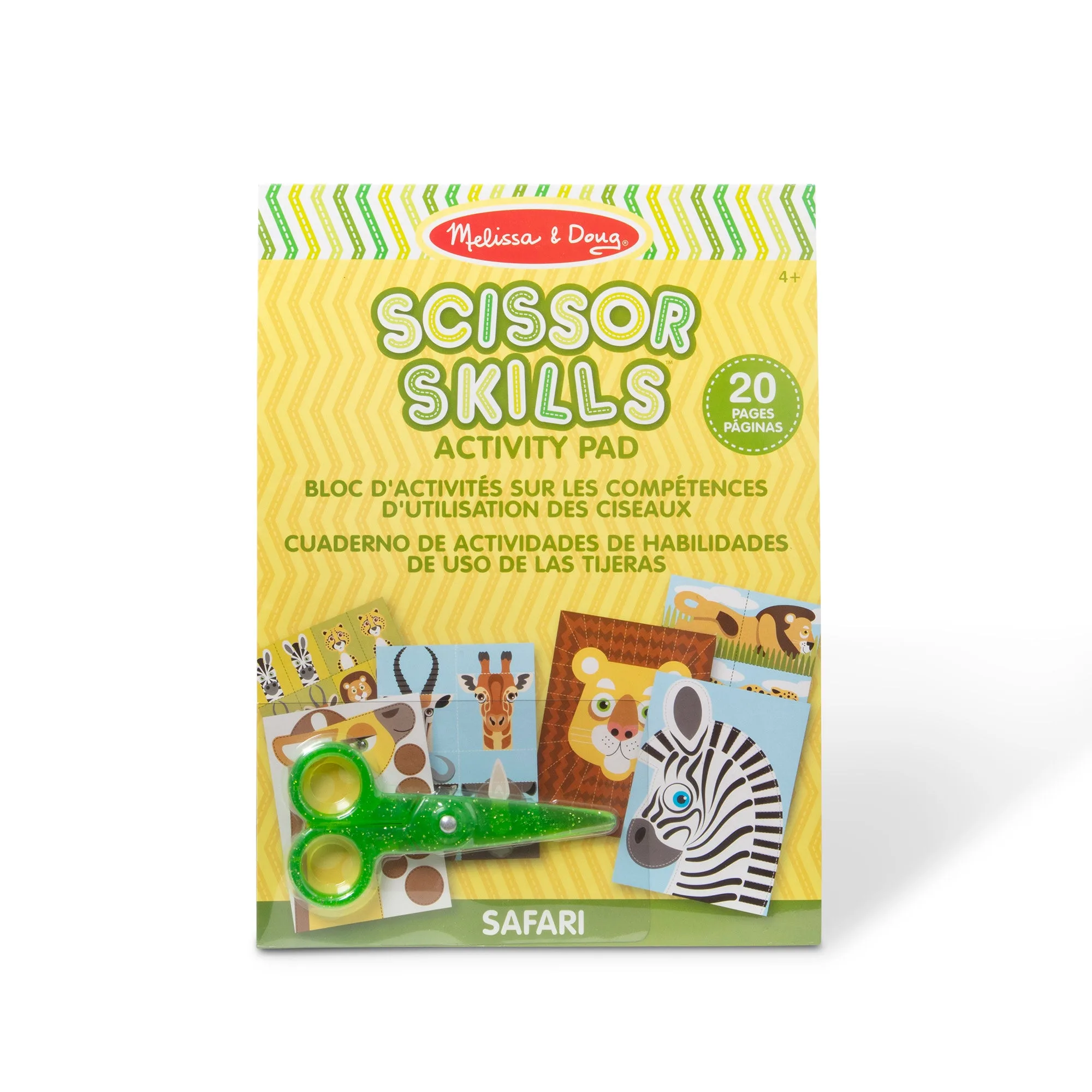
Safari Scissor Skills Activity Pad
-
Safari Scissor Skills Activity Pad: Plastic safety scissors are included and are safe for preschoolers. The right tool is in the box, so you can start teaching safety immediately.
-
Safari Scissor Skills Activity Pad: Projects are organized from simple to more complex and practice slightly different skills and techniques. You can follow a built-in progression that matches your child’s growing control.
A simple routine for teaching toddlers to use scissors
Keep sessions short and consistent. The goal is safe technique, not speed. Follow this sequence, adapting to your child’s comfort.
- 1. Introduce the scissors away from paper: Let your child hold the plastic safety scissors and practice opening and closing them in the air. Show how the thumb goes in one loop and the fingers in the other. Praise gentle, controlled movements.
- 2. Practice snipping scrap paper: Give your child a narrow strip of scrap paper and ask them to make small snips along the edge. This builds the open-close rhythm without the pressure of following a line.
- 3. Move to the pad’s simplest project: Open the Safari Scissor Skills Activity Pad to the first project. Point out the cutting line and guide your child’s hand if needed. The pad’s simple-to-complex order means the earliest pages are the most forgiving.
- 4. Progress at your child’s pace: Each project practices slightly different skills and techniques. If a page feels too tricky, stay on the previous one for another session. There is no timer—repeat until your child feels confident.
- 5. Celebrate the finished craft: The pad produces 20 unique crafts, games, and activities. Display or play with what your child makes to reinforce a sense of accomplishment.
Preschool scissor safety rules to repeat every time
State these rules before each session and model them yourself. Consistency matters more than volume.
- Sit while cutting: Keep both feet on the floor and the paper on the table. Walking with scissors is never allowed.
- Scissors stay closed when not in use: Show your child how to close the blades and place the scissors flat on the table when they pause.
- Cut away from your body: Point the blades toward the table edge, not toward fingers or face. The included plastic safety scissors reduce risk, but direction still matters.
- Ask an adult for help: If a cut is too hard or the paper slips, your child should stop and ask rather than force it.
How to use the pad’s simple-to-complex design
The Safari Scissor Skills Activity Pad is organized so that each project builds on the last. Start at the beginning even if your child has some cutting experience—the early pages establish the habit of following a line and turning the paper. As you move forward, the projects practice slightly different skills and techniques, so you can talk about what changed: a curve, a corner, a longer cut. If your child struggles, go back one project and repeat it on a scrap sheet before returning.
Because the supplies are included in the pages, you can tear out one project at a time and keep the rest tidy. That also makes it easy to bring a single sheet to the table and put the pad away when the session ends.
Where the Safari Scissor Skills Activity Pad fits
- Safari Scissor Skills Activity Pad: The pad is designed for kids four and older. Use this age guidance as your starting point; younger children may need more direct hand-over-hand supervision.
- Safari Scissor Skills Activity Pad: The projects produce 20 unique crafts, games, and activities. Cutting practice leads to something playable, which keeps motivation high.
What to watch for as skills grow
You do not need a formal assessment. Instead, notice whether your child is opening and closing the scissors smoothly, turning the paper rather than twisting their wrist, and staying relaxed. If you see frustration, shorten the session or return to a simpler project. The pad’s progression gives you a natural checkpoint: when your child can complete a project with minimal help, move to the next one. Keep the focus on safe habits and effort, not perfect cuts.