Quick answer
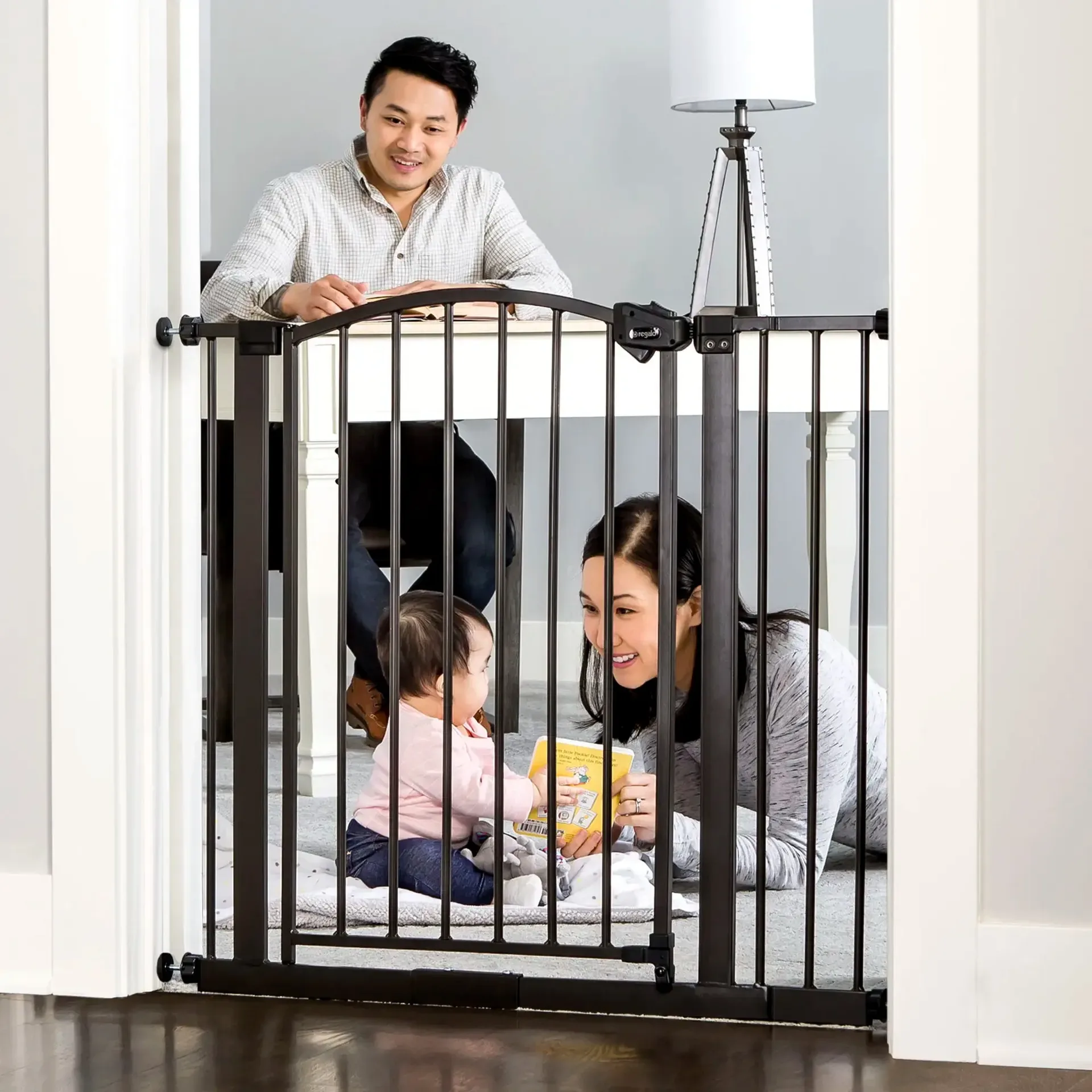
Measure the opening at its narrowest point, then choose a gate rated for that width and the correct mount type. For wide or arched openings, pick a pressure-mount gate with a wide adjustment range or add extensions, and choose an arched decor style if the gate will stay visible in a main living area.
Why wide openings need a different buying approach
A standard doorway gate often tops out around 38 to 42 inches, so a wide hallway or open-plan pass-through can fall outside its range. The fix is not to force a narrow gate; it is to choose a gate whose stated width range covers your opening or to add the manufacturer’s extensions.
Arched openings add a visual problem: a rectangular gate can look out of place in a finished room. Decor styles with an arched top solve that, but the arch is a style choice, not a structural feature. The gate still mounts to the sides of the opening, so measure the straight vertical surfaces where the pressure pads or hardware will sit.
Pressure mount versus hardware mount: the trade-off that matters most
Pressure-mount gates press against the walls or door frame and are the easiest to move between openings. They suit rentals and doorways you occasionally close. The trade-off is that they depend on a solid, flat mounting surface and a consistent width; a crooked or very wide opening may need extensions or a different gate.
Hardware-mount gates screw into the wall or frame and are the better choice for the top of stairs or for an opening you will use every day. They swing open more smoothly and do not rely on pressure alone. The trade-off is installation effort and small holes in the wall. For stair-top use, follow the gate’s instructions and never use a pressure gate at the top of stairs unless the manufacturer explicitly allows it.
What “extra tall” changes for stairs and climbers
Extra-tall gates add height above the standard gate, which helps with toddlers who climb or lean over the top. Height is most useful at stair tops and in rooms where a child has furniture to climb on nearby.
Taller gates are heavier and can be more awkward to open one-handed. Check the handle and latch design before buying, especially if you will carry a child or laundry through the opening. A gate that is hard to operate correctly is more likely to be left open.
Decor style without giving up function
A decorative gate makes sense when the opening is in a main living space and the gate will be visible most of the day. Arched-top designs blend into traditional trim and read as furniture rather than baby gear.
Do not choose a decor gate for a stair top unless its instructions permit that use. Style should be the last filter, not the first: width range, mount type, and safety rating come first.
Decision rules for wide and arched openings
- Measure the narrowest point: Measure the opening at the bottom, middle, and top, and use the smallest number. Also note the width of the flat mounting surfaces on each side, because pressure pads need a solid contact area. If the three measurements differ by more than about half an inch, treat the opening as uneven and check the gate’s mounting requirements before buying.
- Match the gate’s stated width range: Compare your narrowest measurement to the gate’s published range. If your opening is wider, add the manufacturer’s extensions rather than forcing a gate beyond its range. Never exceed the maximum width listed for the gate, even if the gate feels stable.
- Choose the mount type by location: Use a pressure-mount gate for a doorway you move often or a rental. Use a hardware-mount gate for a stair top or a daily-use opening. Follow the manufacturer’s stair-use instructions exactly. If the opening is at the top of stairs, confirm stair-top approval before anything else.
- Decide whether height is needed: Choose an extra-tall gate if your child climbs or leans over a standard gate, or if the opening is at a stair top. Otherwise, a standard-height gate is lighter and easier to operate. Check the latch and handle with one hand before buying a taller gate.
- Pick decor last: Once width, mount type, and height are settled, choose an arched or bronze finish if the gate will be visible in a living area. Do not let style override a width or stair-use limitation. A decorative gate that does not fit the opening is still the wrong gate.
Product facts to compare
-
Bronze Extra Tall Arched Decor Safety Gate: Extra-tall arched decor gate in a bronze finish, model #0380 BR. The extra height helps with climbers, and the arched top suits visible openings in finished rooms.
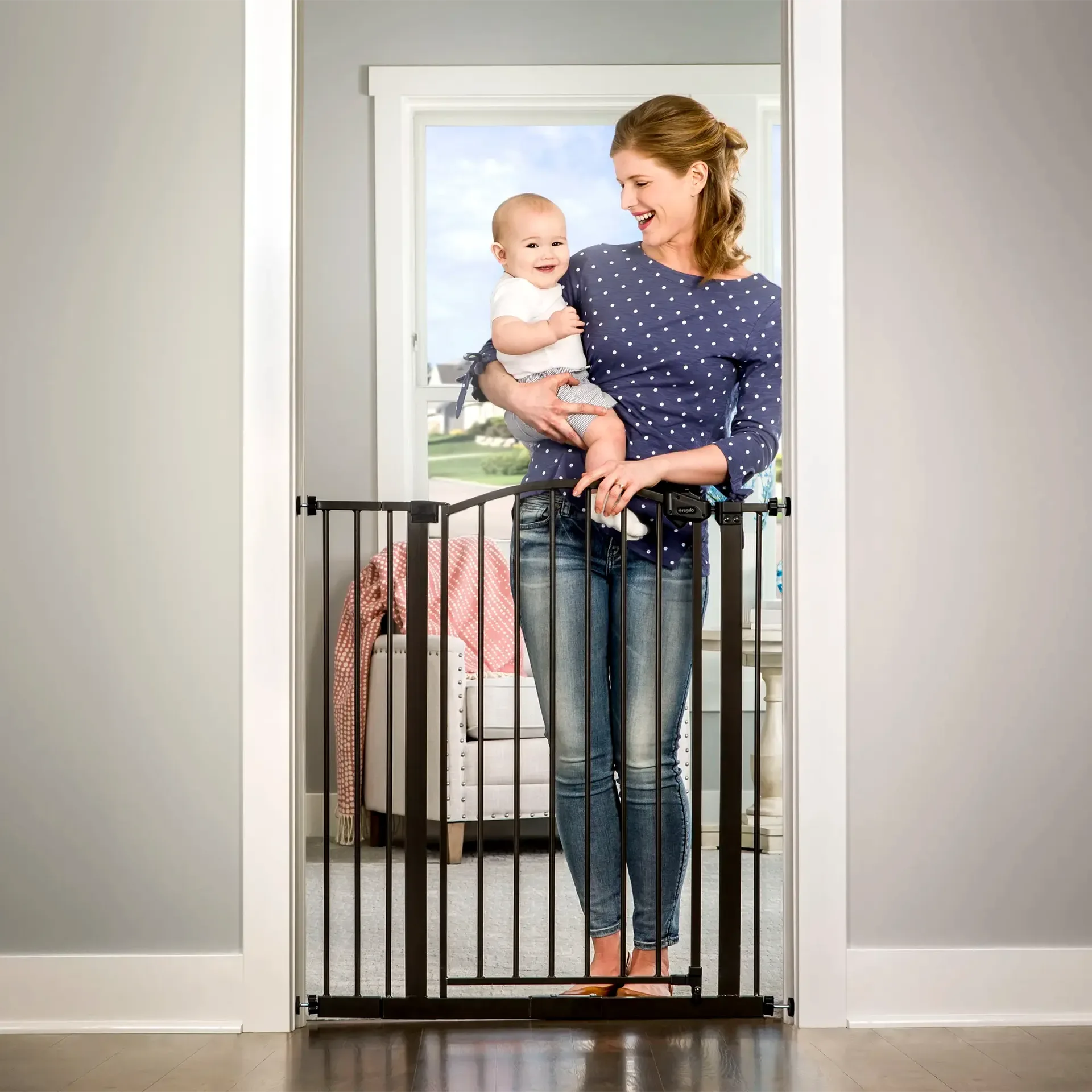
Bronze Extra Tall Arched Decor Safety Gate
-
Easy Step® Extra Wide Platinum Safety Gate: Easy Step Extra Wide gate with a one-touch release safety lock and pressure-mount design, model #1164P. The wide coverage and pressure mount make it a practical choice for a wide doorway you want to install without drilling.
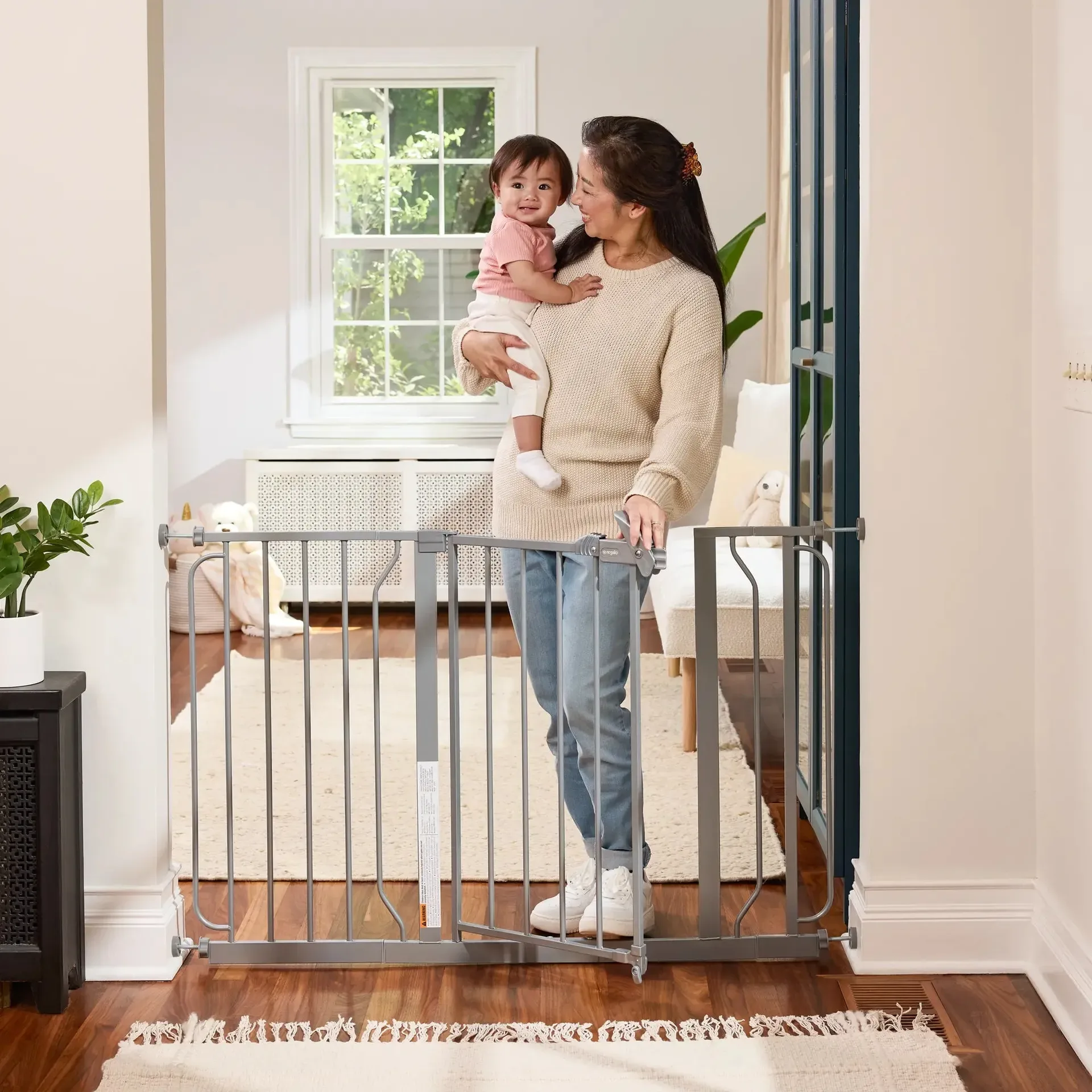
Easy Step® Extra Wide Platinum Safety Gate
-
Bronze Arched Decor Safety Gate: Bronze Arched Decor Safety Gate, model #0370 BR, mixing decor and function. A good fit when the opening is in a visible living area and you want the gate to look intentional rather than temporary.
Who this guide fits
Best for
- Parents measuring a wide hallway, open-plan pass-through, or arched doorway before buying a gate
- Renters who need a pressure-mount gate for a wide opening without drilling
- Households that want a decorative gate in a visible living area
Not for
- Stair-top installations where the gate is not explicitly approved for that use
- Openings wider than the gate’s maximum range plus approved extensions
- Buyers who have not measured the opening and mounting surfaces first