Start with the injuries your class actually produces
A range first-aid setup should match the physical demands of the class, not a generic checklist. For law enforcement physical training, the most common interruptions are minor: a bloody nose, a jammed finger, a rolled ankle, or a mouth injury during grappling or defensive tactics. Your kit needs to handle those quickly so the class can continue or the participant can be referred for further care.
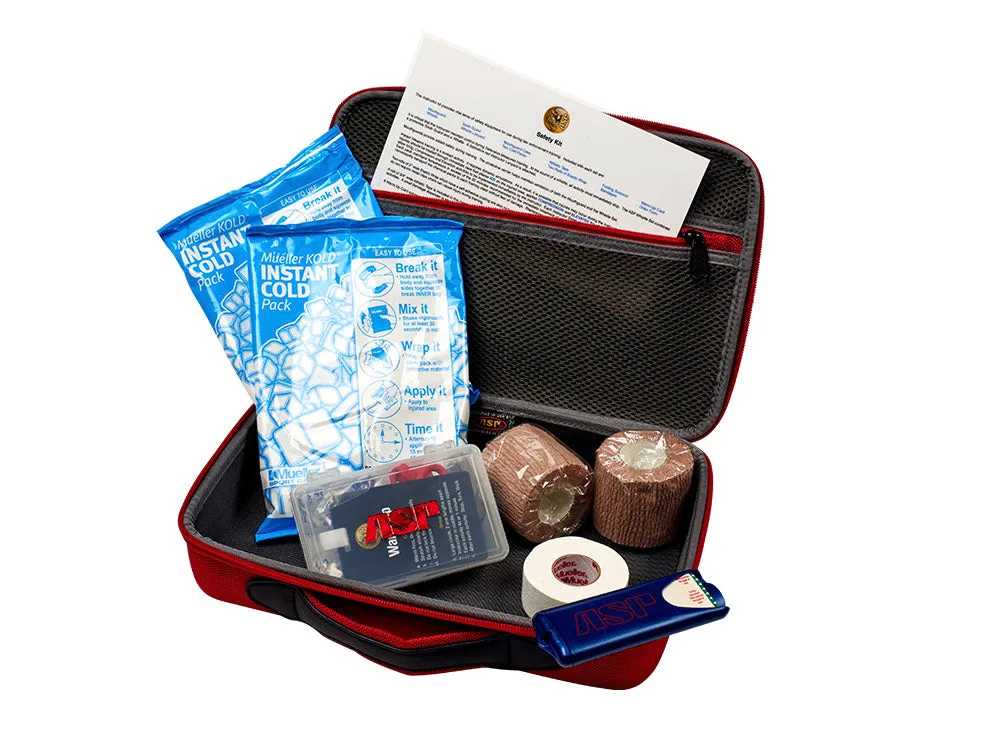
The ASP Safety Kit is built around that reality. It contains items described as essential for physical law enforcement training classes, including a whistle with tooth guard and lanyard, a mouth guard with storage container, a warm-up exercise instruction card, two cold packs, two self-adhesive elastic wraps, bandages, athletic tape, and folding scissors. A molded storage case is included, and an order form is provided for replacement supplies. That combination covers airway protection, minor wound care, joint support, and cold therapy without turning your range bag into a clinic.
What to include in a range safety kit: the practical categories
Use these categories to evaluate any kit, including the ASP Safety Kit, against your own class format.
- Airway and mouth protection: A mouth guard with storage container and a whistle with tooth guard and lanyard address two different needs: protecting teeth during contact drills and giving an instructor a loud, hands-free signal. If your class includes grappling or striking, mouth protection is not optional.
- Cold therapy: Two cold packs let you treat a knock or swelling while another participant continues. The ASP kit supplies two, which is a reasonable starting quantity for a small class; larger classes may need additional packs from your replacement supply order.
- Wrapping and support: Self-adhesive elastic wraps and athletic tape are the workhorses for minor sprains, securing a cold pack, or taping a finger. The ASP kit includes two elastic wraps, bandages, and athletic tape.
- Wound covering: Bandages handle small cuts and abrasions. The kit does not list antiseptic or gloves in the supplied contents, so check those against your department or facility protocols before relying on the kit alone.
- Tools and organization: Folding scissors let you cut tape or wrap without improvising. A molded storage case keeps contents visible and contained, which matters when you are working out of a range bag.
ASP Safety Kit at a glance
-
Safety Kit: Contents: whistle with tooth guard and lanyard, mouth guard with storage container, warm-up exercise instruction card, two cold packs, two self-adhesive elastic wraps, bandages, athletic tape, and folding scissors. This list covers the minor-injury and communication items most often needed during physical training, so you can judge whether your class needs more of any single item.
Safety Kit
-
Safety Kit: Includes a molded storage case and an order form for replacement supplies. The case keeps the kit organized in a range bag, and the order form gives you a defined way to restock consumables instead of rebuilding the kit from scratch.
-
Safety Kit: Designed for training classes and described as containing items that should always be on-hand when conducting physical law enforcement training classes. If you run instructor-led physical training, this kit is positioned as a baseline rather than a general-purpose home first-aid kit.
Where the ASP Safety Kit fits and where it does not
The ASP Safety Kit is a training-class kit, not a trauma kit. Its contents are aimed at minor injuries and class continuity: cold packs, wraps, bandages, tape, scissors, and mouth protection. It does not list tourniquets, chest seals, or other trauma supplies in the supplied information, and it does not list gloves or antiseptic. If your range requires a trauma response capability, treat the ASP kit as one layer and confirm the rest against your agency or facility medical protocol.
The warm-up exercise instruction card is a useful inclusion because it supports a structured warm-up before physical activity. The supplied information does not describe the specific exercises or provide a complete warm-up routine, so use the card as a prompt rather than a substitute for your own instructor-led warm-up.
Choosing a safety kit for instructors: four questions
Answer these before you buy or restock.
- How many participants are in a typical class?: The ASP kit includes two cold packs and two elastic wraps. For a small class, that may be enough for simultaneous minor injuries. For larger classes, plan to supplement with additional cold packs and wraps, and use the included order form to keep replacements on hand.
- Does your class include contact or grappling?: If yes, mouth protection and a whistle are directly relevant. The ASP kit includes both. If your class is lecture-only, those items may be less useful, and a smaller kit focused on bandages and cold packs could be sufficient.
- Do you need a kit that stays organized in a range bag?: The molded storage case is a practical advantage if you move between ranges or store the kit alongside other gear. It also makes it easier to see when a consumable is running low.
- What does your facility already supply?: If your range provides gloves, antiseptic, or a larger medical kit, you can avoid duplicating those items. The ASP kit does not list them, so confirm what is already available before assuming the kit is complete for your setting.
Restocking and maintenance without guesswork
The ASP Safety Kit includes an order form for replacement supplies, which is the most reliable way to restock the specific items the kit was designed around. Check the kit before each class: cold packs can be used up, tape and wraps run out, and mouth guards may need replacement after use. The supplied information does not give a replacement schedule or shelf life, so set your own check based on how often you teach and inspect the kit before every session.
Store the kit in the molded case and keep it with your range gear so it is available before warm-ups begin. If you teach at multiple locations, a second kit or a clearly defined restock routine prevents the kit from being depleted at one site and missing at another.