Why a Sold Stone Is Still Worth Studying
The Salt & Pepper Diamond 0.49ct is marked SOLD, so you cannot buy this exact stone. That does not make it useless as a reference. A sold listing is a real example of how a small salt and pepper diamond was priced, described, and offered with a bespoke design route. If you are shopping for a similar stone, it gives you concrete numbers and constraints to compare against.
The listing describes a round salt and pepper diamond of 0.49ct and 4.9mm. It also sets out two design paths: bring your own ideas, or go with the recommended design. Those details matter more than the poetic star comparison when you are trying to decide what a small inclusion diamond is worth to you.
What the Sold Listing Confirms
-
Salt & Pepper Diamond 0.49ct – SOLD: Salt & Pepper Diamond round 0.49ct (4.9mm). This is the core specification. At 0.49ct and 4.9mm, it sits at the smaller end of the salt and pepper market, which affects both visual presence and price.
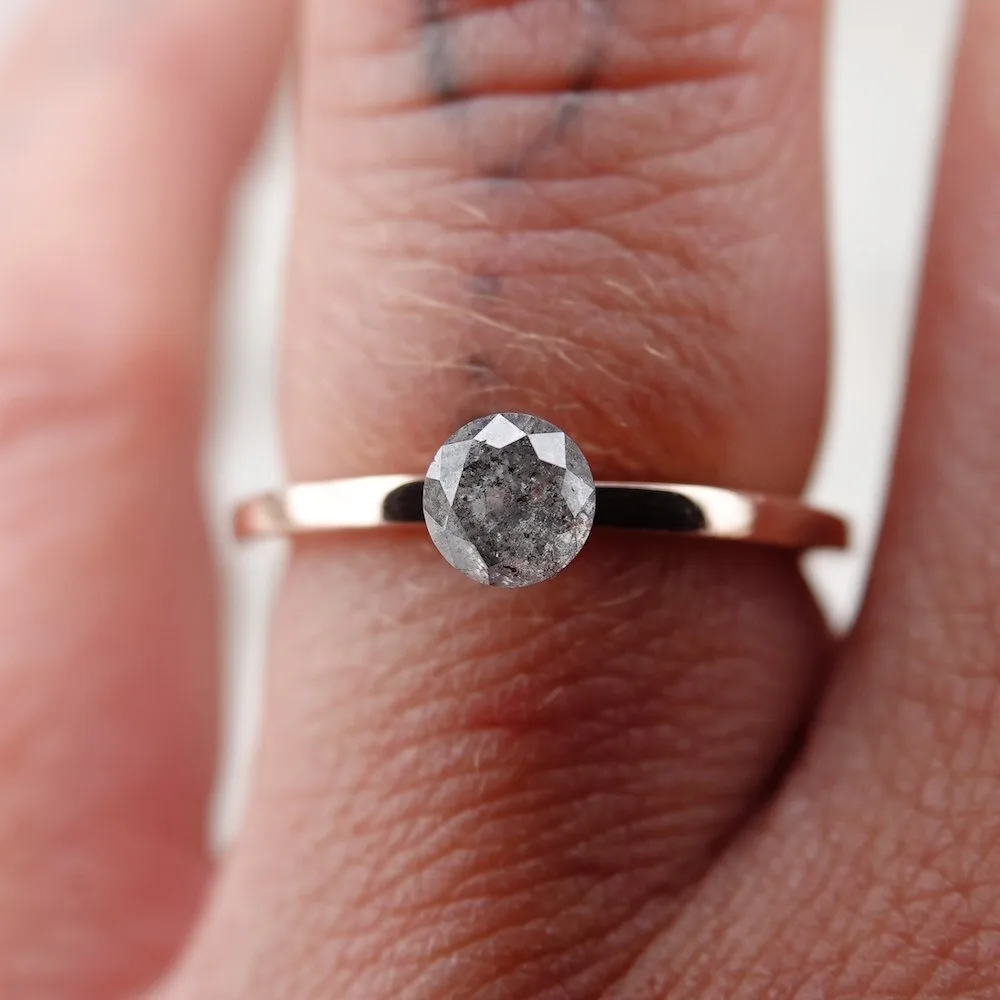
Salt & Pepper Diamond 0.49ct – SOLD
-
Salt & Pepper Diamond 0.49ct – SOLD: Catalog price: USD 484.22, with a catalog comparison price of USD 682.00. These are the only price figures supplied. They give you a benchmark for a small salt and pepper diamond, but they are not a quote for any other stone.
-
Salt & Pepper Diamond 0.49ct – SOLD: Available design options: "I've got my own ideas" or "I'll go with your recommended design." The stone was sold with a bespoke design decision attached. That means the total cost of a similar project includes more than the loose stone.
How 0.49ct Behaves on the Hand
A 4.9mm round stone is not a statement centerpiece in the way a one-carat-plus diamond is. It reads as a refined, modest stone. That can be an advantage if you want a salt and pepper diamond for everyday wear, a stacking ring, or a design where the metalwork carries as much visual weight as the gem.
The trade-off is presence. Small stones show less of the internal landscape that makes salt and pepper diamonds distinctive. If you are drawn to the speckled, cloudy character of these stones, you need to look closely at the specific stone, not just the carat weight. The listing for this sold diamond does not include close-up images or a clarity description, so it cannot tell you how its inclusions actually looked. When you shop for a similar stone, ask for video or magnified images before you commit.
What a Small Salt and Pepper Diamond Costs Beyond the Stone
The sold listing separates the stone from the setting work. That is a useful reminder that the diamond is only part of the budget.
- Bespoke design from £1200: The listing states bespoke design prices start at £1200 with a 12-week lead time. This is a starting figure, not a fixed quote for every project.
- Classic 4-claw setting in 9ct gold: The listing suggests a 9ct yellow, white, or rose gold classic 4-claw setting with an 8-week lead time. Metal choice and setting style affect the final cost.
- Deposit to secure the stone: The listing says you can secure the diamond with a deposit, after which the team emails you to begin a bespoke design. That means the stone is reserved before the design is finalized.
The Design Decision You Will Face
The two options on this listing are not just administrative. Choosing "I've got my own ideas" means you are bringing a concept, a sketch, or a reference to the process. Choosing "I'll go with your recommended design" means you are trusting the maker's judgment on setting style and proportions. Neither is better, but they suit different buyers.
If you have never commissioned jewelry before, the recommended design route removes some uncertainty. If you have a clear picture of what you want, the own-ideas route gives you more control. Either way, the 12-week bespoke lead time is a real planning constraint. If you are buying for a specific date, work backward from that lead time before you pay a deposit.
Small Stone vs Larger Stone: What Changes
This sold 0.49ct diamond is a useful anchor for comparing carat sizes. The differences below are general to salt and pepper diamonds, not claims about this specific stone's appearance.
- Visual presence: A 0.49ct stone is subtle. Larger stones generally show more of the inclusion pattern and read more dramatically on the hand.
- Price sensitivity: Small stones are usually more affordable, but salt and pepper pricing depends heavily on the individual stone's pattern and transparency. Carat weight alone does not set value.
- Design flexibility: Small stones work well in delicate settings, stacking bands, and multi-stone designs. Larger stones often demand a more substantial setting.
What This Listing Does Not Tell You
The supplied information does not include a clarity grade, a color description beyond "salt and pepper," or any statement about treatment. It also does not confirm whether the stone is certified by a lab. Those are exactly the questions you should ask about any comparable stone.
The listing's care section contains only the phrase "Not the star for you?" which is not care guidance. So there is no supplied cleaning or compatibility instruction for this diamond. Do not assume a specific cleaning method based on this listing. Ask the seller for care advice that matches the finished piece.
How to Apply These Lessons to Your Own Search
- Set a stone budget and a setting budget separately: Use the sold stone's catalog price as one reference point, then add the bespoke design starting figure and metal costs. The total is your real budget.
- Decide your carat range before you shop: If 0.49ct feels too small, look at larger stones. If it feels right, focus on pattern and cut rather than weight alone.
- Ask for video of the actual stone: The sold listing offered a video on request. Do the same for any stone you are considering, especially a small one where inclusions are harder to see.
- Confirm the lead time in writing: The listing states an 8-week setting lead time and a 12-week bespoke design lead time. Get the timeline for your specific project confirmed before you pay.