What Makes a Salt & Pepper Diamond Different
A salt and pepper diamond is not a flawed stone you settle for — it's a deliberate choice for someone who wants a diamond that looks like a tiny galaxy, not a clear ice cube. The natural inclusions create grey, white, and black patterns that are completely unique to each stone. No two are alike, and that's the whole point.
This guide uses three real sold stones from the catalog to show you what matters when you're shopping for one of these diamonds: carat weight, cut style, size, and the setting options that the store recommends.
Three Real Stones That Show the Range
-
Salt & Pepper Diamond 0.69ct – SOLD: Salt & Pepper Diamond round 0.69ct (5.7mm) with natural inclusions described as being like Hubble telescope images of galaxies. This smaller round stone (0.69ct, 5.7mm) shows that salt and pepper diamonds come in classic round cuts too, not just ovals. The smaller size makes it more affordable and easier to set in a simple 4-claw ring.
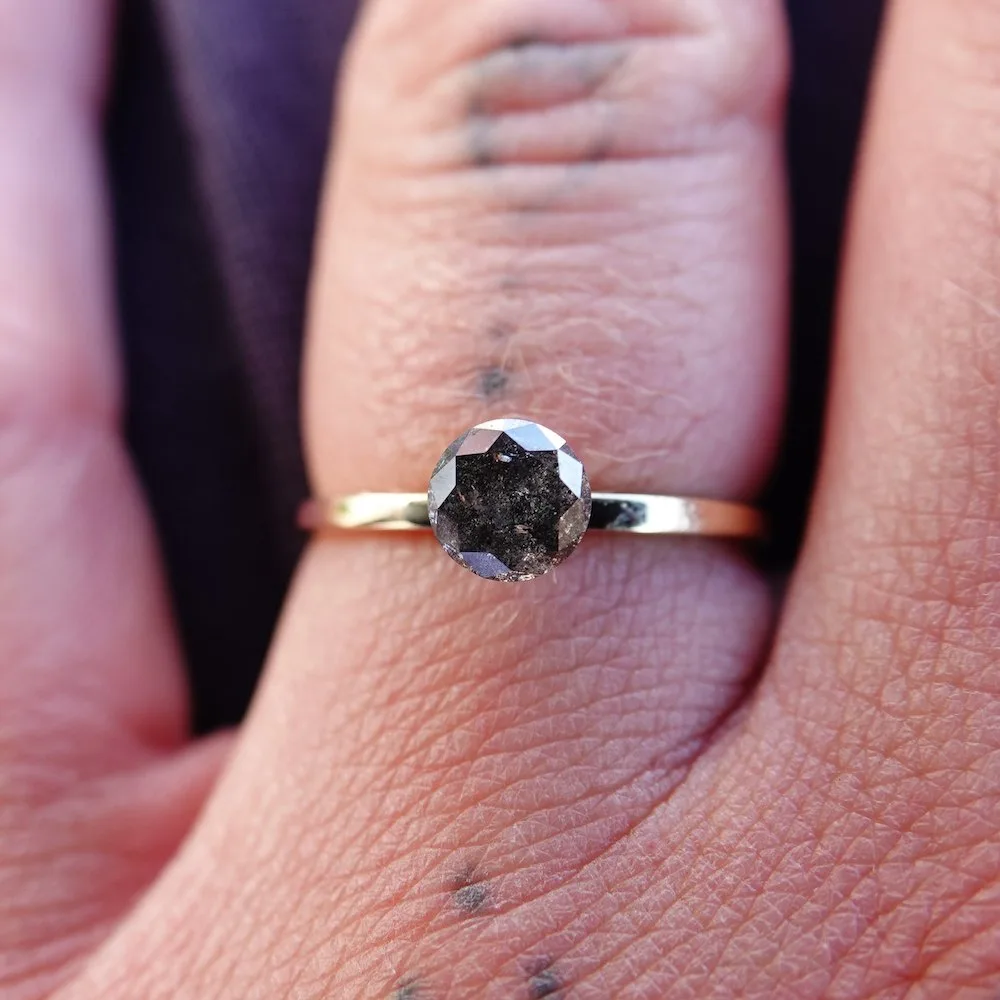
Salt & Pepper Diamond 0.69ct – SOLD
-
Salt & Pepper Diamond 2.87ct – SOLD: Salt & Pepper Diamond oval 2.87ct (10.2x9mm) with a look described as 'pools of glittering, silken & smoky waters'. At 2.87ct and oval shaped, this stone is noticeably larger and has a different visual character — more elongated, with a misty, atmospheric feel. The larger surface area shows off more of the internal patterns.
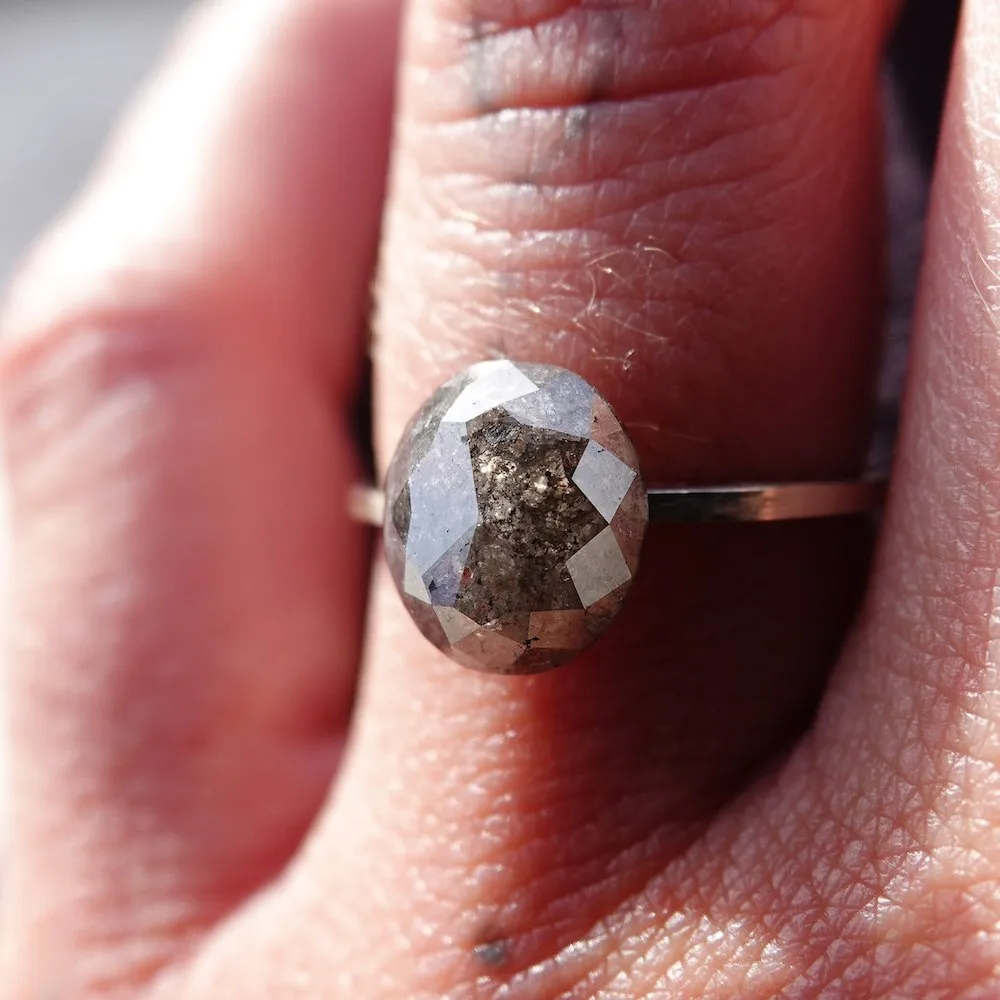
Salt & Pepper Diamond 2.87ct – SOLD
-
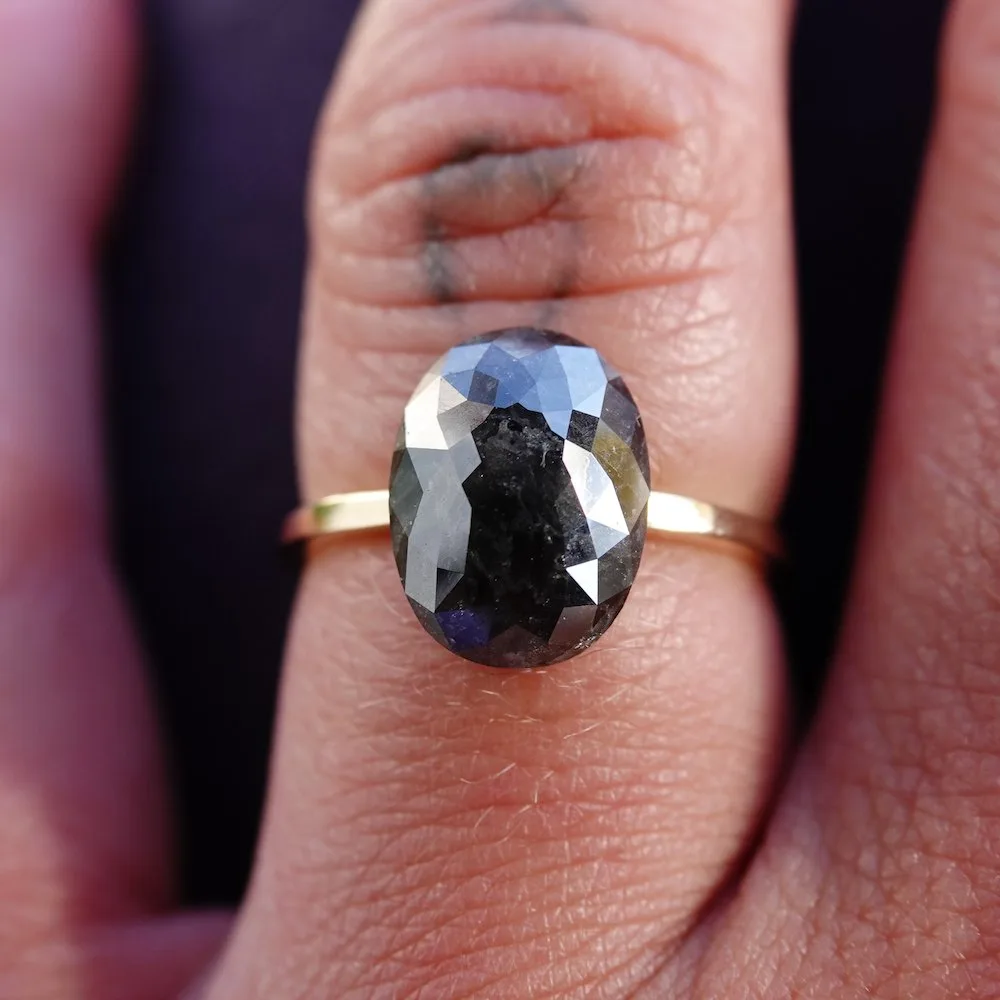
Salt & Pepper Diamond 3.12ct – SOLD: Salt & Pepper Diamond oval 3.12ct (11.9x9mm) with a 'super sparkly rose cut' and a deep, stormy-night-sky colour. This is the largest stone of the three (3.12ct) and it uses a rose cut, which is a flat-bottom cut with a domed top and triangular facets. Rose cuts give a softer, more vintage sparkle than brilliant cuts, and they let you see deeper into the stone's inclusions.
Carat Weight vs. Visual Impact
Carat weight isn't everything with salt and pepper diamonds. A 0.69ct round stone (5.7mm) and a 3.12ct oval (11.9x9mm) are very different in size, but the smaller stone can still have dramatic galaxy-like inclusions. The visual impact depends on the pattern density, the cut, and how the stone is set.
If you want a noticeable ring stone, aim for at least 1ct. But if you prefer a delicate, subtle piece, a sub-1ct salt and pepper diamond can be just as interesting — and easier on the budget.
Cut: Brilliant vs. Rose Cut
Most salt and pepper diamonds are cut as brilliant rounds or ovals to maximise sparkle, but the 3.12ct example in the catalog uses a rose cut. Rose cuts have a flat base and a domed, faceted top. They produce a softer, more diffused sparkle and let you see deeper into the stone's inclusions.
If you love the idea of a stone that looks like a tiny universe you can peer into, a rose cut is worth seeking out. If you want more conventional sparkle that catches light from every angle, a brilliant cut is the better bet.
Setting Recommendations from the Store
The catalog offers specific setting suggestions for each stone. For the 0.69ct round, the store recommends a classic 4-claw design or the Elzora ring in 9ct gold (8-week lead time). For the 2.87ct oval, the Medea ring is suggested. For the 3.12ct rose cut, a classic 4-claw setting is recommended.
These recommendations exist because the store knows which settings complement each stone's shape and size. A 4-claw setting is safe and timeless. A Medea or Elzora setting adds a distinctive design element. If you have your own ideas, the store offers a bespoke design service starting from £1400-£1800 with a 12-week lead time.
What the Catalog Does Not Settle
The supplied records do not include information about diamond clarity grades, fluorescence, or specific colour grades. Salt and pepper diamonds are not graded by traditional clarity scales because their inclusions are the feature, not a flaw. You should expect visible inclusions and a range of grey tones.
The records also do not confirm the exact origin of the diamonds or whether they are treated. If those details matter to you, ask the seller directly before purchase.