Why the Sanctuary SilTarp Works in Rain
The Sanctuary SilTarp is built to keep you dry when the weather turns. Its 30 denier rip-stop nylon with dual silicon/PU coating and fully taped seams provides 5,000 mm of hydro-static resistance. That means water beads up and runs off rather than soaking through.
The kit includes everything you need to pitch a rain-worthy shelter right out of the box: a spacious silnylon tarp, 60 feet of reflective Dyneema guy line (cut into 6 x 10-foot sections), six micro line-lok adjusters, and six aerospace-quality aluminum Y-stakes. No extra shopping required.
Pitching for Rain Protection
The following steps describe a supported sequence using the supplied components. Adjust based on your site and conditions.
- Choose a pitch that sheds water: The flat and square tarps offer 16 perimeter loops and one top center loop, giving you many options. For rain, an A-frame or lean-to configuration works well because the sloped surfaces direct runoff away from your sleeping area. Pair it with a bivy or groundsheet to keep your gear off the wet ground.
- Use trekking poles or natural supports: Combine the tarp with trekking poles to build an A-frame shelter in minutes. The top center loop can secure the ridgeline, while perimeter loops anchor the corners. If you prefer a hammock setup, hang the tarp overhead for complete coverage.
- Secure the ridgeline first: Run one of the 10-foot Dyneema sections between two trees or poles at the desired height. Use the line-lok adjusters to tension the line without tying complex knots. The reflective cordage is easy to see in low light.
- Stake out the corners: Use the aluminum Y-stakes to anchor the tarp corners at a low angle. A lower pitch catches less wind and sheds rain more effectively. Adjust the line-loks to fine-tune tension after staking.
- Check for tautness: A loose tarp can flap in wind and collect water. The catenary cuts on the hex and tapered tarps help achieve a taut pitch. For the flat tarp, pull each corner until the fabric is smooth but not overstressed.
What the Sanctuary SilTarp Kit Provides
-
Sanctuary SilTarp: The tarp is made from 30 denier rip-stop nylon with dual silicon/PU coating and fully taped seams, offering 5,000 mm hydro-static resistance. This level of waterproofing is sufficient for moderate to heavy rain, keeping you dry in wet conditions.
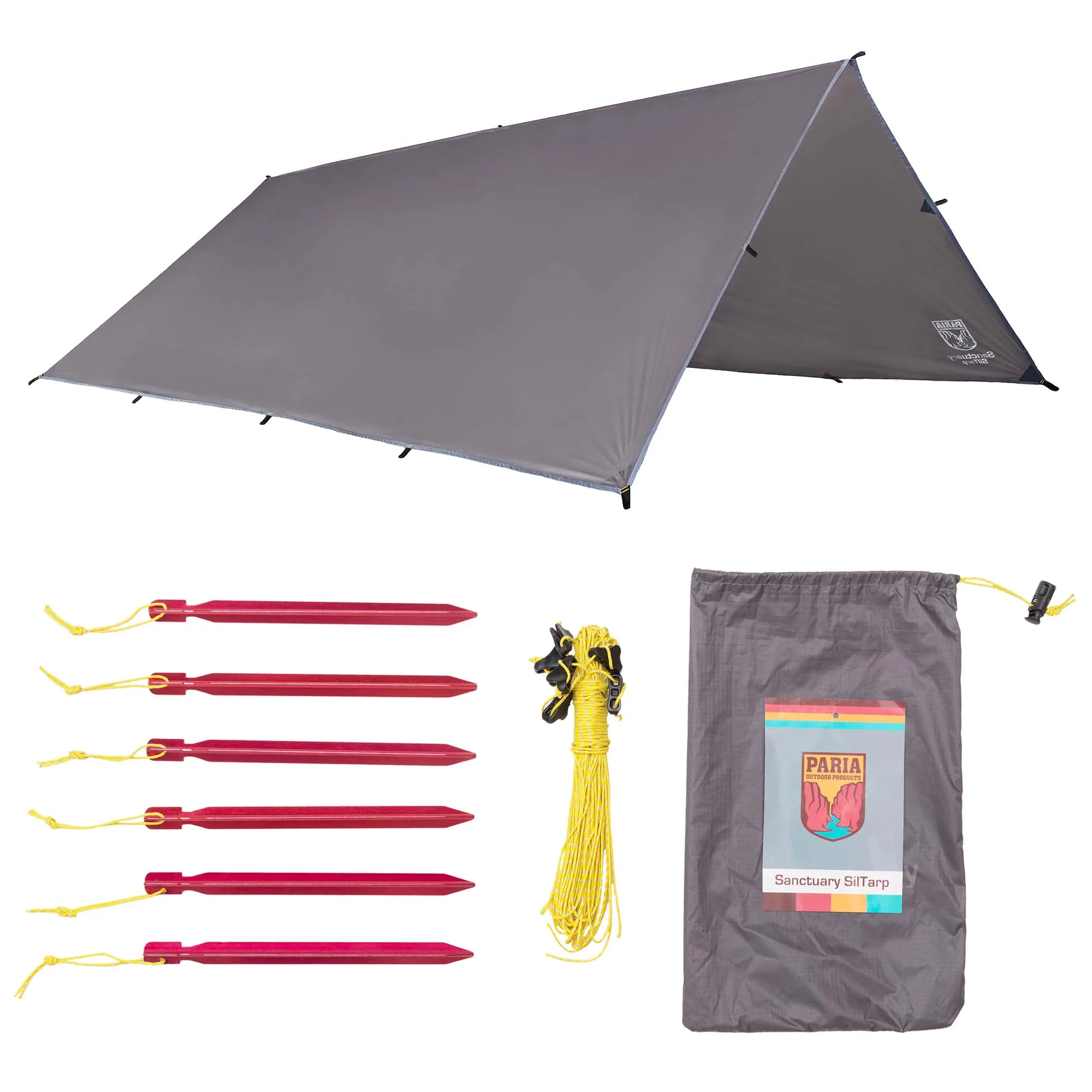
Sanctuary SilTarp
-
Sanctuary SilTarp: The kit includes 60 feet of reflective Dyneema guy line (6 x 10-foot sections), six micro line-lok adjusters, and six aluminum Y-stakes. You have all the components needed to pitch a rain shelter without buying additional hardware. The line-loks make tension adjustments quick.
Choosing the Right Tarp Shape for Rain
The Sanctuary SilTarp comes in three shapes: flat/square, hex, and tapered. Each handles rain slightly differently. The flat tarp's 16 perimeter loops give you the most configuration flexibility, including a classic A-frame. The hex tarp's catenary cuts help pull the fabric tight, reducing sag and puddling. The tapered tarp is the lightest option, with catenary cuts on both the sides and ridgeline for a streamlined pitch. All three shapes can shed rain effectively when pitched with a low ridgeline and taut corners.
What the Catalog Does Not Specify
The supplied information does not include step-by-step instructions for specific knots, recommended pole heights, or exact distances between stakes. Use your judgment based on the site: a lower ridgeline (around chest height) generally works better in wind and rain. If you are new to tarp camping, practice pitching in dry conditions first so you can set up quickly when rain starts.