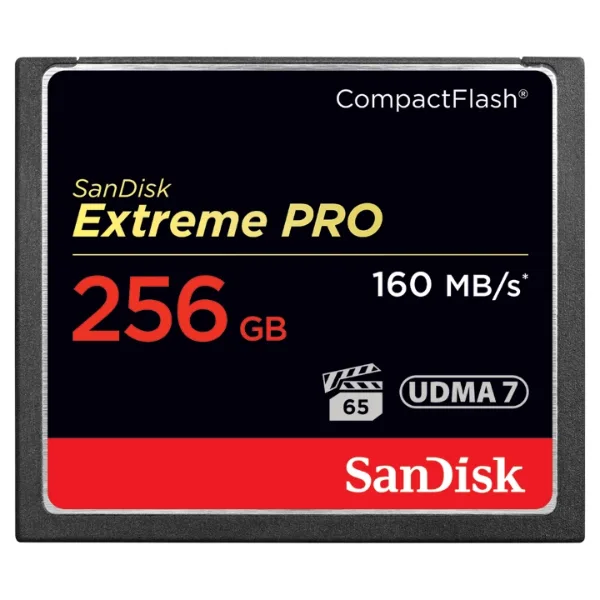
Quick answer
Choose the 64GB SanDisk Extreme Pro CF card if you shoot shorter bursts and want the lowest entry cost; pick the 256GB if you need long, uninterrupted sports or event coverage and can accept the higher price. The 128GB sits in the middle for most DSLR owners who want fewer card swaps without paying for maximum capacity.
Same speed, different capacity: what actually changes
All three cards share the same read speed (up to 160MB/s) and write speed (up to 150MB/s), so the choice comes down to capacity and cost, not performance. The 64GB card is rated VPG-65 for video, while the 128GB and 256GB list a video speed of 2; if you mainly shoot stills, that difference is unlikely to matter, but check your camera’s video requirements if you record clips.
The 256GB card costs roughly double the 64GB, so you are paying for fewer card changes and more headroom rather than faster transfers. The 128GB is priced between them and often hits the sweet spot for a single-card workflow.
When capacity matters more than price
Sports and event photographers who cannot stop to swap cards benefit most from the 256GB capacity. Wildlife shooters on multi-day trips also gain from the extra space, especially when backing up is not possible every day. The 64GB card remains a sensible second card or a primary choice for portrait, landscape and studio work where you can offload files regularly.
Trade-offs to weigh before you buy
- 64GB vs 256GB price gap: The 256GB costs substantially more than the 64GB. If your shoots are short or you back up frequently, the 64GB leaves more budget for lenses or lighting. Set a budget first; capacity should follow your shooting duration, not the other way around.
- Card swaps vs upfront cost: Carrying two 64GB cards can cost less than one 256GB and gives you a backup if one fails, but you must stop to swap. The 256GB removes that interruption at a higher price. If you cannot pause during a shoot, prioritise the 256GB; otherwise two smaller cards may be more practical.
- Video speed rating: The 64GB is rated VPG-65; the 128GB and 256GB list video speed 2. For stills this is irrelevant, but for video check your camera’s minimum sustained write requirement before choosing. Match the card’s video rating to your camera’s recording mode if you shoot video.
- Physical durability: All three cards are shock, temperature, water and X-ray proof, so the choice is not about toughness. The difference is purely capacity and price. Do not pay extra for durability; all three share the same protection.
Product facts
-
SanDisk Extreme Pro CompactFlash CF Card 64GB 160MB/s: Capacity: 64 GB; read up to 160MB/s, write up to 150MB/s; VPG-65. A lower-cost entry point that still delivers the same headline speed, ideal if you offload files often.
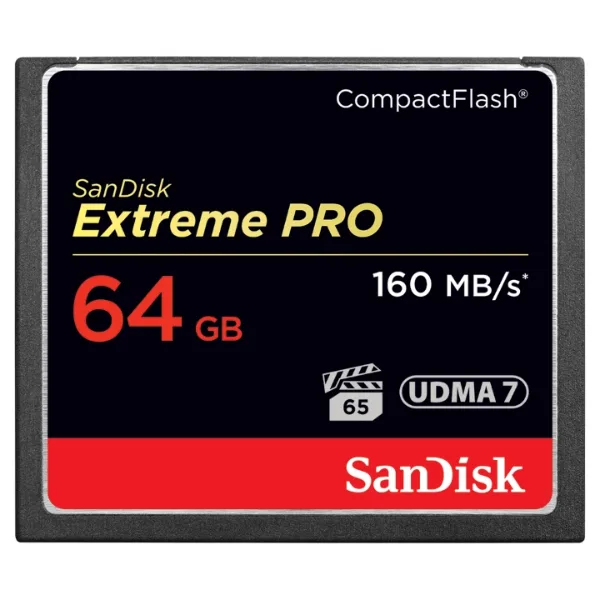
SanDisk Extreme Pro CompactFlash CF Card 64GB 160MB/s
-
SanDisk Extreme Pro CompactFlash CF Card 128GB 160MB/s: Capacity: 128 GB; read up to 160MB/s, write up to 150MB/s. Doubles the 64GB capacity for fewer swaps while keeping the same speed rating.
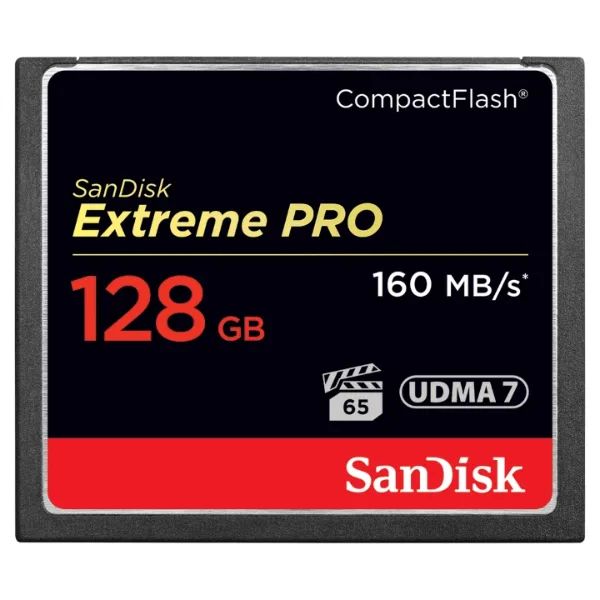
SanDisk Extreme Pro CompactFlash CF Card 128GB 160MB/s
-
SanDisk Extreme Pro CompactFlash CF Card 256GB 160MB/s: Capacity: 256 GB; read up to 160MB/s, write up to 150MB/s. The largest capacity here suits long shoots where changing cards is impractical.
Which capacity fits you?
Best for
- Sports and event photographers who need long uninterrupted bursts (256GB)
- Travel and wildlife shooters who cannot offload daily (256GB or 128GB)
- Portrait, landscape and studio photographers who offload regularly (64GB)
Not for
- Shooters who need the lowest possible cost and can swap cards (64GB is not for you if you refuse to swap; consider 256GB)
- Video shooters who require a specific VPG rating not listed for the 128GB or 256GB (check your camera manual first)
- Anyone who needs a CFexpress card; these are CompactFlash, not CFexpress