Quick answer
For the Sangria Glass canvas, choose a smooth silk or stranded cotton for the glass body and a separate bright thread for the fruit. Keep the glass shading in two or three close tones and use a lighter metallic or white for the shine.
Why glass and fruit need different thread plans
Glass reads as glass because of reflected light, not because of color alone. Fruit reads as fruit because of saturated color and soft shading. On a hand-painted canvas like Sangria Glass, the painted areas already set the color plan, so your thread choices should support those two jobs instead of competing with them.
If you use one busy variegated thread across both the glass and the fruit, the shine disappears and the fruit looks flat. Separate the two zones before you buy: one thread family for the glass, one for the fruit.
Trade-offs between smooth, shiny, and matte threads
Smooth threads such as silk or fine stranded cotton give clean light reflections and are easier to control in small glass areas. Shiny metallics make the highlight pop but can be stiff to stitch and may fray, so reserve them for small accents. Matte threads calm the fruit and keep it from looking metallic, but they can dull the glass if used everywhere.
There is no single correct thread type. The practical rule is to match the thread's surface to the painted area: smooth for the glass body, a small amount of shine for the highlight, and slightly matte or cotton threads for the fruit.
Stitch direction changes how the glass reads
Thread color alone does not create glass shading. The direction of your stitches controls how light travels across the stitched surface. Basketweave keeps a flat, even surface that suits the glass body, while a slight change in stitch angle can suggest a curved reflection.
Decide stitch direction before you buy thread, because a directional stitch uses more thread than basketweave in the same area. If you plan heavy compensation around the glass rim, add one extra card or skein of your main glass color.
Decision rules for choosing threads
- Glass body color: Pick two close tones of the same color family, one for the main glass and one slightly darker for the edge. Avoid a high-contrast variegated thread here; it breaks the smooth surface. Buy enough of the main glass tone to stitch the largest area twice.
- Glass highlight: Choose a single light thread, either white silk or a fine metallic, for the painted shine. Use it only where the canvas shows the brightest reflection. Test the metallic on a scrap of 18 mesh first; if it frays, switch to white silk.
- Fruit color: Match the fruit's painted color with a saturated cotton or silk. Add one darker shade for the shadow side of the fruit, but skip green unless the canvas actually paints a garnish. Keep fruit threads separate from glass threads so the two zones do not blend.
- Thread quantity: For a 5-inch canvas, one card or skein of each color is usually enough unless you plan extensive compensation or a directional stitch. Buy one extra of the main glass tone if you are unsure.
Canvas facts that affect thread buying
-
Sangria Glass: Hand-painted 18 mesh canvas measuring 5 inches, designed by Arden Gray. The 5-inch size keeps the thread list small, so two or three glass tones and two fruit tones are usually enough.
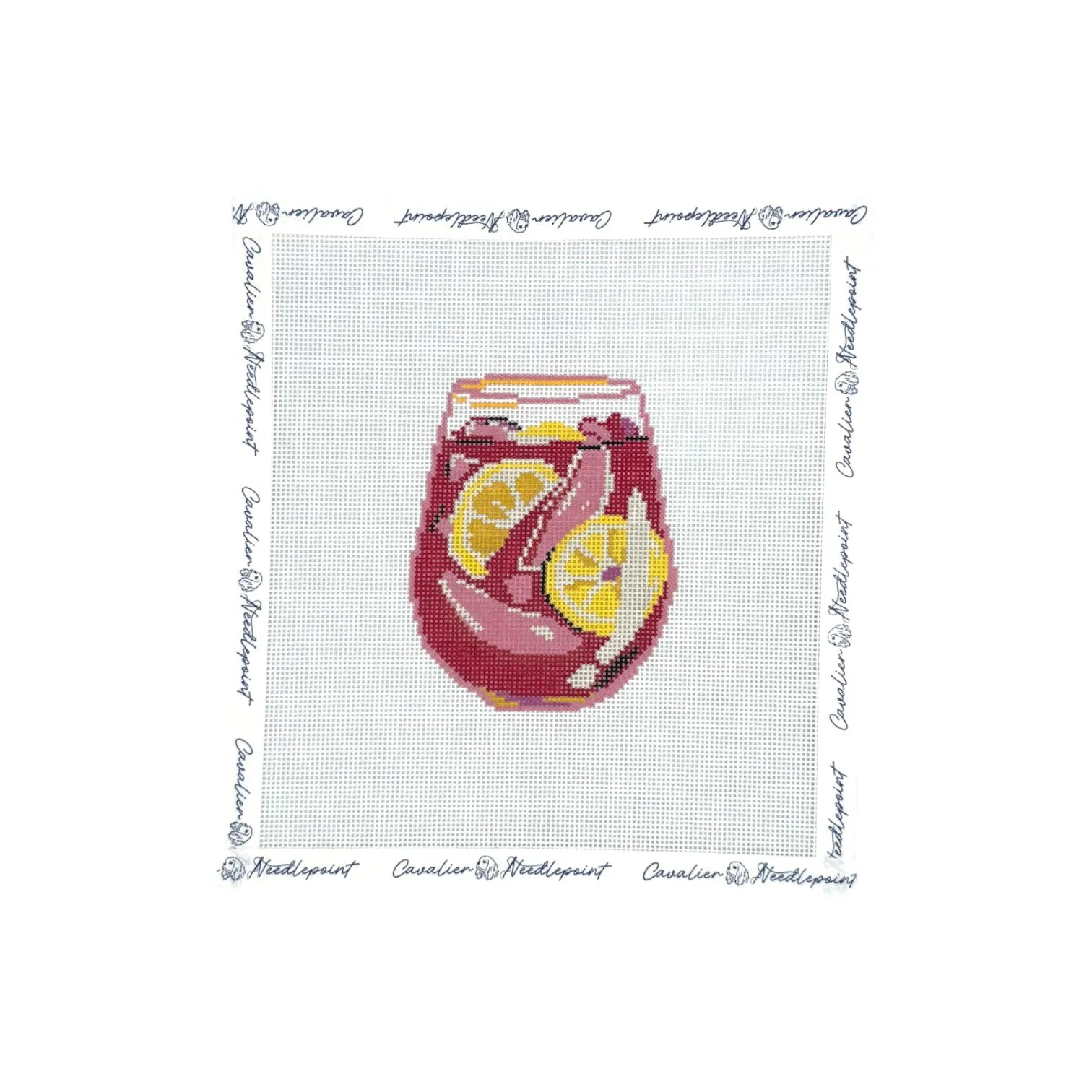
Sangria Glass
Who this thread plan suits
Best for
- Stitchers working the Sangria Glass canvas who want distinct glass and fruit zones
- Buyers choosing threads for a small 18 mesh drink canvas with painted highlights
Not for
- Stitchers who prefer one variegated thread across the whole canvas
- Large canvases where a single thread card will not cover the stitched area