Quick answer
Choose a chef knife if you want a versatile all-rounder for heavy chopping and rocking, or pick a santoku if you prefer a lighter, flatter blade for precise slicing and push-cutting.
Blade shape and cutting style
A chef knife's curved blade lets you rock the tip back and forth, which is natural for mincing herbs or chopping vegetables without lifting the blade. The 8" Martha Stewart Carverton chef knife uses that curve to handle large ingredients easily.
A santoku has a straighter edge and a slightly shorter blade, making it ideal for a push-cut or pull-cut motion. The Babish 6.5" santoku is precision-forged for slicing through tough foods, and its straight profile gives you more control for precise cuts.
Steel and construction differences
Both knives use high-carbon stainless steel, but their construction details affect performance. The Martha Stewart Carverton chef knife is made from high-carbon stainless steel and features an ergonomic triple-rivet handle for a secure grip during repetitive tasks.
The Babish santoku is precision-forged from a single piece of high-carbon German Steel (1.4116), then heat-tempered and hand-ground. Its full-tang handle provides balanced weight, and the etched Babish logo on the butt adds a touch of personality.
Trade-offs in everyday use
The 8" chef knife gives you more length for slicing large melons or squash, and the curved blade is excellent for rocking through herbs. However, the longer blade can feel bulky for smaller hands or detailed work.
The 6.5" santoku is lighter and more nimble, making it a great choice for precise vegetable work and slicing boneless proteins. Its flatter edge means less natural rocking motion, so mincing herbs may require a bit more wrist lift.
Trade-offs at a glance
- Chef knife (e.g., Martha Stewart Carverton 8"): A curved 8" blade that excels at rocking cuts for mincing herbs and chopping large vegetables. The longer length helps with slicing big produce. Best if you frequently chop large items or prefer a rocking motion.
- Santoku (e.g., Babish 6.5" German Steel): A straighter, shorter blade that favors push-cutting for precise slices. The full-tang handle and hand-ground edge give excellent control for detailed work. Best if you do a lot of precise slicing and push-cutting of vegetables and boneless proteins.
- Decision point: If you mostly rock-chop and want one knife for many tasks, go chef. If you prefer controlled push-cuts and a lighter blade, go santoku.
Knife features at a glance
-
Martha Stewart Carverton 8" Chef Knife, High Carbon Stainless Steel Kitchen Knive W/ Black Triple Rivet Handle: High-carbon stainless steel construction with an ergonomic black triple-rivet handle. The triple-rivet handle gives you a secure, comfortable grip during repetitive chopping and slicing.
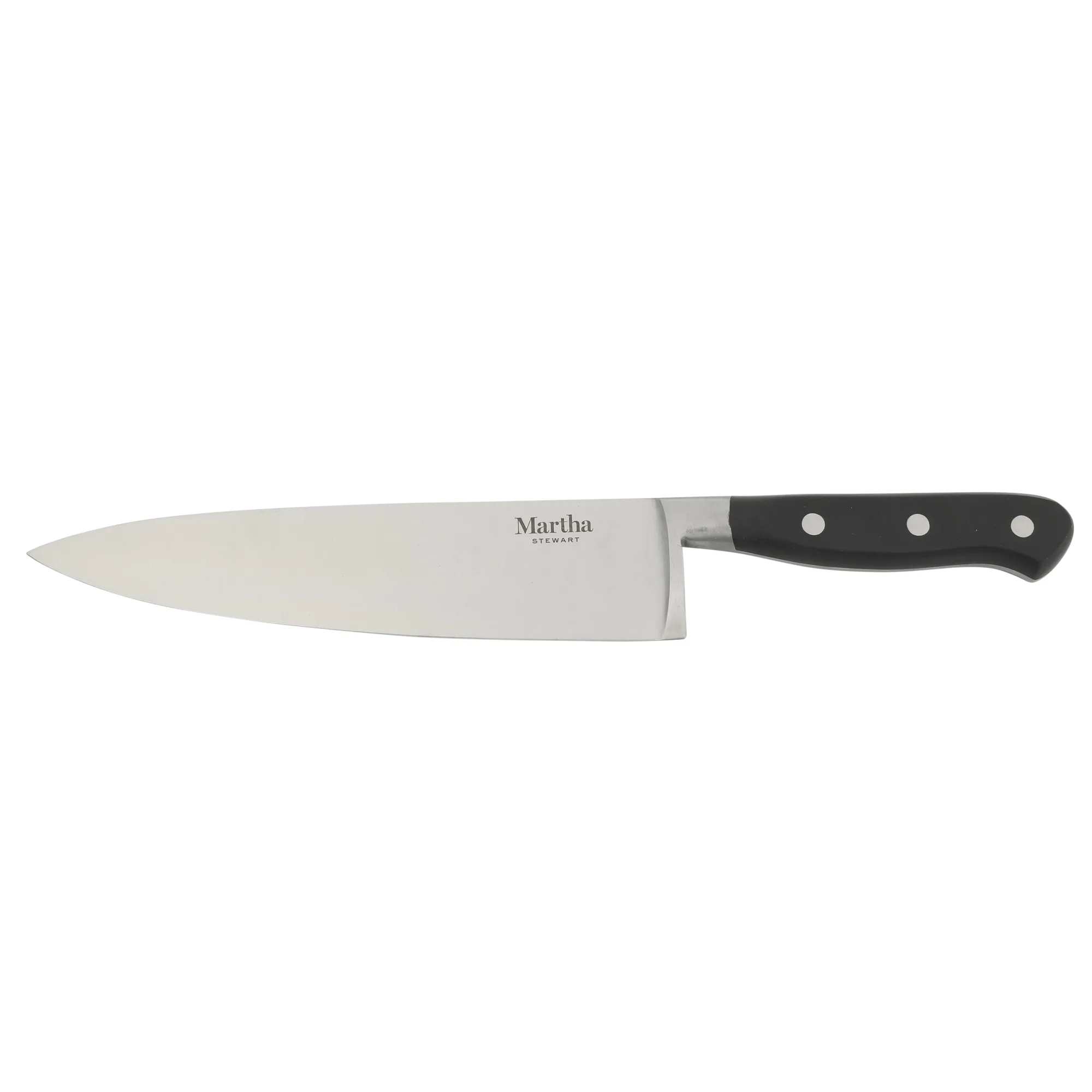
Martha Stewart Carverton 8" Chef Knife, High Carbon Stainless Steel Kitchen Knive W/ Black Triple Rivet Handle
-
Babish High-Carbon 1.4116 German Steel 6.5" Santoku Knife: Precision-forged from a single piece of high-carbon German Steel, then heat-tempered and hand-ground for maximum sharpness. The single-piece forging and hand-grinding produce a blade that holds a keen edge and stays balanced in your hand.
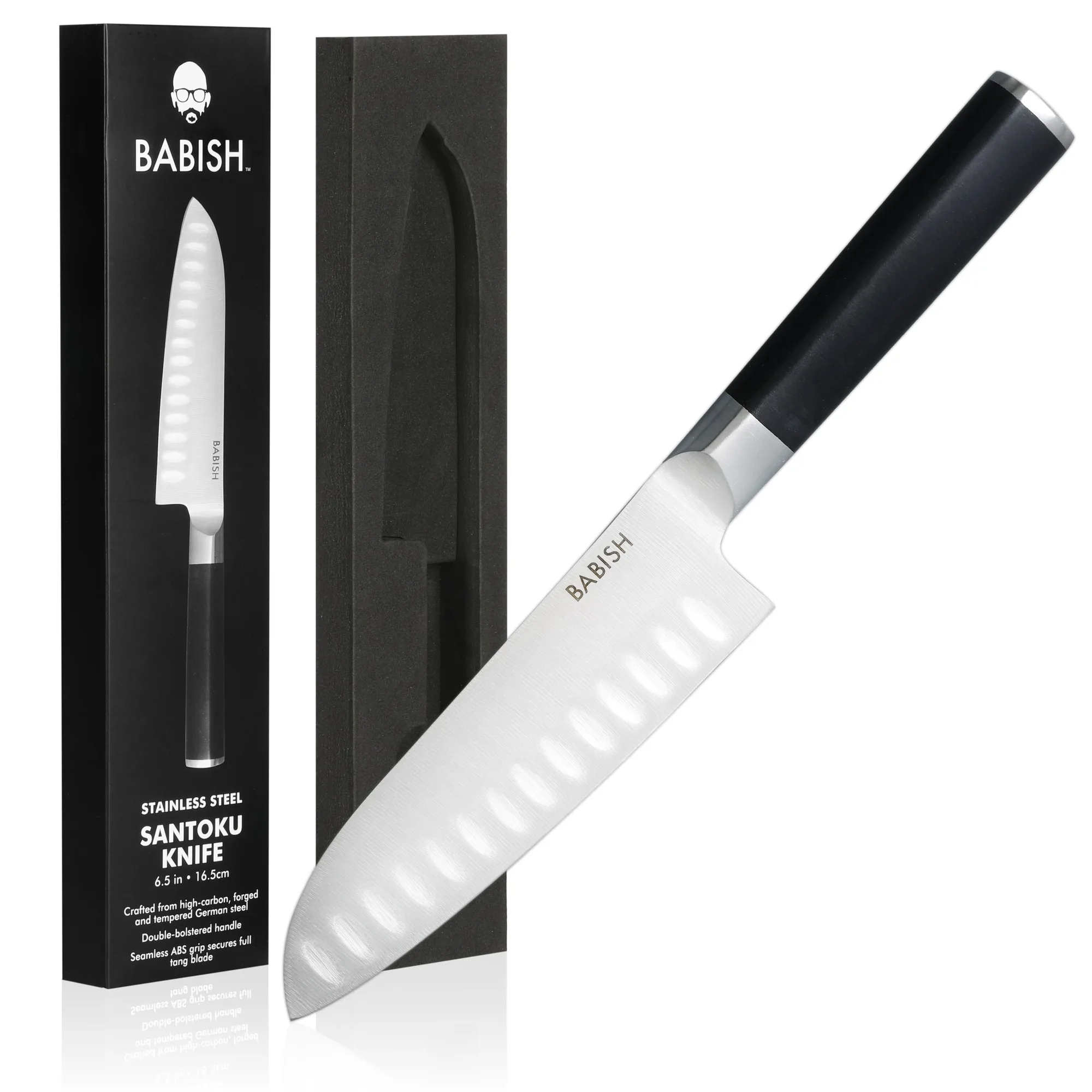
Babish High-Carbon 1.4116 German Steel 6.5" Santoku Knife
Which one fits you?
Best for
- Home cooks who want a single versatile knife for chopping, dicing, and mincing with a rocking motion.
- Anyone who regularly prepares large vegetables or needs extra blade length.
Not for
- Cooks who prefer a lighter, shorter blade for precise push-cutting and detailed vegetable work.
- Those who rarely chop large items and want a more nimble, controlled cutting experience.