A one-of-a-kind portrait hoop changes the styling plan
The Sarah Paulson hoop is not a print you can reorder if a shelf gets bumped. It is a one-of-a-kind piece designed, created, and stitched by the maker, and it combines hand embroidery with acrylic paint on the hoop and watercolours on the fabric. That mix of materials is what gives the portrait its depth, but it also means your placement and handling choices should protect the surface rather than treat the hoop as a durable frame.
Because the design is built around a portrait, the hoop reads as a focal point rather than background texture. Styling it well is less about matching a colour scheme and more about giving the face room, keeping the hoop stable, and choosing a spot where the handwork can be seen up close.
What the piece is made of
-
Sarah Paulson | 10 inch Embroidery Hoop: The embroidery sits in a 10 inch bamboo hoop, with the design digitally drawn, hand stitched, and painted using acrylic paint on the hoop and watercolours on the fabric. The 10-inch size and mixed materials set the practical limits for where and how you display it.
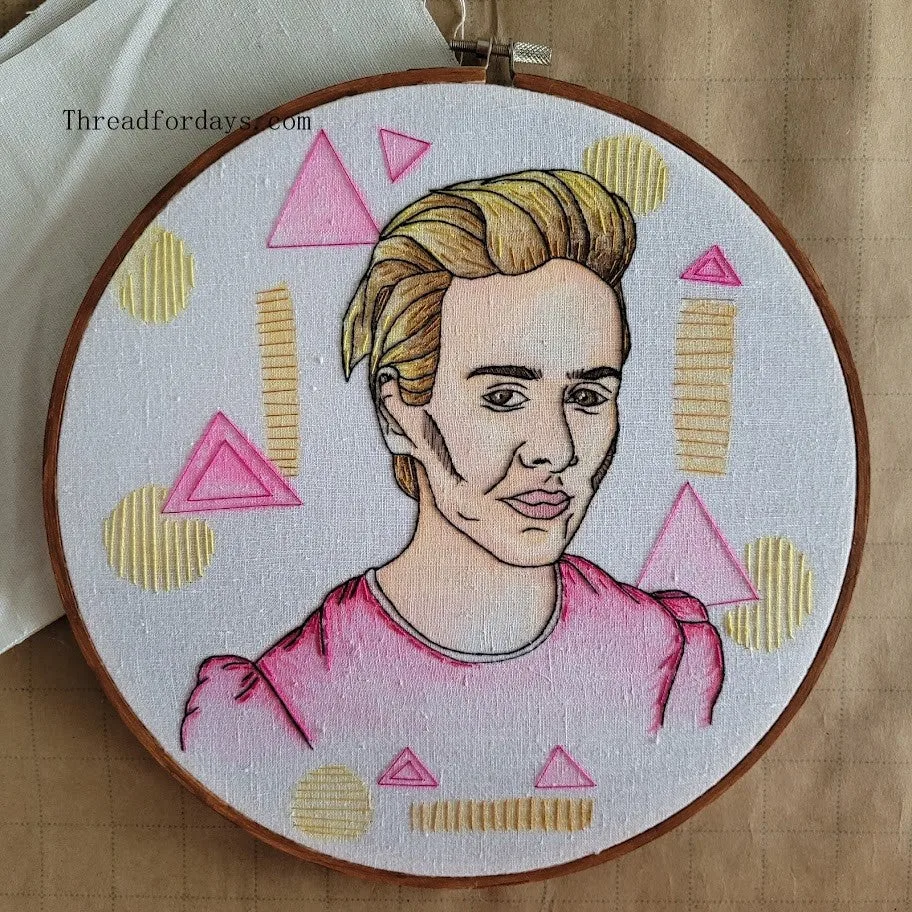
Sarah Paulson | 10 inch Embroidery Hoop
-
Sarah Paulson | 10 inch Embroidery Hoop: The piece contains about 25 hours of handiwork and is entirely designed, created, and stitched by the maker. That level of handwork is why the hoop deserves a stable, considered spot rather than a temporary lean.
Choose a wall or shelf spot before you style anything else
- Decide between wall and shelf: The maker suggests hanging the piece on your wall as artwork or resting it on a shelf. Pick one primary home first, because a 10-inch hoop needs different support in each location.
- Give the portrait breathing room: A portrait hoop works best when it is not crowded by other frames or objects. Leave visual space around the hoop so the face and stitching remain the focus.
- Keep the hoop away from busy traffic: Because the piece includes painted and watercolour surfaces, place it where it is unlikely to be knocked, brushed, or used as a resting spot for everyday items.
- Check the viewing height: Hang or rest the hoop so the portrait sits near eye level where possible. That makes the hand stitching and painted details visible without needing to handle the piece.
- Confirm stability before adding decor: Once the hoop is in place, give it a gentle check that it sits securely. Only then arrange nearby objects or wall pieces around it.
Wall placement for a 10-inch portrait hoop
A wall placement turns the hoop into a standalone artwork, which suits a portrait design. The supplied information does not include a hanging method, hardware, or weight guidance, so treat the wall plan as a placement decision and choose a hanging approach that matches the hoop's actual weight and your wall.
- Use a dedicated wall spot: Choose a section of wall where the hoop can be the main piece rather than an accent in a dense gallery wall.
- Avoid direct sun and damp: Watercolours and acrylic paint are best kept out of harsh light and humid spots. A interior wall away from bathrooms and strong windows is a safer default.
- Plan the surrounding wall: If you add other pieces, keep them visually quieter than the portrait hoop so the face remains the focal point.
Shelf styling that keeps the portrait safe
Resting the hoop on a shelf is a supported option, but a shelf introduces its own risks: objects in front of the hoop, dust, and the chance of a knock. Style the shelf around the hoop rather than crowding it.
- Place the hoop toward the back: Set the hoop back from the shelf edge so it is less likely to be caught by a sleeve or a reaching hand.
- Keep the front clear: Avoid tall objects directly in front of the portrait. A clear line of sight preserves the point of the piece.
- Use low, stable companions: Small, low objects beside the hoop can add context without competing. Anything that could topple toward the hoop is better placed elsewhere.
- Check the shelf surface: Make sure the hoop sits flat and does not wobble. A stable base matters more than decorative extras.
Handling and care limits to respect
The supplied information does not include specific cleaning, washing, or repair instructions for this hoop. That is a real limitation, not a gap to fill with guesswork. Avoid wiping the fabric with water or household cleaners, and do not assume the painted hoop can be treated like bare wood or the stitched cloth like a washable textile. If dust becomes visible, the safest approach is to disturb the surface as little as possible and seek advice from the maker or a conservator rather than testing a cleaner on the artwork.
Because the piece is one of a kind and contains about 25 hours of handiwork, handle it by the hoop rim when you must move it, and keep it out of reach of children and pets. The goal is to prevent the kind of accidental contact that could distort stitches or damage the painted surface.
Product facts for your reference
- Sarah Paulson | 10 inch Embroidery Hoop: Sarah Paulson | 10 inch Embroidery Hoop is a one-of-a-kind hoop art piece with a bamboo hoop and hand embroidered and painted linen cloth. The materials confirm this is a mixed-media artwork, so display and handling should protect both the fabric and the painted hoop.
- Sarah Paulson | 10 inch Embroidery Hoop: The maker suggests hanging the piece on your wall as artwork or resting it on a shelf. These are the two supported display options; styling can be planned around either one.