Quick answer
Use Scalp Therapy Shampoo when your scalp feels flaky, itchy, or coated with product buildup, and work it into the scalp first rather than the ends. Massage it in, let it sit briefly, and rinse thoroughly before conditioning.
When a scalp-focused shampoo makes sense
A scalp care shampoo is designed to clean where oil, dead skin, and styling residue collect. If your regular shampoo leaves your roots flat or your scalp still feels coated after rinsing, a targeted scalp step can help. It is not a replacement for a moisturizing shampoo if your main complaint is dry, brittle ends.
The trade-off: clean scalp vs. dry ends
Scalp-focused cleansing can leave longer hair feeling rougher if you apply it along the full length. Keep the shampoo concentrated on the scalp and let the rinse water carry it through the mid-lengths. If your ends are already dry, pre-condition them or use a conditioner after every wash.
Who should skip it or use it less often
If your scalp is sensitive, newly irritated, or reacts to strong cleansing, start with once a week and watch for tightness or redness. Anyone with a diagnosed scalp condition should follow a dermatologist's advice rather than a routine article. This shampoo is not a treatment for medical scalp disorders.
Scalp care shampoo steps
- Pre-rinse and detangle: Soak your hair with warm water for at least 30 seconds and finger-comb out tangles before applying shampoo. Warm water loosens oil and residue so the shampoo can reach the scalp. If your hair is very tangled, detangle with conditioner first, then shampoo the scalp.
- Apply to the scalp, not the ends: Dispense a quarter-sized amount into your palm, then work it directly along the scalp line in sections. Avoid piling shampoo onto the mid-lengths and ends, where it can cause dryness. Use more shampoo only if your hair is dense or you have heavy buildup; otherwise start small.
- Massage and let it sit: Massage with your fingertips, not your nails, for about 30 seconds, then leave the lather on the scalp for one to two minutes. This contact time lets the formula work on flakes and residue. Set a timer if you tend to rinse too soon; short contact time is a common reason scalp shampoo underperforms.
- Rinse thoroughly: Rinse until the water runs clear, lifting sections of hair to reach the nape and behind the ears. Leftover shampoo can leave a filmy feel that mimics buildup. Check the nape and hairline by feel; if it still feels slick, keep rinsing.
- Condition the ends only: Apply conditioner from mid-lengths to ends, keeping it off the scalp. This restores slip to hair that a scalp-focused shampoo can leave rough. If your scalp is oily, skip conditioner at the roots entirely.
- Set your frequency: Start with two or three washes per week if you have visible flakes or buildup, then drop to once a week for maintenance. Adjust based on how your scalp feels between washes, not on a fixed calendar. If your scalp feels tight or irritated after washing, reduce frequency before changing products.
Product facts
-
Scalp Therapy Shampoo 16 oz: PURA D'OR Scalp Therapy Shampoo comes in a 16 oz size, Standard option, item code 602. A 16 oz bottle is practical for a weekly scalp routine, so you can use enough to cover the scalp without running out quickly.
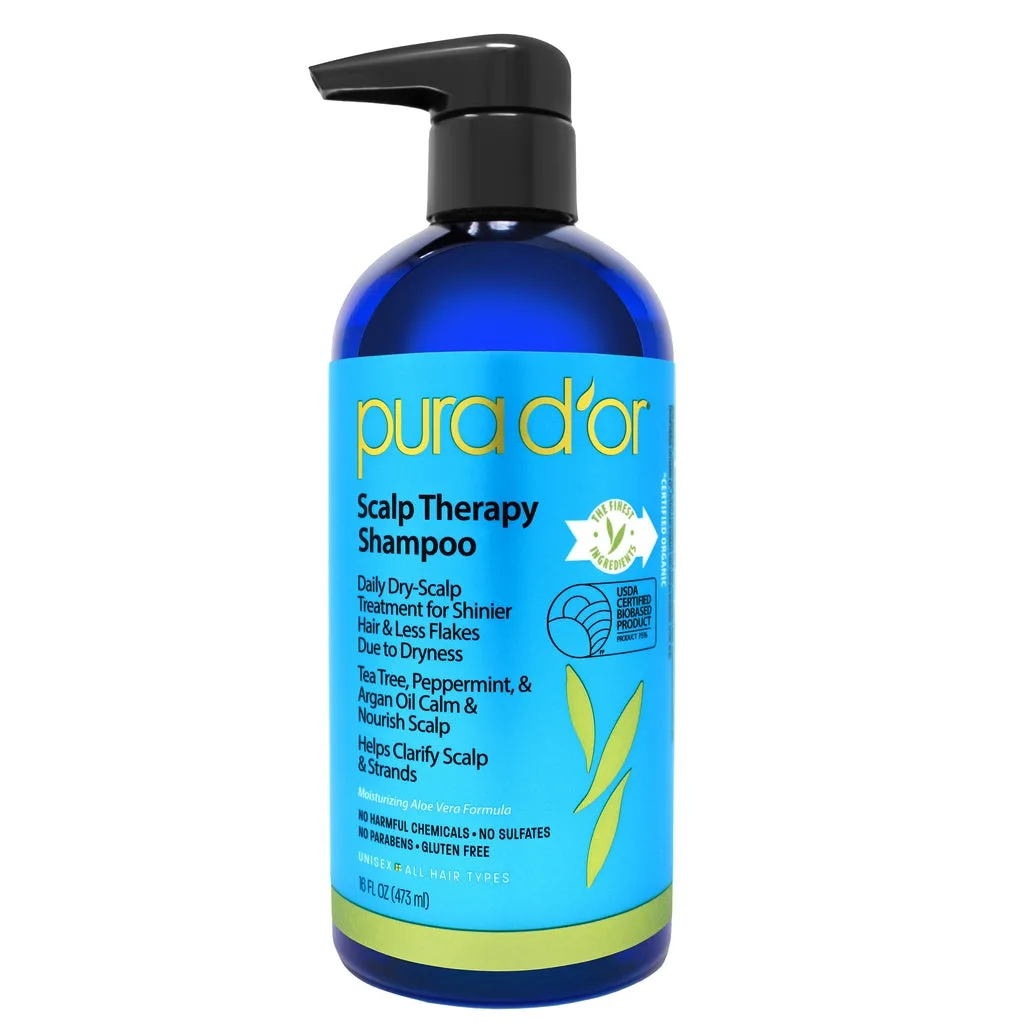
Scalp Therapy Shampoo 16 oz