Placement is a scent decision and a safety decision
Where you put a scented candle changes two things at once: how quickly the fragrance reaches the room, and how safely the flame burns. A candle tucked into a corner may look cozy, but it can struggle to scent the space and sit too close to surfaces. A candle placed in a draft may flicker and burn unevenly.
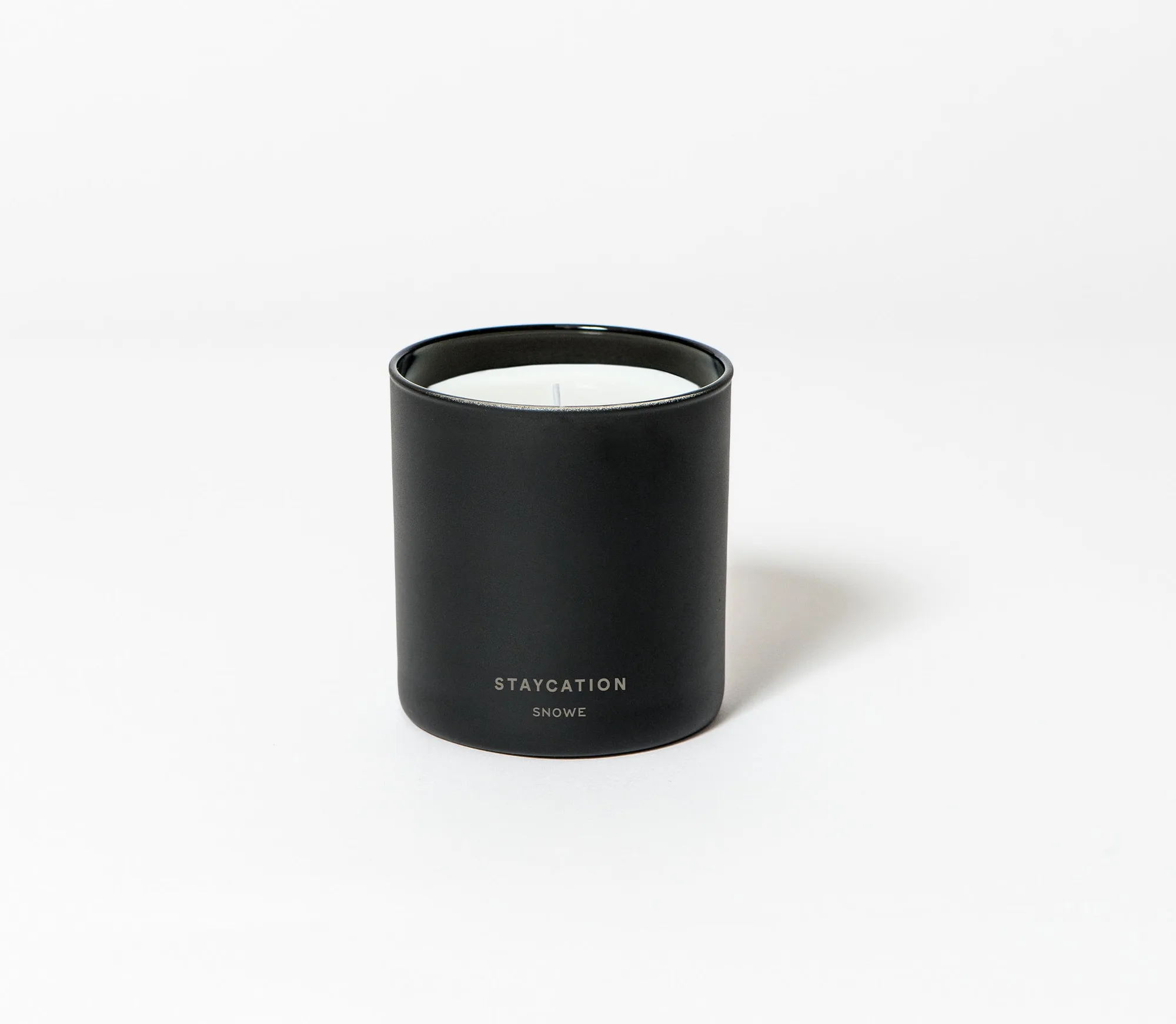
The practical approach is to choose a spot with open air around it, a stable heat-resistant surface, and enough distance from walls and soft furnishings. Then match the scent to the room's job. The Snowe Scented Candle comes in five custom-blended scents, so placement and scent choice can work together rather than compete.
A simple placement check before you light
- Choose a stable, heat-resistant surface: Set the candle on a non-flammable surface that will not tip, and keep it away from table edges where pets or sleeves can knock it.
- Give the flame open air: Avoid tight shelves, deep alcoves, and spots directly under cabinets. The supplied product information does not specify a minimum wall distance, so treat clearance as a judgment call: the more enclosed the spot, the less suitable it is.
- Keep it out of drafts: Open windows, air vents, and doorways with cross-breezes can make a flame flicker. A steady flame burns more predictably.
- Clear the surroundings: Move curtains, papers, and other flammable items away from the candle before lighting.
- Place it at nose height or below: Fragrance rises, so a candle on a side table or console often reads more clearly than one high on a shelf. This is general placement advice, not a manufacturer instruction.
Entryway: scent the first few feet
The entryway is where a scented candle earns its keep. A console table or a sturdy shelf near the door gives the fragrance a chance to greet people as they arrive. Keep the candle away from the door swing and any spot where bags or keys get dropped.
For an entryway, choose a scent that feels welcoming without being heavy. The Staycation scent is one of the five options in the Snowe Scented Candle line, and the catalog describes the candles as a subtle yet immersive backdrop rather than an overpowering statement.
Bedroom: lower and farther from the bed
In a bedroom, place the candle on a nightstand or dresser that is clear of fabric and away from the bed's edge. A spot across the room from the pillow is usually better than one right beside it, because the scent can disperse before it becomes intense.
Pillow Talk is one of the supplied scent options and reads as a natural fit for bedroom placement. The catalog does not provide scent notes or intensity ratings for any variant, so the best way to judge is to start with the candle in a spot where you can move it if the fragrance feels too strong or too faint.
Living room and dining area: where the candle should sit
- Side table beside a sofa: A stable table away from upholstery gives the scent room to travel and keeps the flame clear of fabric.
- Console behind a sofa: Useful in open-plan rooms, provided the candle is not directly under a shelf or against the wall.
- Dining table centerpiece: Keep it out of the path of serving dishes and away from table linens that could catch a draft.
- Avoid deep shelving and tight corners: Enclosed spots limit airflow and put the flame closer to surfaces than is comfortable.
What the Snowe Scented Candle gives you to work with
-
Scented Candle: Soy wax blend with a burn lifetime of 75 hours A long burn time means placement is worth getting right: one candle can serve a room through many evenings rather than being a one-off.
Scented Candle
-
Scented Candle: Five custom-blended scents, including Staycation, Tastemaker, Speak Easy, and Pillow Talk You can assign different scents to different rooms instead of moving one candle around.
-
Scented Candle: Catalog price USD 17.42, compared with a catalog comparison price of USD 26.00 At this price, buying a second candle for another room is a reasonable way to keep placement permanent.
How far from the wall should a candle burn?
The supplied product record does not include a manufacturer-specified wall clearance, so there is no exact distance to quote. What the record does support is the general logic: a candle needs open air and a clear zone around the flame. In practice, that means avoiding spots where the candle is pressed against a wall, tucked under a shelf, or surrounded by fabric.
If you are unsure about a spot, test it briefly while you are in the room. A flame that leans, sputters, or creates a hot spot on nearby paint is a sign to move the candle rather than adjust the room.
Matching the supplied scents to rooms
- Staycation: A natural candidate for the entryway or living room, where a welcoming backdrop scent makes sense.
- Pillow Talk: Suited to bedroom placement on a dresser or nightstand away from the bed edge.
- Tastemaker: A reasonable choice for a dining or entertaining space; the catalog does not provide scent notes, so treat this as a starting point.
- Speak Easy: Works as a living-room or bar-cart scent where the candle can sit on a stable surface with clearance.
What this guide cannot tell you
The supplied information does not include care instructions, safety warnings, a specified wall distance, or scent notes for the five variants. It also does not confirm how long each scent lingers or how strong it is. Use the placement principles above as a practical framework, and follow any instructions that come with the candle itself.