Quick Answer
Choose a scope cover that matches your terrain and shooting style—prioritize durable materials, a secure fit, and low-profile design. For most backcountry hunters, a closed-cell foam cover wrapped in Cordura offers the best balance of protection and convenience.
Why Your Scope Needs More Than a Lens Cap
Lens caps protect the glass from dust and rain, but they do little when your rifle takes a hit against a rock or tree. In the backcountry, a slip or fall can knock your optic out of zero or crack the lens—ending your hunt. A scope cover adds a protective layer around the entire tube, not just the lenses.
Think about how you carry your rifle: slung over your shoulder, strapped to a pack, or in a scabbard. Each method exposes your scope to different impacts. A cover that stays put and absorbs shock can mean the difference between a clean shot and a failed hunt.
Material and Build: What Actually Protects
Not all scope covers are equal. The material determines how much impact protection you get and how well the cover survives rough use. Closed-cell foam is a proven choice because it absorbs and disperses energy without adding much bulk. It also holds its shape over time, so the cover keeps fitting snugly.
The outer fabric matters too. Cordura is a heavyweight nylon known for resisting abrasion and tears. If you’re crawling through brush or sliding down a slope, a Cordura cover will take the abuse and keep the foam inside intact. Cheaper fabrics may rip or wear through quickly, leaving your optic exposed.
Also consider the cover’s profile. A bulky cover can snag on branches and make your rifle harder to handle. Look for a low-profile design that adds minimal bulk while still providing full coverage.
Fit and Security: A Loose Cover Is a Useless Cover
A scope cover that shifts or slips off is worse than none—it can catch on gear or leave your optic exposed at the worst moment. Check how the cover attaches and whether it stays in place during movement. Some covers use elastic or straps; others rely on a snug friction fit.
Make sure the cover matches your scope’s dimensions. An oversized cover won’t protect properly, and an undersized one may not fit at all. If the product offers color options, choose a color that suits your hunting environment—camouflage for concealment or a bright color for visibility if you prefer.
Decision Rules for Choosing a Scope Cover
- Match material to your terrain: If you hunt in rocky, brushy, or steep terrain, choose a cover with closed-cell foam and a tough outer fabric like Cordura. For mild conditions, a lighter cover may suffice, but don’t sacrifice durability. Assess the worst-case impact your rifle might face, not the average.
- Prioritize a secure fit over brand: Measure your scope’s length and tube diameter. Look for covers that specify compatible dimensions. A snug fit prevents shifting and keeps the cover in place during a fall. If the cover doesn’t fit securely, it won’t protect—move on.
- Balance bulk with protection: A low-profile cover is easier to handle and less likely to snag, but it must still cover the entire scope tube. Verify that the cover fully encloses the optic, including the turrets and ocular bell. Check that the cover doesn’t interfere with your scope’s adjustments or mounting.
Product Spotlight
-
SCOPE COVER [Inventory]: The PEAX Scope Cover is made with durable closed-cell foam wrapped in bombproof Cordura fabric, with a low-profile design. This combination absorbs impacts and resists abrasion, so your optic stays protected through rough backcountry travel without adding bulk.
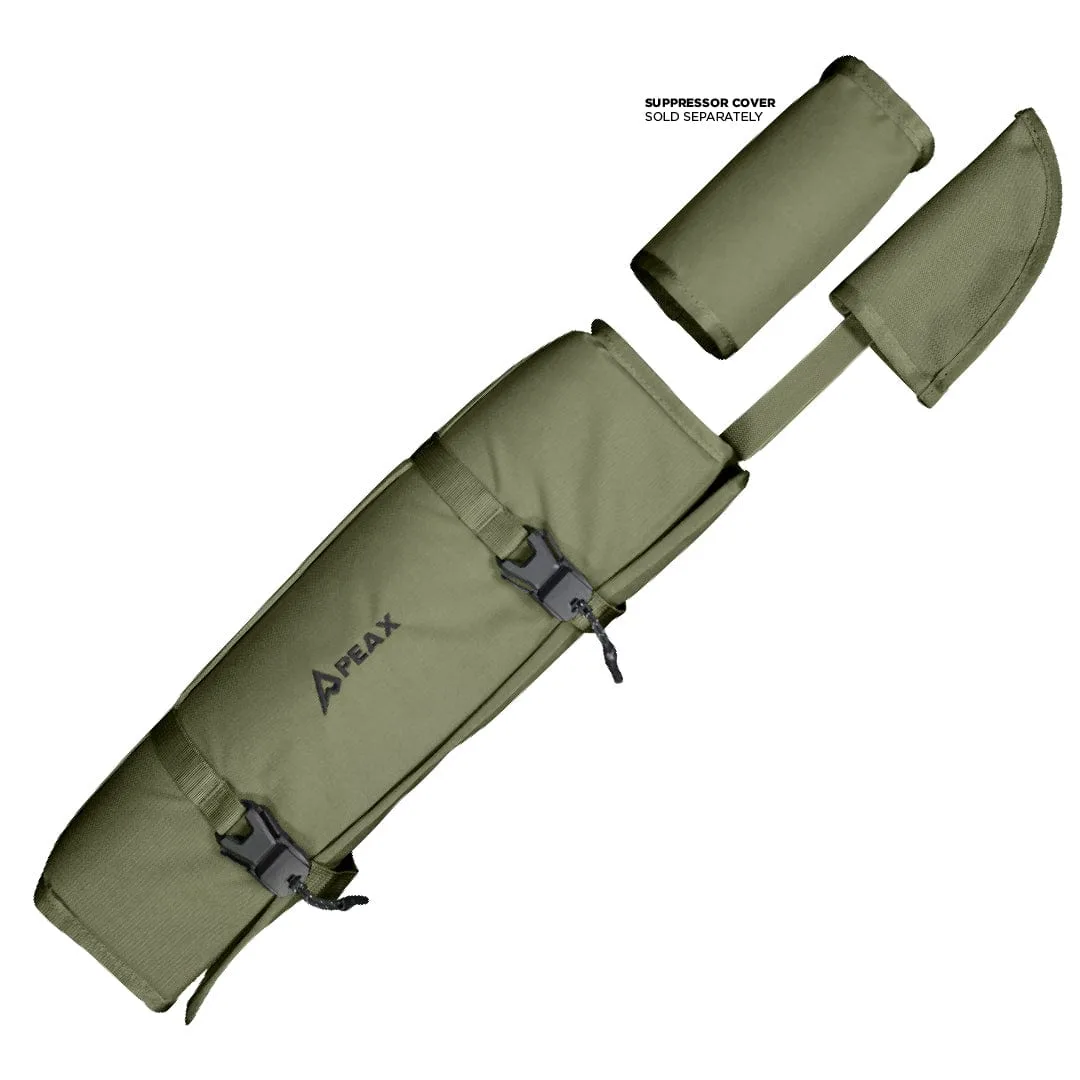
SCOPE COVER [Inventory]
Who Should Choose What
Best for
- Backcountry hunters who carry rifles in rough terrain and need durable impact protection
- Hunters who want a low-profile cover that stays secure during long pack-outs
Not for
- Hunters who only need basic dust and moisture protection and prefer a lightweight lens cap
- Those who require a hard-shell case for extreme impacts or transport in a vehicle