The shared Strike foundation
The Scott Strike eRide 930 and Strike eRide 900 Evo are close cousins. Both are full-suspension e-MTBs with 150mm of travel at both ends, a Bosch drive unit and 12-speed SRAM Eagle gearing. If you are shopping within the Strike family, the decision is less about riding category and more about frame material, suspension brand and how much you want to spend.
The catalog lists the 930 at USD 5,543.34 against a comparison price of USD 8,399.00, and the 900 Evo at USD 4,899.30 against USD 6,999.00. Those figures make the two bikes surprisingly close in price, which is exactly why a careful spec-by-spec look matters.
What the catalog confirms on each bike
-
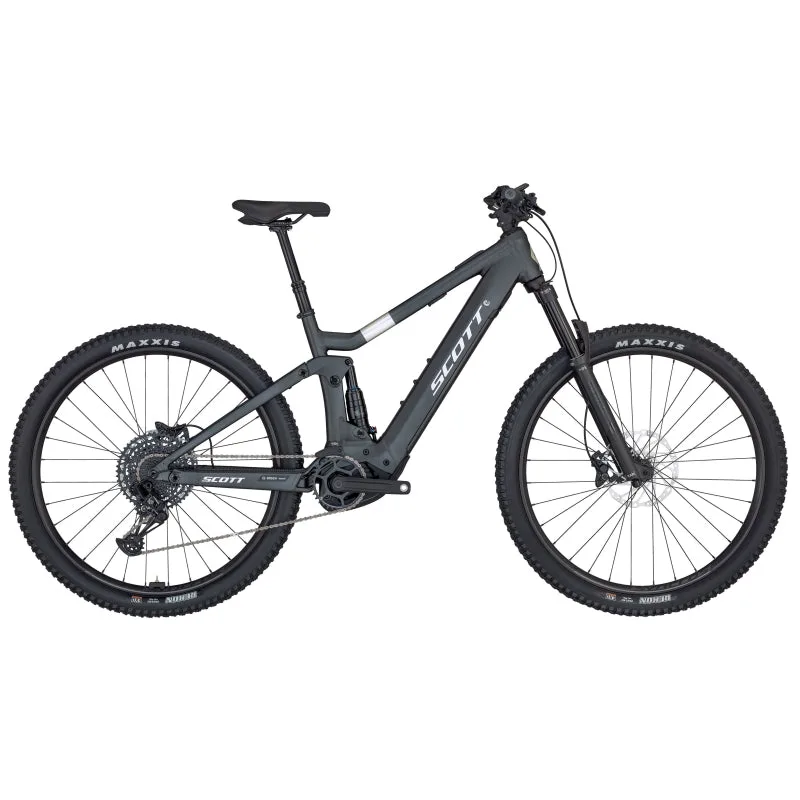
Scott Strike Eride 930: Strike eRIDE Alloy Frame with Marzocchi Z2 Air 150mm fork and X-Fusion NUDE 150mm TwinLoc rear suspension. This is the alloy, value-focused build in the pair, with a coil-free air fork and a rear shock that can be controlled via TwinLoc.
Scott Strike Eride 930
-
Scott Strike Eride 930: SRAM SX-NX Eagle 12-speed drivetrain, SRAM DB8 4-piston brakes and Maxxis Rekon tires. These components define the 930's trail-ready but budget-conscious character, with mixed SX and NX Eagle gearing rather than a full higher-tier groupset.
-
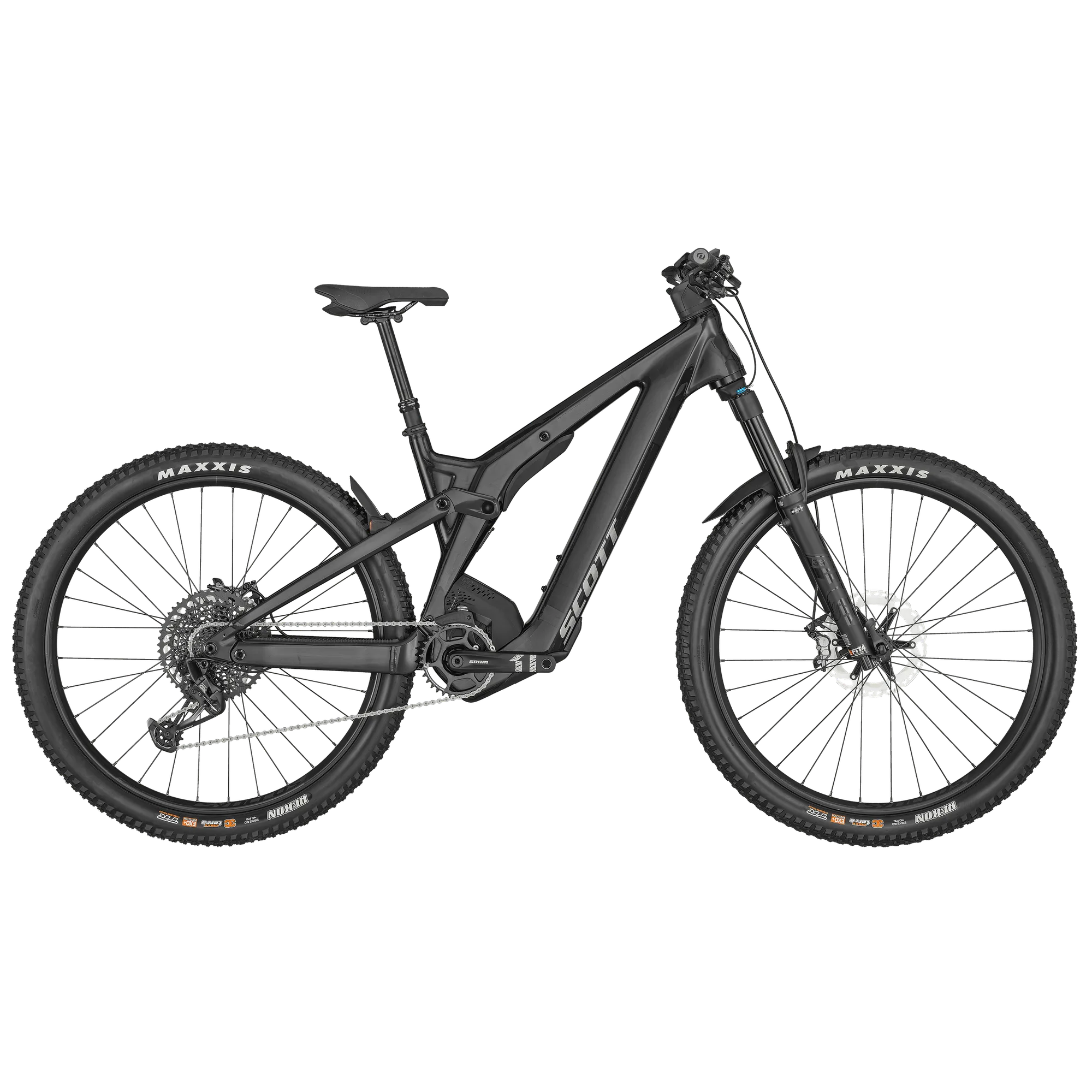
Scott Strike eRide 900 Evo: Strike eRIDE Carbon/Alloy Frame with FOX 36 Performance Elite 150mm fork and FOX Float EVOL eRIDE 150mm TwinLoc rear shock. The 900 Evo steps up to a carbon front end and FOX suspension, which is the main reason it sits in a different performance bracket.
Scott Strike eRide 900 Evo
-
Scott Strike eRide 900 Evo: SRAM GX Eagle 12-speed drivetrain, Shimano XT 4-piston disc brakes, Bosch CX 750Wh PowerTube with SmartSystem and a FOX dropper post. The 900 Evo's drivetrain, brakes, battery and dropper are all a tier above the 930 on paper, which explains the different value proposition.
Where the two builds actually diverge
- Frame material: The 930 uses an alloy frame; the 900 Evo uses a carbon/alloy frame. The catalog does not give frame weights, so treat any weight advantage as unconfirmed rather than a deciding factor.
- Fork and rear shock: The 930 runs a Marzocchi Z2 Air fork and X-Fusion NUDE rear shock. The 900 Evo runs a FOX 36 Performance Elite fork and FOX Float EVOL eRIDE rear shock. Both offer 150mm of travel and TwinLoc on the rear.
- Drivetrain: The 930 mixes SRAM SX and NX Eagle; the 900 Evo uses SRAM GX Eagle. Both are 12-speed, so gear range is broadly similar, but the 900 Evo's GX tier sits higher in SRAM's line.
- Brakes: The 930 uses SRAM DB8 4-piston brakes; the 900 Evo uses Shimano XT 4-piston brakes. Both are four-piston setups, but they come from different brake families.
- Battery and motor: The 900 Evo is confirmed with a Bosch CX 750Wh PowerTube and SmartSystem. The catalog does not state the 930's battery capacity or motor model beyond a Bosch drive unit, so do not assume they match.
- Tires and cockpit: The 930 comes with Maxxis Rekon tires. The 900 Evo is described with slicker tires, thicker grips and a thicker saddle, aimed at comfort. Tire widths are not given for either bike.
Sizing and availability: what you can actually order
Sizing is where the two bikes differ most in practical terms. The 930 is listed in Medium, Large and X-Large in Black. The 900 Evo is listed only in Carbon Black / Large in the supplied variant evidence.
- Strike eRide 930: Available in Black / Medium, Black / Large and Black / X-Large, giving a wider spread of rider sizes.
- Strike eRide 900 Evo: Supplied variant evidence shows Carbon Black / Large only, so riders outside that size may not find a match in this listing.
Price and value: which one makes more sense
On catalog prices alone, the 900 Evo is the cheaper bike at USD 4,899.30 versus USD 5,543.34 for the 930, despite the carbon/alloy frame, FOX suspension, GX Eagle drivetrain and Shimano XT brakes. That makes the 900 Evo look like the stronger value on paper, provided the Large size fits you.
The 930's case rests on availability and component familiarity rather than price. If you need a Medium or X-Large, or you prefer the Marzocchi and SRAM DB8 package, the 930 is the practical choice even at a higher sticker price. Neither bike's catalog entry confirms rack or fender fitment for the 900 Evo; the 930 is noted as having a rack and fender available.
How to decide between the two
- Check your size first: If you are not a Large, the 900 Evo's supplied variant evidence does not cover you. Start with the 930's Medium or X-Large options.
- Decide whether FOX and carbon matter to you: The 900 Evo's FOX 36 fork, FOX Float rear shock and carbon/alloy frame are the headline upgrades. If those are not priorities, the 930's alloy frame and Marzocchi fork are a coherent trail package.
- Compare the brakes and drivetrain you prefer: Shimano XT brakes and SRAM GX Eagle on the 900 Evo versus SRAM DB8 brakes and SX-NX Eagle on the 930. Both are 12-speed and four-piston; the difference is tier and brand feel.
- Confirm battery and motor details before ordering: The 900 Evo's Bosch CX 750Wh SmartSystem is confirmed. The 930's battery capacity and motor model are not stated in the supplied record, so ask before you buy if range is critical.
- Weigh price against the build: At the listed prices the 900 Evo is cheaper despite the higher-tier parts. If it fits and the spec suits your riding, it is the value pick; otherwise the 930's wider sizing wins.