Two pans, two jobs: the 21cm and the 25cm
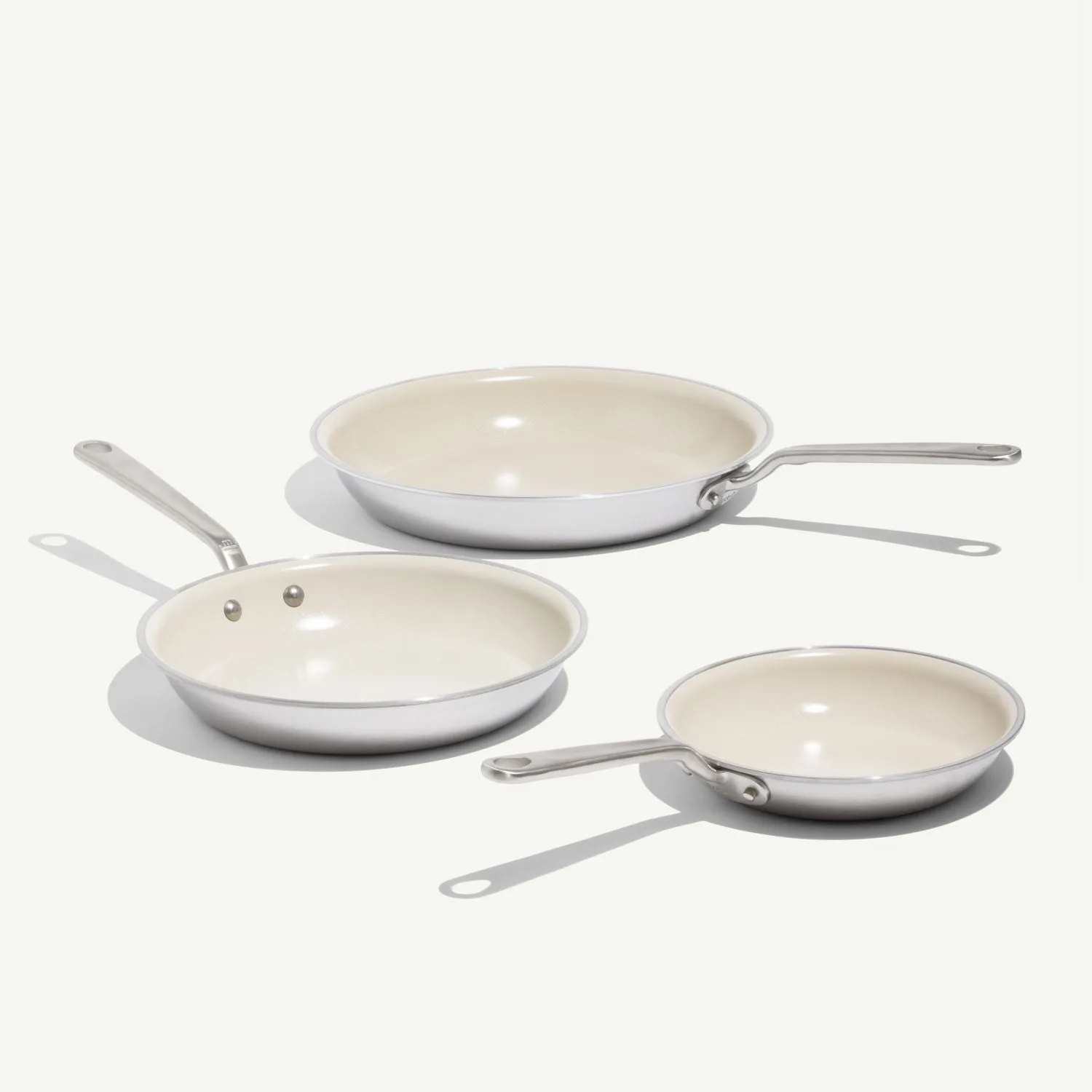
The Scratch Guard twin pack is not two versions of the same pan. It pairs a 21cm frying pan with a 25cm one, and that size gap is the whole point. The smaller pan is the one you reach for when you are cooking for one or two: eggs, a single omelette, a quick lunch, reheating a portion. The larger pan takes over when volume matters: family dinners, batch cooking, searing more than one piece at a time, or dishes that need room to spread out rather than steam.
If you are replacing a tired pan, the useful question is not which size is better. It is whether these two sizes together cover the cooking you actually do. For most kitchens, a small pan and a large pan is a more practical pair than two mid-sized pans, because the jobs are genuinely different.
What the twin pack includes
-
Scratch Guard: Non Stick Frying Pan Set - Twin Pack: Includes x2 long lasting frying pans in sizes 21cm and 25cm The two-size pairing is the core of the buying decision, so check that both sizes suit your household before choosing this set.
Scratch Guard: Non Stick Frying Pan Set - Twin Pack
Scratch Guard: Non Stick Frying Pan Set - Twin Pack
-
Scratch Guard: Non Stick Frying Pan Set - Twin Pack: Scratch resistant, triple layer non-stick coating The coating is the main durability claim, and it applies to both pans in the pack.
-
Scratch Guard: Non Stick Frying Pan Set - Twin Pack: Solid stainless steel handle A fixed steel handle affects how the pan feels in hand and how it sits on the hob.
-
Scratch Guard: Non Stick Frying Pan Set - Twin Pack: 10 year guarantee A stated guarantee period is worth weighing when you are comparing the pack against a single pan.
How to tell whether the 21cm pan is big enough
Think about the meals you cook most often, not the ones you cook occasionally. If your weekday cooking is eggs, toast toppings, small sautés, or single portions, the 21cm pan will handle most of it. It heats quickly and takes up little hob space, which matters on a crowded stovetop.
Where the 21cm pan runs out of room is when ingredients need to sit in a single layer. If you routinely cook for three or more people, or if your pans are usually full to the rim, the small pan will feel like a compromise and the 25cm pan will do the heavy lifting.
Where the 25cm pan earns its place
The 25cm pan is the one that covers family cooking, larger sautés, and dishes you want to brown rather than stew. More surface area means more room between pieces, which is usually what you want when the goal is colour and texture rather than a gentle cook.
The trade-off is space. A 25cm pan needs a wider hob ring and more cupboard room, and it is heavier to handle than the 21cm. If your storage is tight or your hob is small, measure before you commit rather than assuming the larger pan will fit comfortably.
Choosing between the two pans in daily use
- 21cm pan: Best for one or two portions, eggs, omelettes, quick sautés and small reheats. Takes less hob and cupboard space.
- 25cm pan: Best for family meals, batch cooking, searing several pieces at once and dishes that need room to spread. Needs more space and is heavier.
- Both together: The pair covers small and large jobs without duplicating a mid-size pan, which is the practical argument for buying the twin pack rather than one pan.
Hob, oven and heat: what the pack is built for
The pans are suitable for all hob types, including induction, and oven safe up to 260C/500F/Gas Mark 10. That combination makes the set more flexible than a basic non-stick pan, because you can start on the hob and finish in the oven without switching pans.
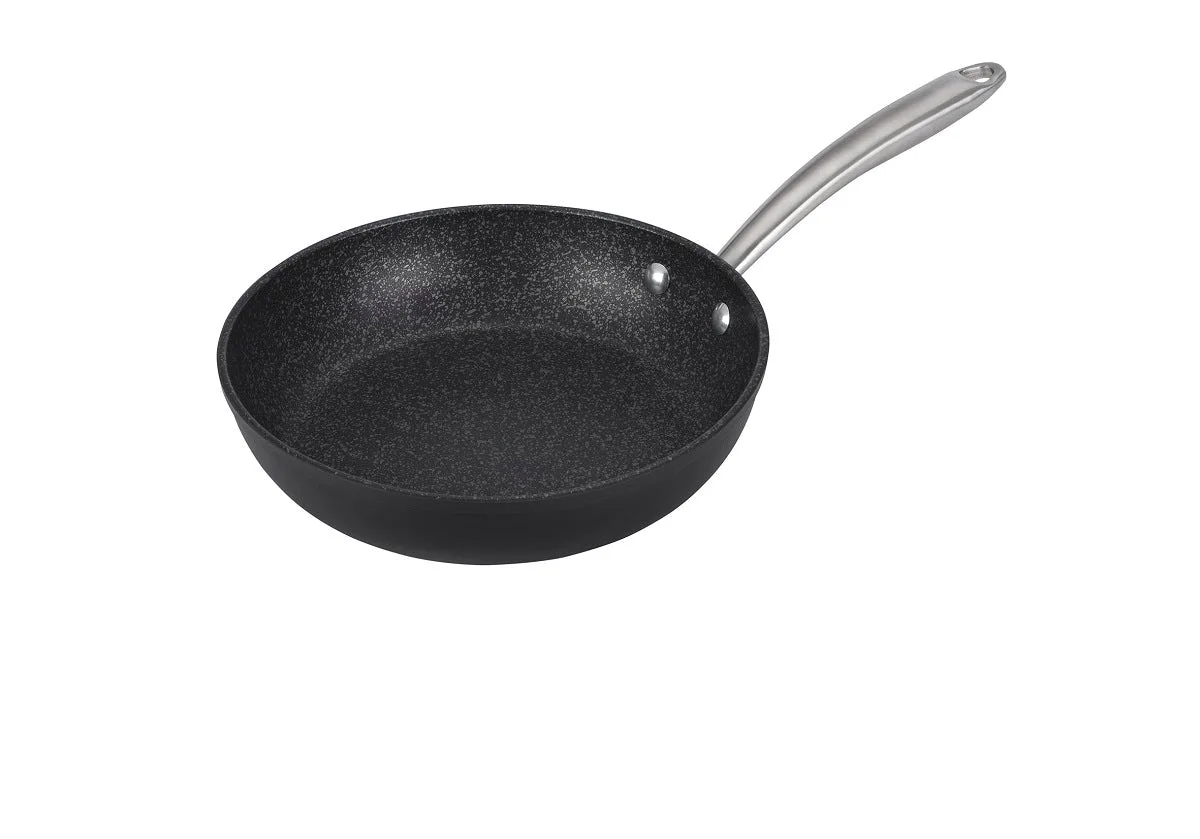
The aluminium body with a high quality steel base is there for fast, even cooking, and the matte black hybrid ceramic exterior is described as easy to wipe clean. The pans are also dishwasher safe, which is useful on busy days, though hand washing is gentler on any non-stick surface over time.
Compatibility and care details that affect the decision
- Scratch Guard: Non Stick Frying Pan Set - Twin Pack: Suitable for all hob types, including induction Confirms the set works on induction hobs, which is a common deal-breaker for pan sets.
- Scratch Guard: Non Stick Frying Pan Set - Twin Pack: Oven safe up to 260C/ 500F/ Gas Mark 10 Lets you finish dishes in the oven, adding flexibility that a hob-only pan cannot offer.
- Scratch Guard: Non Stick Frying Pan Set - Twin Pack: Easy clean & dishwasher safe Practical for everyday use, though the coating will last longer with careful washing.
- Scratch Guard: Non Stick Frying Pan Set - Twin Pack: The matte black hybrid ceramic non stick frying pan exterior not only looks great but wipes clean with ease The exterior finish is part of the easy-clean claim, not just a styling detail.
What the supplied information does not settle
The product record does not state the weight of either pan, the exact base diameter, or whether the pans are suitable for particular hob ring sizes beyond the all-hob-types claim. It also does not give a recommended heat setting or a specific seasoning routine. If those details matter to you, treat them as open questions rather than assuming a specification.
There is no information in the supplied record about whether the pans are suitable for children or about load limits for oven use beyond the temperature rating. The 10 year guarantee is stated, but the conditions are not included here, so check the guarantee terms before you rely on them.
A simple way to decide
If you cook mostly for one or two people and your pans rarely fill up, the 21cm pan will do most of the work and the 25cm pan will be there for the times you need more room. If you regularly cook for a family, the 25cm pan will be your default and the 21cm pan becomes the useful small helper.
The twin pack makes most sense when you want both a small and a large pan and you value the matching coating, handles and care routine. If you only ever need one size, a single pan is the more sensible buy. If you need two pans of the same size, this pack will not suit you.