Quick answer
Choose a seamless bra when you want the smoothest possible finish under thin or fitted knits, and choose a seamed bra when you want shaping, lift, and structure that holds its shape all day. If your priority is a clean line under a t-shirt, seamless wins. If your priority is a defined silhouette, seams do the work.
The bra that looks invisible under a sweater can look lumpy under a silk blouse, and the bra that lifts beautifully can show ridges under a thin tee. That's the core trade-off between seamless and seamed bras: one prioritizes a smooth surface, the other prioritizes shape.
This comparison breaks down how each construction behaves under real clothes, which cup sizes and bust shapes each one suits, and how to decide based on the outfit you're actually wearing. We'll use two real options from our catalog to make the differences concrete.
How seamless and seamed bras differ in construction
A seamless bra is molded or bonded so the cup has no stitched seams across the front. That uninterrupted surface is why seamless bras are the default choice for t-shirts, fine knits, and any fabric that telegraphs texture. The trade-off is that molded cups can't shape the bust the way cut-and-sewn panels can, so they tend to rely on compression or light molding rather than true structural lift.
A seamed bra is built from separate fabric panels stitched together. Those seams are engineering, not decoration: they create curves, direct tissue, and hold a shape that lasts through the day. The cost is visible seam lines under very thin or very tight clothing, and seams can press into the skin if the cup size is off.
- Check the cup interior: a smooth, unbroken surface means seamless; visible stitched panels mean seamed.
- Hold the bra up to light in front of a thin shirt to preview how much texture will show through.
Smoothing under clothes: which one actually disappears
Under a fitted t-shirt or fine-gauge knit, a seamless bra almost always reads cleaner. There are no seam ridges to catch light, and the smooth cup edge sits flush against the body. That's the seamless bra benefit people are really paying for: not more support, but less visible texture.
Seamed bras can still look smooth under structured fabrics like denim, ponte, or lined dresses, where the fabric itself has enough body to hide seam lines. Under clingy jersey or thin silk, though, seams tend to show, especially across the apex of the cup where the seam curves most.
- Match bra construction to fabric weight: seamless for thin and clingy, seamed for structured and lined.
- If a seamed bra shows under one outfit, keep a seamless option on hand for that specific garment.
Support and shaping: where seams earn their keep
Seamed bras generally offer more shaping because each panel can be cut on a different grain to lift, round, or project the bust. This is why seamed bra support tends to feel more directional: the bra holds a shape rather than just covering one. For fuller busts, that structure often translates into better all-day comfort because the weight is distributed across panels instead of a single molded cup.
Seamless bras can still support well when they're designed with compression or an underwire, but the shaping is gentler and more uniform. If you want a rounded, lifted look, seams do more of that work. If you want a natural, low-profile look, seamless is usually enough.
- Fuller busts often get better lift and separation from seamed cups.
- Smaller busts can usually wear seamless without losing shape.
Fit guidance for each construction
With a seamless bra, fit is about the band and the cup edge. The band should sit level and snug; if it rides up, the cups will gap. The cup edge should lie flat against the chest with no spill or wrinkle. Because molded cups don't adapt much, getting the size right matters more than with seamed styles.
With a seamed bra, fit is about where the seams land. The center seam should sit at your natural apex, not above or below it, and the underwire should follow your breast root without pressing into tissue. If a seam digs in, the cup is likely too small or the shape isn't matching your bust profile.
- Always scoop and smooth tissue into the cup after fastening.
- If you're between sizes in a seamless bra, size up in the band before sizing up in the cup.
Trade-offs to weigh before you buy
- Smoothness vs. shaping: Seamless cups give the cleanest line under thin fabric but shape the bust less; seamed cups shape and lift more but can show ridges under clingy knits. Pick based on the outfit you wear most, not the one you wear occasionally.
- Fit tolerance: Molded seamless cups have less give, so a half-size error shows up as gapping or spill; seamed cups adapt more because the panels move with you. If you're between sizes, a seamed style is more forgiving.
- All-day comfort: Seamed bras distribute weight across panels, which can feel better for fuller busts; seamless bras with compression can feel easier for smaller busts or long days in light clothing. Comfort depends on your bust weight and how long you wear it, not on which type is 'better'.
Two real options that show the difference
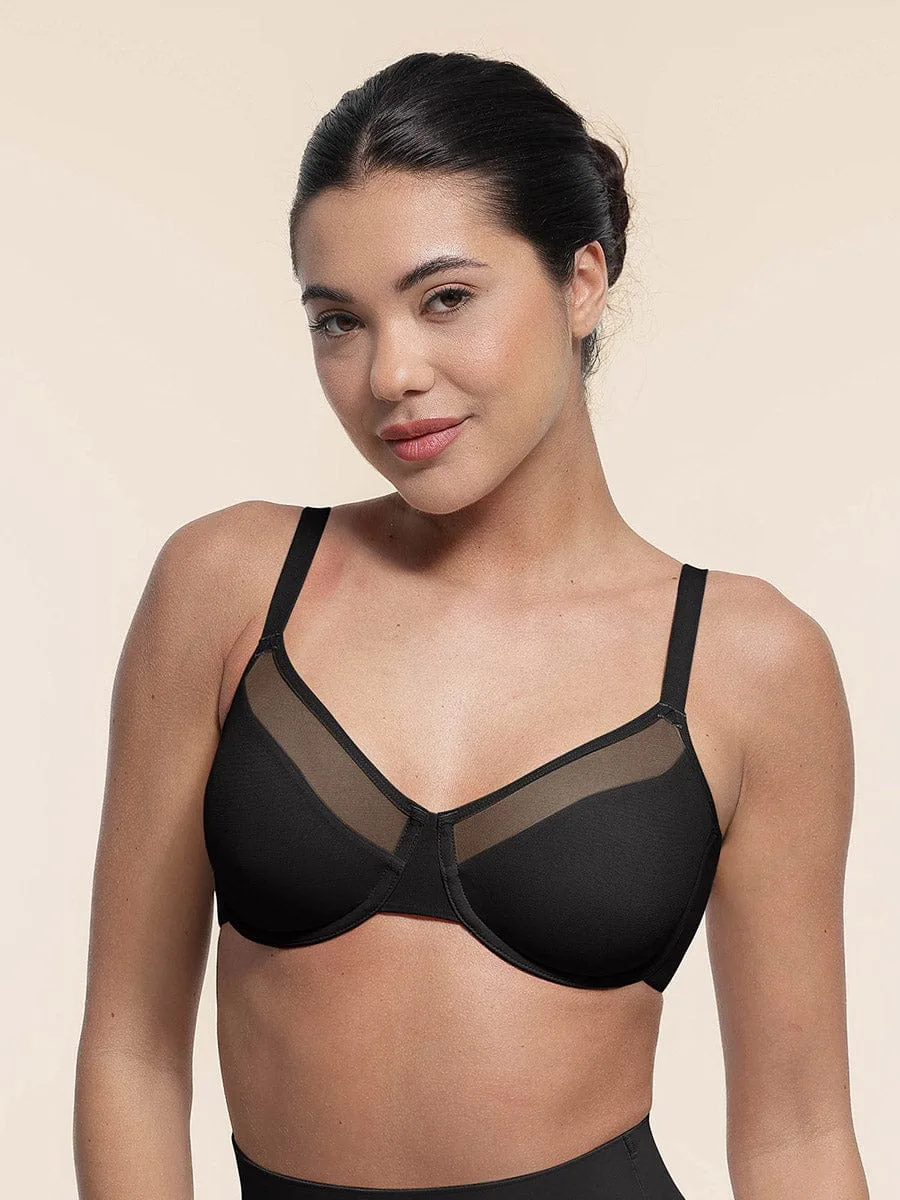
- Seamless Minimizer Mesh Bra: Crafted with smooth, seamless cups and soft mesh detailing, with an underwire that gives a natural lift without digging and adjustable straps for a custom fit. This is the seamless side of the trade-off: the smooth cup surface is what keeps lines from showing under knits, while the underwire adds lift that a purely molded cup might lack.
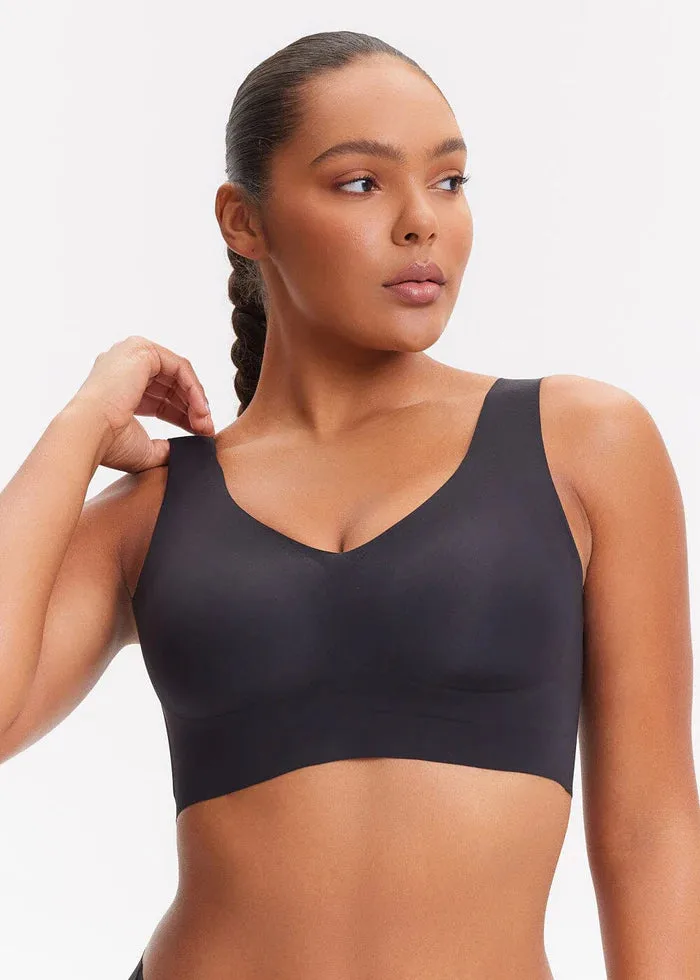
- Ultimate Essential BRA: Features a seamlessly soft-wired design and compression material in the back that smooths back contours. This shows that seamless construction can extend beyond the cups: the back compression targets the contours a front-only smoothing bra leaves alone, which matters under fitted tops.
Which should you choose?
Best for
- Anyone whose main goal is a smooth look under t-shirts, fine knits, and clingy dresses
- Smaller to medium busts that don't need heavy structural lift
- People who want a bra that disappears under clothes without visible seam lines
Not for
- Fuller busts that need strong lift and separation, who will usually get more from a seamed bra
- Anyone whose priority is a defined, rounded silhouette rather than a natural, low-profile look
- People who want the bra to do visible shaping work under structured clothing
There's no single winner here, only a match between construction and context. Keep one seamless bra for thin, unforgiving fabrics and one seamed bra for days when shape and lift matter more than invisibility, and you'll stop fighting your wardrobe.