What the Tefal wok listing actually confirms
Before you season or clean anything, it helps to know what you are working with. The Tefal Asian Specialty Range Chinese Wok with Lid is a purpose-built wok for stir-fries and other Asian dishes at home. It comes in two sizes, 36cm and 40cm, and includes a coordinating lid.
The supplied product information does not state the wok's material, coating type, or manufacturer care instructions. That matters because seasoning steps differ between carbon steel, cast iron and non-stick woks. The safest approach is to check the packaging or the label on your specific wok before applying any oil or heat treatment, and to follow Tefal's own guidance if it differs from the general advice below.
Tefal Asian Specialty Range Chinese Wok with Lid
-
Tefal Asian Specialty Range Chinese Wok With Lid 36cm/40cm: Available in 36cm and 40cm size variations for flexible portion control. Size affects how much you can cook at once and how the wok sits on your hob, so choose before you start seasoning.
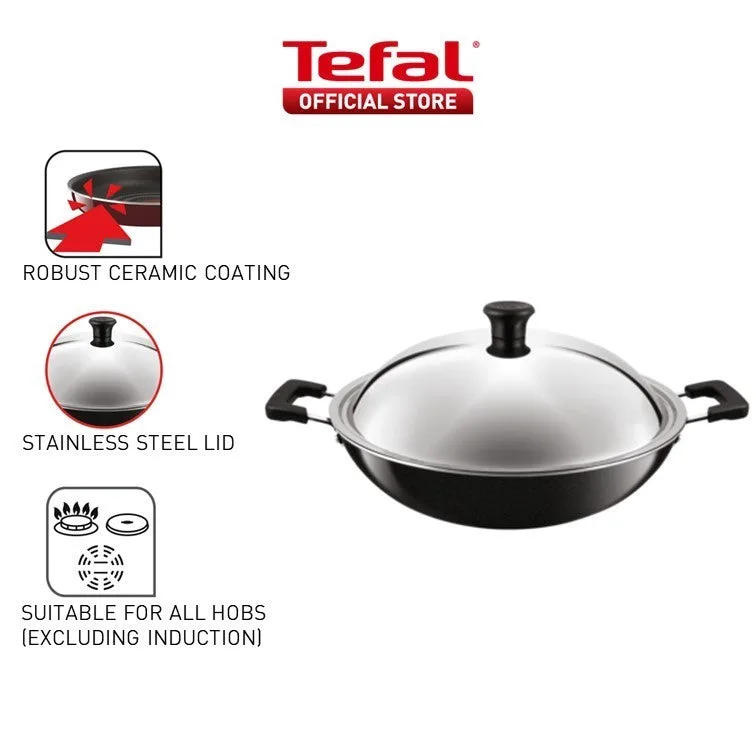
Tefal Asian Specialty Range Chinese Wok With Lid 36cm/40cm
-
Tefal Asian Specialty Range Chinese Wok With Lid 36cm/40cm: Features the traditional Chinese wok shape with a coordinating lid. The lid is useful for resting, steaming and covering food, and the shape determines how you move food around the pan.
-
Tefal Asian Specialty Range Chinese Wok With Lid 36cm/40cm: Part of Tefal's dedicated Asian Specialty Range. It is designed for stir-fries and similar dishes rather than general-purpose frying.
Wok 36cm vs 40cm: which size should you season and cook with?
The listing offers three variants: Wok 36cm C52896, Wok 40cm C52897 and Wok 36cm A69698. The two 36cm options share the same diameter, while the 40cm gives you a wider cooking surface. Neither size is inherently better; the right choice depends on your hob, your storage space and how many people you usually cook for.
- 36cm (C52896 or A69698): A more compact wok that is easier to handle and store. It suits smaller households or kitchens with limited cupboard space. The listing does not confirm weight, so check the product page if lifting matters to you.
- 40cm (C52897): A wider wok that gives you more room to toss ingredients without crowding them. It is the better fit if you regularly cook for a larger group, but confirm it sits securely on your hob before buying.
How to season a Chinese wok: a cautious, check-first routine
Seasoning is the process of building a thin oil layer on a bare metal wok. It is not a one-time task, and it is not appropriate for every wok. Use the steps below only if your wok's label or packaging confirms it is uncoated carbon steel or cast iron and that seasoning is recommended. If the wok has a non-stick coating, skip the high-heat oil treatment and follow the manufacturer's cleaning advice instead.
- 1. Wash and dry first: Remove any factory residue with warm water and a soft cloth, then dry the wok thoroughly. Do not use abrasive pads on a coated surface.
- 2. Check the material and coating: Look for a label, tag or packaging note that says the wok is carbon steel or cast iron and that seasoning is intended. If you cannot confirm this, do not apply high heat with oil.
- 3. Apply a thin oil film: Use a small amount of a high-smoke-point cooking oil and spread it thinly across the interior with a paper towel or cloth. The goal is a barely visible film, not a pool of oil.
- 4. Heat gently and evenly: Warm the wok over your hob, moving it so the oil coats the sides as well as the base. The supplied information does not specify a temperature or duration, so watch the wok rather than timing it, and stop if the oil smokes heavily or the surface looks uneven.
- 5. Cool and wipe: Let the wok cool, then wipe away excess oil with a clean cloth. Repeat the thin oil and gentle heat step a few times over your first few cooking sessions to build up the layer gradually.
Cleaning a wok after cooking without stripping the surface
How you clean the wok depends on what it is made of. The listing does not confirm the coating, so treat these as general principles and defer to Tefal's instructions for your exact model.
- Let it cool before washing: Sudden temperature changes can warp a hot wok or damage a coating. Wait until it is cool enough to handle.
- Use warm water and a soft sponge: For everyday cleaning, warm water and a soft sponge are usually enough. Avoid metal scourers and harsh abrasives, which can scratch a coating or strip a seasoned layer.
- Dry immediately: Water left on a bare metal wok is the main cause of rust. Dry it with a cloth and, if the wok is uncoated, warm it briefly on the hob to drive off moisture before storing.
- Re-oil bare metal after washing: If your wok is carbon steel or cast iron, a very thin wipe of oil after drying helps protect the surface until the next use.
Wok rust prevention tips for humid kitchens
Singapore's humidity makes rust a real risk for bare metal woks. These habits help, but they cannot replace the manufacturer's care instructions if your wok has a coating.
- Store it dry and uncovered: Do not put a wet wok away in a closed cupboard. Let it air completely, then store it somewhere with airflow.
- Keep the lid off during storage: The coordinating lid is useful for cooking and resting, but trapping moisture under it between uses encourages rust on uncoated surfaces.
- Inspect the surface regularly: Check for small orange spots before each use. Light surface rust on bare steel can often be scrubbed away and re-seasoned, but deep pitting is a sign to replace the wok.
- Avoid soaking: Never leave a wok to soak in the sink, even for a short time. Wash, rinse and dry it straight away.
What the supplied information does not confirm
The listing does not state the wok's material, coating, hob compatibility, weight, or manufacturer-approved seasoning and cleaning steps. It also does not confirm whether the lid is oven-safe or dishwasher-safe. Before you season, clean with anything other than warm water and a soft sponge, or use the wok on a particular hob, check the packaging or Tefal Singapore's product page for your exact variant: Wok 36cm C52896, Wok 40cm C52897 or Wok 36cm A69698.