The core idea: a password, hidden roles, and trust
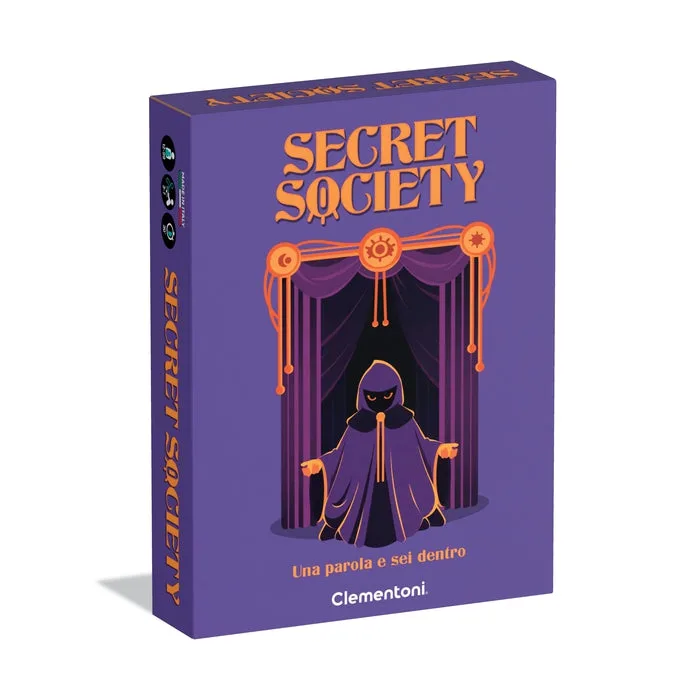
Secret Society is a party game of hidden roles. To join the secret society, you need to know the password. You guess it from clues given by other players—but not everyone wants to help you. The tension comes from figuring out who is giving honest clues and who is misleading you.
Because the game is built around hidden roles and quick rounds, it rewards observation and social reading as much as luck. The catalog describes it as highly replayable and suited to evenings with friends.
What the catalog confirms about Secret Society
-
Secret Society: A fun party game with hidden roles that tests trust among friends. This defines the experience: you are not solving a puzzle alone but reading other players.
Secret Society
-
Secret Society: To enter the secret society, you must know the password; guess it using clues from other players, but beware—not everyone wants to help you. This is the central mechanic: clue interpretation and detecting misleading help.
-
Secret Society: A highly replayable game with quick, fun matches, suitable for evenings with friends. Sets expectations for session length and group setting.
-
Secret Society: Made in Italy. A production detail some shoppers care about.
What to expect at the table
The catalog does not list player count, recommended age, or exact components. Those details are not confirmed by the supplied information, so check the box or product page before buying if they matter to your group. What is clear is the format: a hidden-role party game where the password is the goal and clues are the path.
Because the game is described as fast and replayable, it fits groups that enjoy quick social deduction rounds rather than long strategy sessions.
How to play: a practical flow
- 1. Set up the hidden roles: Each player receives a hidden role. The catalog does not specify how roles are assigned, so follow the rulebook included with your copy. The key is that roles stay secret: some players want to help others find the password, and some do not.
- 2. Establish the password: The password is the target. The catalog does not detail how the password is chosen or displayed; refer to the rulebook for the exact procedure. What matters is that players know a password exists and must guess it from clues.
- 3. Give and interpret clues: Players offer clues about the password. Use those clues to form a guess—but remember that not everyone wants you to succeed. Watch for clues that seem off or too vague. The catalog explicitly warns that not all players want to help you.
- 4. Guess the password: When you think you know it, make your guess according to the rulebook. The catalog does not specify the exact guessing procedure, so follow the included rules for turn order and how guesses are declared.
- 5. Resolve the round: The game is described as having quick matches. The rulebook will explain how a round ends and how to score or determine the winner. The catalog does not provide scoring details, so rely on the official rules for resolution.
Strategy tips for better deduction
- Track who gives which clues: Since not everyone wants to help, keep a mental (or written) note of who gave which clue. Patterns may reveal whose interests align with yours.
- Weigh clue quality, not just quantity: A vague clue may be honest caution or deliberate misdirection. Compare clues across players: if one player's clues consistently lead nowhere, adjust your trust.
- Share your reasoning out loud: In hidden-role games, stating your logic can pressure others to reveal their stance. It also helps you spot contradictions in their responses.
- Keep rounds short and move quickly: The game is designed for fast, fun matches. Long deliberations can stall the pace; trust your reads and guess when you have enough information.
- Adapt to the group: Because it is a party game, the social dynamic matters. Pay attention to who is quiet, who is pushing hard, and who deflects—these are often as telling as the clues themselves.
Honest trade-offs
Secret Society is a light, social deduction party game, not a deep strategy board game. The catalog does not specify player count, age range, or play time, so if those are critical for your group, verify them before purchase. The game leans on group interaction and replayability rather than complex rules or components.
If your group enjoys bluffing, quick rounds, and reading people, it fits well. If you prefer cooperative puzzles or heavy strategy, this may not be the right pick.